THE ADVENTURE COLLECTIVE® · Independent discovery and booking for outdoor travel

Witness white travertine terraces shaped by thermal springs and explore the Roman ruins of Hierapolis on a full-day outing. This practical guide covers what to expect, local history, and how to prepare for the walks and sun-soaked plates of limestone.
Witness white travertine terraces shaped by thermal springs and explore the Roman ruins of Hierapolis on a full-day outing. This practical guide covers what to expect, local history, and how to prepare for the walks and sun-soaked plates of limestone.
A walk onto Pamukkale’s terraces starts with a crunch—powdery white carbonate underfoot—and the air smells faintly of warm minerals. The terrace rims rise like frozen waterfalls, the thermal water continuing its slow, indifferent work of fossilizing the hillside. Above them, the grid of Hierapolis’s ruined streets and a stone theater lay plain, a Roman city that grew around these springs and treated them as a source of healing and ritual.
Verified experiences and guided adventures in the surrounding area.
Operated by Neon Tours · Pamukkale, Denizli Province
A walk onto Pamukkale’s terraces starts with a crunch—powdery white carbonate underfoot—and the air smells faintly of warm minerals. The terrace rims rise like frozen waterfalls, the thermal water continuing its slow, indifferent work of fossilizing the hillside. Above them, the grid of Hierapolis’s ruined streets and a stone theater lay plain, a Roman city that grew around these springs and treated them as a source of healing and ritual.
Geology here is visible history: calcium-rich spring water deposits travertine over millennia, creating pools, stalactite-like rims and layered basins. Hierapolis traces its human timeline back to the Hellenistic and Roman eras (founded by the Attalid dynasty), with notable monuments such as the theater, the Apollo temple and a large necropolis reflecting the city’s sacred status.
Local culture blends small-town Aegean life—markets, textile vendors and simple eateries—with a long tradition of thermal bathing; the Antique Pool (where swimming is allowed for a fee) preserves the idea of therapeutic waters.
Practically, visitors should plan a full day: there’s walking on uneven limestone, steps in the ruins, and sun exposure on the plateau. Arrive early or late afternoon to avoid peak crowds and the strongest sun. Stick to designated paths on the travertines to protect fragile formations and follow local signage about where footwear is allowed. Bring water, sun protection and a lightweight daypack; many tour operators run shuttle routes from Izmir and Denizli for a one-day visit.
moderate.
9 hours.
Suitable for travelers with moderate fitness; expect several hours of standing and uneven walking
Swimming on the travertine terraces is not allowed to protect the formations; however, the Antique Pool in Hierapolis permits swimming for a fee.
Allow about 3–4 hours onsite to walk the terraces and explore key ruins; tours from Izmir or Denizli usually run about 8–9 hours total including transport.
Certain areas have steep steps and uneven surfaces; visitors with mobility limitations should check specific access points and consider limited circulation within the site.
There are basic visitor facilities, a small museum, and nearby cafes in Pamukkale village and Denizli; pack snacks if you prefer more options.
Hierapolis was founded in the Hellenistic period and flourished under Roman rule as a spa city built around thermal springs; many surviving monuments date to Roman and early Byzantine eras.
The travertines are fragile—visitor restrictions and water management aim to balance tourism with preservation; stay on marked routes and avoid soaps or lotions in thermal areas.
Neon Tours operates guided outdoor trips and adventures with an emphasis on safety, stewardship, and memorable experiences.
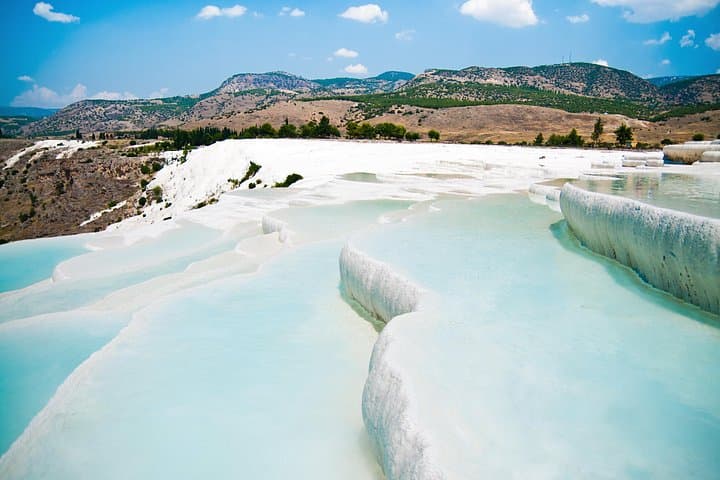
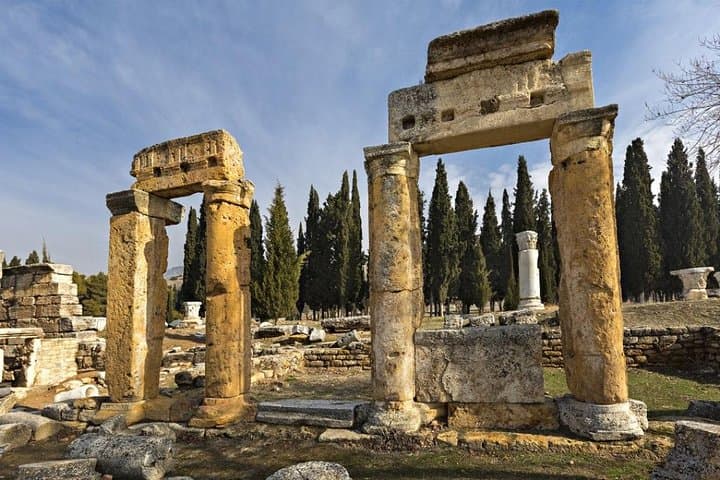
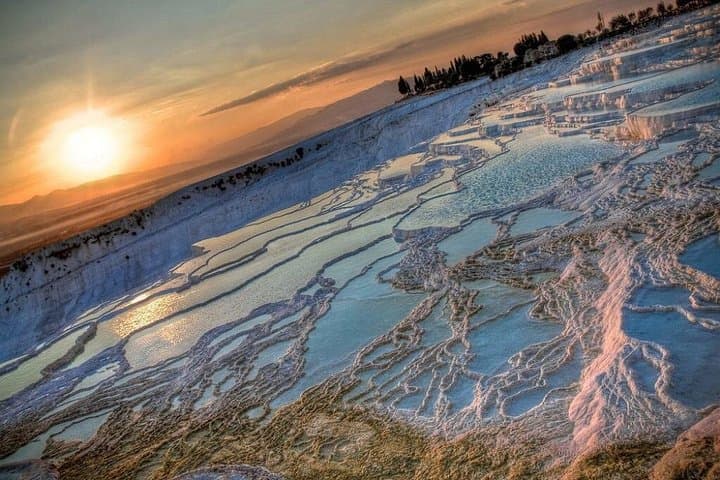
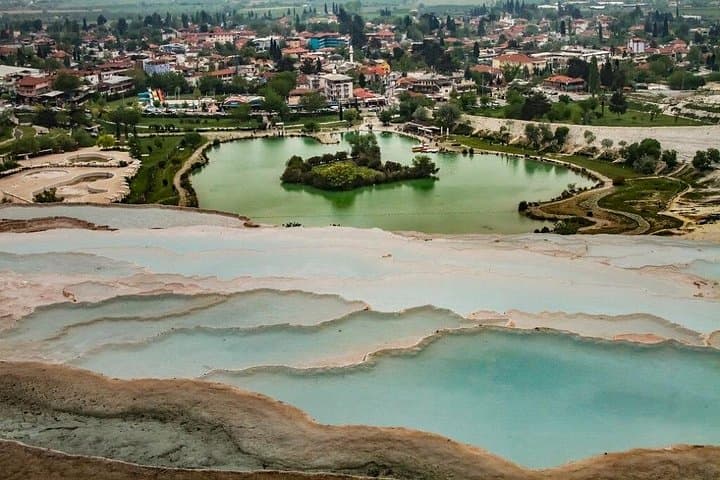
A walk onto Pamukkale’s terraces starts with a crunch—powdery white carbonate underfoot—and the air smells faintly of warm minerals. The terrace rims rise like frozen waterfalls, the thermal water continuing its slow, indifferent work of fossilizing the hillside. Above them, the grid of Hierapolis’s ruined streets and a stone theater lay plain, a Roman city that grew around these springs and treated them as a source of healing and ritual.
A walk onto Pamukkale’s terraces starts with a crunch—powdery white carbonate underfoot—and the air smells faintly of warm minerals. The terrace rims rise like frozen waterfalls, the thermal water continuing its slow, indifferent work of fossilizing the hillside. Above them, the grid of Hierapolis’s ruined streets and a stone theater lay plain, a Roman city that grew around these springs and treated them as a source of healing and ritual.
Geology here is visible history: calcium-rich spring water deposits travertine over millennia, creating pools, stalactite-like rims and layered basins. Hierapolis traces its human timeline back to the Hellenistic and Roman eras (founded by the Attalid dynasty), with notable monuments such as the theater, the Apollo temple and a large necropolis reflecting the city’s sacred status.
Local culture blends small-town Aegean life—markets, textile vendors and simple eateries—with a long tradition of thermal bathing; the Antique Pool (where swimming is allowed for a fee) preserves the idea of therapeutic waters.
Practically, visitors should plan a full day: there’s walking on uneven limestone, steps in the ruins, and sun exposure on the plateau. Arrive early or late afternoon to avoid peak crowds and the strongest sun. Stick to designated paths on the travertines to protect fragile formations and follow local signage about where footwear is allowed. Bring water, sun protection and a lightweight daypack; many tour operators run shuttle routes from Izmir and Denizli for a one-day visit.