THE ADVENTURE COLLECTIVE® · Independent discovery and booking for outdoor travel

Walk Estafeta and Chapitela with a local pintxo chef guiding a three-stop tasting: three pintxos and paired drinks in 2–3 hours. Learn why Pamplona’s bars keep crowds and flavors moving and how to make the most of a short culinary crawl.
Walk Estafeta and Chapitela with a local pintxo chef guiding a three-stop tasting: three pintxos and paired drinks in 2–3 hours. Learn why Pamplona’s bars keep crowds and flavors moving and how to make the most of a short culinary crawl.
The group slips out into a cool Pamplona evening and the guide threads them through a mesh of narrow streets where bars glow like small theatres. Estafeta pushes its smells toward the pavement—garlic, slow-roasted peppers, warm bread—while Chapitela answers with sharper, modern bites. Guests move from counter to counter, tasting small plates that act like postcards from Navarra.
Verified experiences and guided adventures in the surrounding area.
Operated by The good tour company · Pamplona, Navarre
The group slips out into a cool Pamplona evening and the guide threads them through a mesh of narrow streets where bars glow like small theatres. Estafeta pushes its smells toward the pavement—garlic, slow-roasted peppers, warm bread—while Chapitela answers with sharper, modern bites. Guests move from counter to counter, tasting small plates that act like postcards from Navarra.
Pamplona rests on the Arga River plain beneath the outer foothills of the Pyrenees; its compact medieval core and stone ramparts shape a dense urban walkability that made the pintxo culture flourish here. Pintxos trace their roots to Basque taberna traditions: a slice of bread, a skewer, a chef’s quick innovation. The tour pairs that culinary history with local insights—why bars favor seasonal produce, how the Running of the Bulls week reshapes the city, and which streets still run as they did centuries ago.
Practical details are straightforward. Tours last about 2–3 hours and include three pintxos with paired drinks; groups are small and the route covers short, flat blocks on cobblestones. It’s suitable for most mobility levels and operates outside 7–14 July (San Fermín restrictions apply). Expect standing room at counters, quick service, and lively local conversation. Bring dietary notes ahead of booking, come hungry but not starving, and wear comfortable shoes for standing and light walking. Cash is handy for extras; if you want photos, turn them into quiet moments—these are working kitchens serving neighbors as much as visitors.
easy.
2–3 hours.
Light activity—suitable for most adults who can stand and walk short cobbled distances.
The tour includes three pintxos and three wines or soft drinks per person during the 2–3 hour route.
Yes—most meeting points and bars can accommodate wheelchairs, but notify the operator of special needs when booking.
Infants and small children can join; infant seats are available, but the experience centers on adult-oriented bars and tastes.
No—tours are not available between 7–14 July due to the festival and heightened city restrictions.
Pamplona’s old town grew around Roman and medieval routes; modern pintxo culture evolved from Basque bar traditions where small plates allowed fast social dining.
Support small businesses by finishing samples and tipping; reduce waste by carrying a reusable bottle and respecting laneways to limit congestion at tiny tapas bars.
The good tour company operates guided outdoor trips and adventures with an emphasis on safety, stewardship, and memorable experiences.
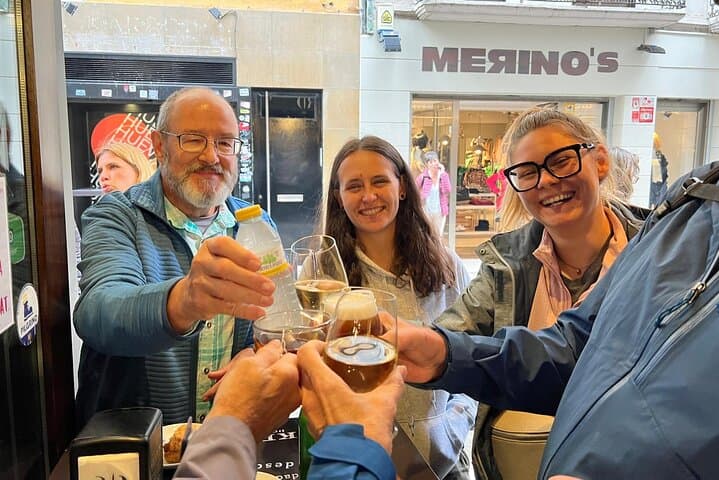
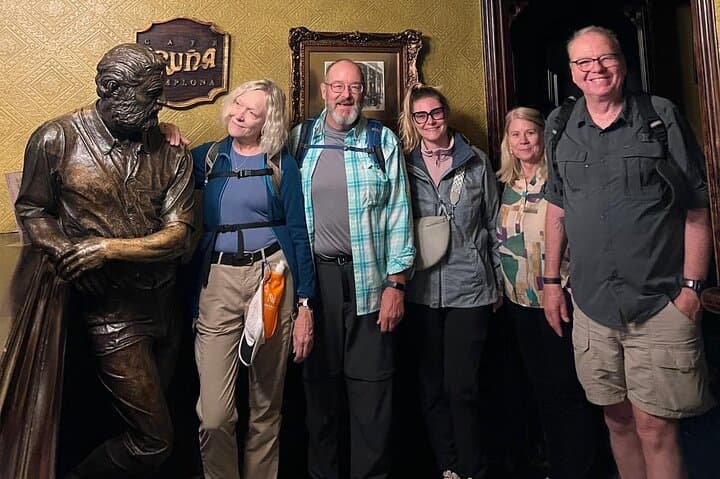
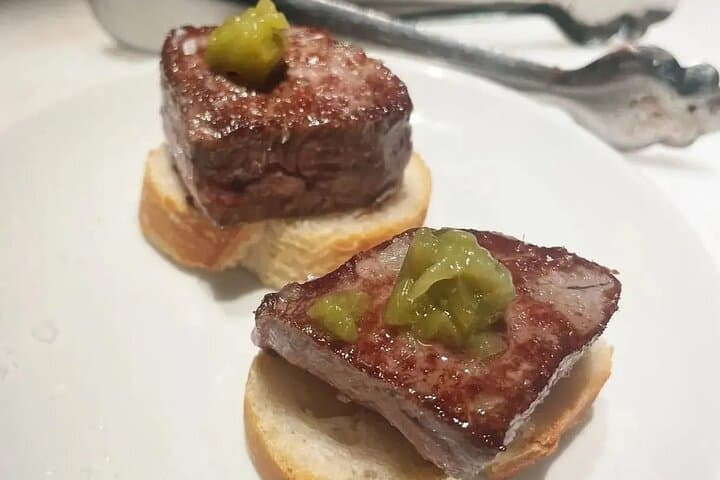
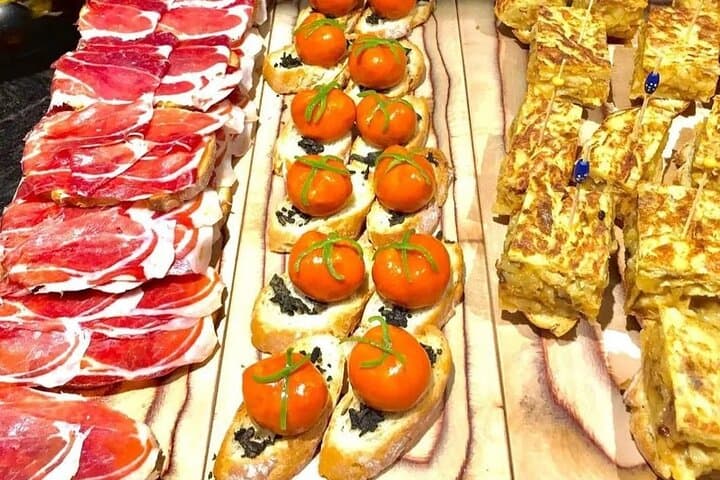
The group slips out into a cool Pamplona evening and the guide threads them through a mesh of narrow streets where bars glow like small theatres. Estafeta pushes its smells toward the pavement—garlic, slow-roasted peppers, warm bread—while Chapitela answers with sharper, modern bites. Guests move from counter to counter, tasting small plates that act like postcards from Navarra.
The group slips out into a cool Pamplona evening and the guide threads them through a mesh of narrow streets where bars glow like small theatres. Estafeta pushes its smells toward the pavement—garlic, slow-roasted peppers, warm bread—while Chapitela answers with sharper, modern bites. Guests move from counter to counter, tasting small plates that act like postcards from Navarra.
Pamplona rests on the Arga River plain beneath the outer foothills of the Pyrenees; its compact medieval core and stone ramparts shape a dense urban walkability that made the pintxo culture flourish here. Pintxos trace their roots to Basque taberna traditions: a slice of bread, a skewer, a chef’s quick innovation. The tour pairs that culinary history with local insights—why bars favor seasonal produce, how the Running of the Bulls week reshapes the city, and which streets still run as they did centuries ago.
Practical details are straightforward. Tours last about 2–3 hours and include three pintxos with paired drinks; groups are small and the route covers short, flat blocks on cobblestones. It’s suitable for most mobility levels and operates outside 7–14 July (San Fermín restrictions apply). Expect standing room at counters, quick service, and lively local conversation. Bring dietary notes ahead of booking, come hungry but not starving, and wear comfortable shoes for standing and light walking. Cash is handy for extras; if you want photos, turn them into quiet moments—these are working kitchens serving neighbors as much as visitors.