THE ADVENTURE COLLECTIVE® · Independent discovery and booking for outdoor travel

A five-day overland journey from Dushanbe to Osh along the Pamir Highway. Expect high passes, remote guesthouses, ancient forts and dramatic plateaus—prepare for altitude and long driving days.
A five-day overland journey from Dushanbe to Osh along the Pamir Highway. Expect high passes, remote guesthouses, ancient forts and dramatic plateaus—prepare for altitude and long driving days.
You push away from Dushanbe before dawn and the road lifts you out of green valleys into a high, thin light where the air seems to dare you to breathe faster.
Verified experiences and guided adventures in the surrounding area.
Operated by Explore Pamir · Dushanbe, Dushanbe
You push away from Dushanbe before dawn and the road lifts you out of green valleys into a high, thin light where the air seems to dare you to breathe faster.
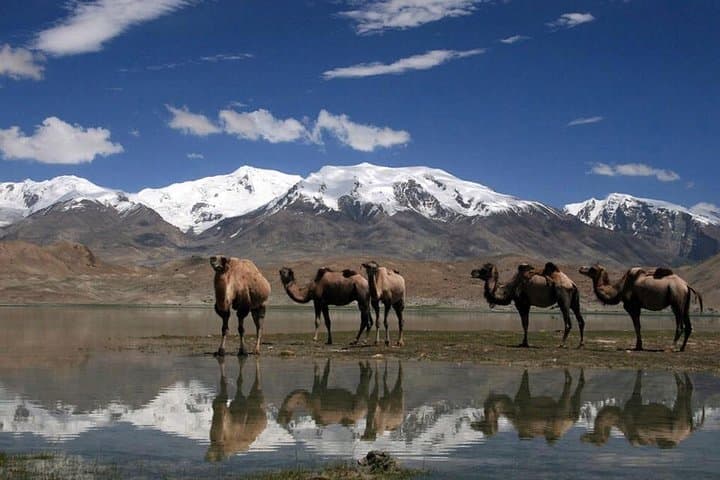
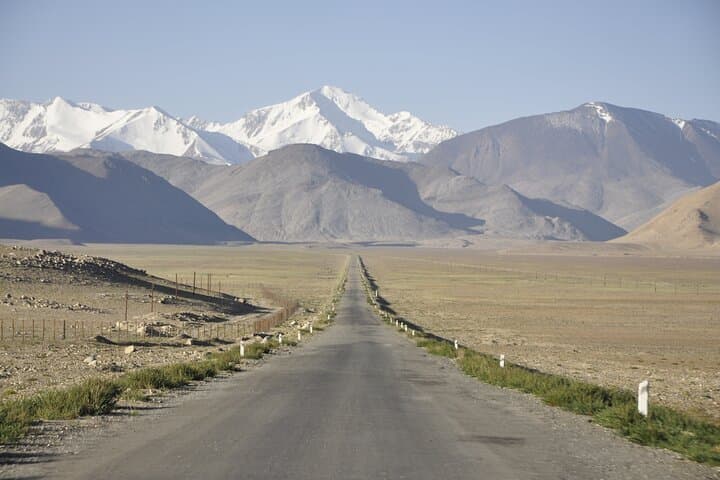
Over five days the Pamir Highway carries you across plateaus, over hairpin passes and beside the wide Pyanj River that marks Afghanistan’s edge. You’ll climb Shurabad Pass (≈2,200 m) on day one, thread through Khorog’s river-confluence walls, cross the steppe to Murghab and crest Ak-Baital Pass (4,655 m)—the highest drivable point in the former Soviet Union—before descending to the salt-slate mirror of Karakul Lake (3,915 m) and crossing into Kyrgyzstan at Kyzyl Art (4,282 m).
This is ancient ground: Kushan forts and 4th-century Buddhist stupas punctuate the route, and the Pamiris maintain distinct cultural traditions shaped by altitude and isolation. Geology here reads like a cross-section of continental collision—folded sediment, scree slopes, and broad, wind-polished basins where snowmelt writes seasonal streams.
Practically, expect long driving days (several stretches of 200–250 km in rugged conditions), limited services, and guesthouse or homestay accommodations. Altitude is the trip’s defining challenge—plan gradual ascent, hydrate, and watch for headaches. Summer opens the passes and offers the most reliable road conditions; spring and fall can be unpredictable. Pack layered clothing, a warm sleeping layer, and sturdy footwear for short walks at viewpoints.
This is a road trip that rewards patience: sharp light, unexpected open horizons, and encounters with communities whose lives still turn on river water and yak pastures.
challenging.
5 days.
Good aerobic fitness and tolerance for long vehicle days and short high-altitude walks; be prepared for reduced oxygen above 3,000 m.
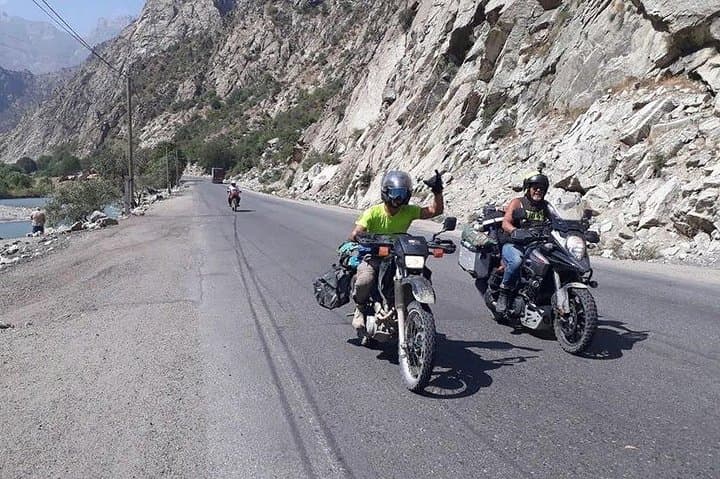
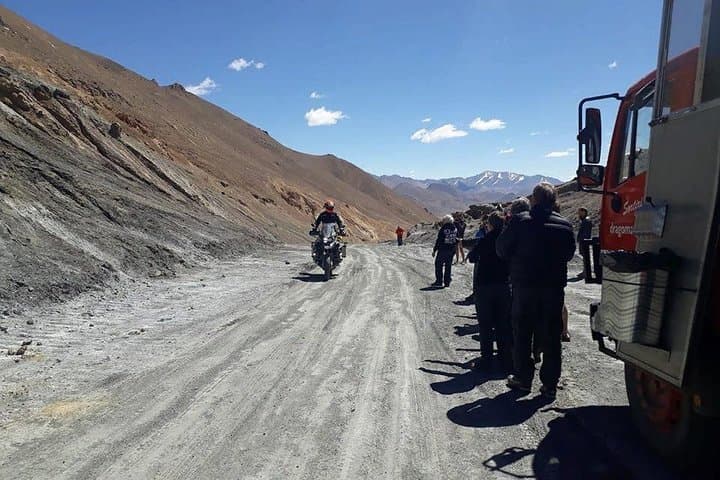
Surfaces range from paved sections to long stretches of gravel and washboard; expect slow average speeds and occasional delays from weather or maintenance.
Many nationalities require a visa or e-visa—check entry rules and passport validity well before travel.
Bring a basic altitude-ready first-aid kit, stay hydrated, ascend gradually and be aware of symptoms of altitude sickness; consult your doctor if you have heart or spinal conditions.
Expect simple guesthouses and homestays with basic facilities—comfort varies by location and remote towns often have limited hot water.
The route follows ancient trade and pilgrimage paths; Kushan-era forts and Buddhist stupas attest to long-standing human presence along Silk Road corridors.
This high-altitude landscape is fragile—pack out waste, avoid off-road driving in sensitive zones and respect grazing areas to minimize impact.
Explore Pamir operates guided outdoor trips and adventures with an emphasis on safety, stewardship, and memorable experiences.
You push away from Dushanbe before dawn and the road lifts you out of green valleys into a high, thin light where the air seems to dare you to breathe faster.
You push away from Dushanbe before dawn and the road lifts you out of green valleys into a high, thin light where the air seems to dare you to breathe faster.
Over five days the Pamir Highway carries you across plateaus, over hairpin passes and beside the wide Pyanj River that marks Afghanistan’s edge. You’ll climb Shurabad Pass (≈2,200 m) on day one, thread through Khorog’s river-confluence walls, cross the steppe to Murghab and crest Ak-Baital Pass (4,655 m)—the highest drivable point in the former Soviet Union—before descending to the salt-slate mirror of Karakul Lake (3,915 m) and crossing into Kyrgyzstan at Kyzyl Art (4,282 m).
This is ancient ground: Kushan forts and 4th-century Buddhist stupas punctuate the route, and the Pamiris maintain distinct cultural traditions shaped by altitude and isolation. Geology here reads like a cross-section of continental collision—folded sediment, scree slopes, and broad, wind-polished basins where snowmelt writes seasonal streams.
Practically, expect long driving days (several stretches of 200–250 km in rugged conditions), limited services, and guesthouse or homestay accommodations. Altitude is the trip’s defining challenge—plan gradual ascent, hydrate, and watch for headaches. Summer opens the passes and offers the most reliable road conditions; spring and fall can be unpredictable. Pack layered clothing, a warm sleeping layer, and sturdy footwear for short walks at viewpoints.
This is a road trip that rewards patience: sharp light, unexpected open horizons, and encounters with communities whose lives still turn on river water and yak pastures.