THE ADVENTURE COLLECTIVE® · Independent discovery and booking for outdoor travel

Ride a camel through Marrakech’s vast Palmeraie for an easy, hour-long trek among palms and orange trees, finishing with mint tea beneath the shade. This short excursion pairs cultural context with accessible outdoor time and hotel pickup.
Ride a camel through Marrakech’s vast Palmeraie for an easy, hour-long trek among palms and orange trees, finishing with mint tea beneath the shade. This short excursion pairs cultural context with accessible outdoor time and hotel pickup.
The sun first finds the fronds in Marrakech’s Palmeraie, light slicing between tall date palms as a line of camels pads across sandy tracks. Riders are handed a Tuareg scarf for sun protection and photos, then settle into a slow, rhythmic gait that changes the scale of the landscape: fields of palms, patches of orange trees, and the compact rise of the High Atlas on the far horizon.
Verified experiences and guided adventures in the surrounding area.
Operated by ItalyBesTours · Marrakech, Marrakech-Safi
The sun first finds the fronds in Marrakech’s Palmeraie, light slicing between tall date palms as a line of camels pads across sandy tracks. Riders are handed a Tuareg scarf for sun protection and photos, then settle into a slow, rhythmic gait that changes the scale of the landscape: fields of palms, patches of orange trees, and the compact rise of the High Atlas on the far horizon.
The Palmeraie dates to the Almoravid era when large-scale irrigation turned this edge of the plain into a working palm oasis; the palms sit on alluvial soils and old irrigation channels that still dictate paths and plantings. Cultural threads are visible everywhere — Berber and Tuareg textiles, the ritual of mint tea, and the domesticated relationship between handler and camel that’s been practiced for centuries.
Expect an easy, mostly flat ride: the camel segment runs about an hour, while the full excursion (pickup, transfer, ride, tea) takes roughly four hours. Terrain is sandy tracks and compact earth; mounting requires basic mobility. Wildlife is modest but present — small birds flit between palms, and the camels themselves dominate the scene.
Practical notes: morning or late-afternoon departures are cooler and photographically best; wear closed-toe shoes for walking to saddles, bring water and sunscreen, and plan for hotel pickup and drop-off. Guides typically offer mint tea under shade after the ride — a local pause that frames the experience. For travelers seeking a gentle, culturally rich outdoor hour, the Palmeraie camel trek is direct, accessible, and quietly memorable.
easy.
4 hours.
Light. Able to mount/dismount a camel and sit for an hour; no sustained fitness required.
The camel ride portion lasts about one hour; the full excursion with pickup and tea is typically around four hours.
Yes; the tour is marketed as suitable for all fitness levels, though mounting the camel requires basic mobility and handlers assist passengers.
Yes — hotel pickup and drop-off in Marrakech are included as part of the excursion.
Light, breathable layers, closed-toe shoes, sunglasses, and sunscreen are recommended; a Tuareg scarf is provided for sun and dust protection.
The Palmeraie expanded under the Almoravids when irrigation organized the plain into a managed palm oasis; it remains a working landscape with cultural ties to Berber and Tuareg traditions.
The oasis depends on managed irrigation and careful water use; visitors can help by staying on trails, avoiding litter, and minimizing plastic bottle waste.
ItalyBesTours operates guided outdoor trips and adventures with an emphasis on safety, stewardship, and memorable experiences.
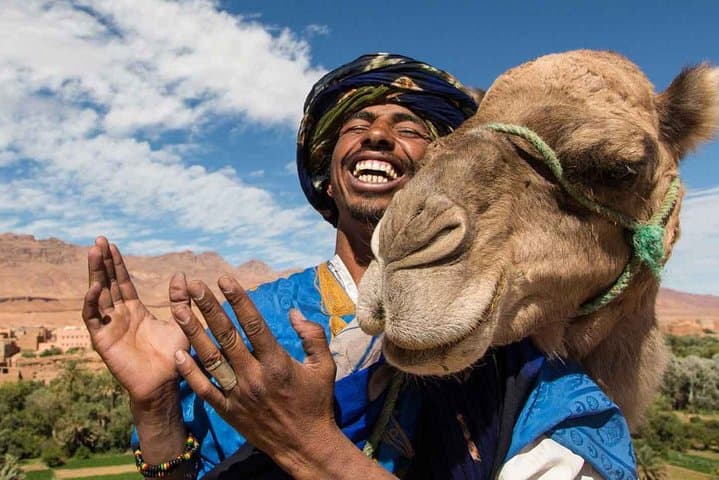
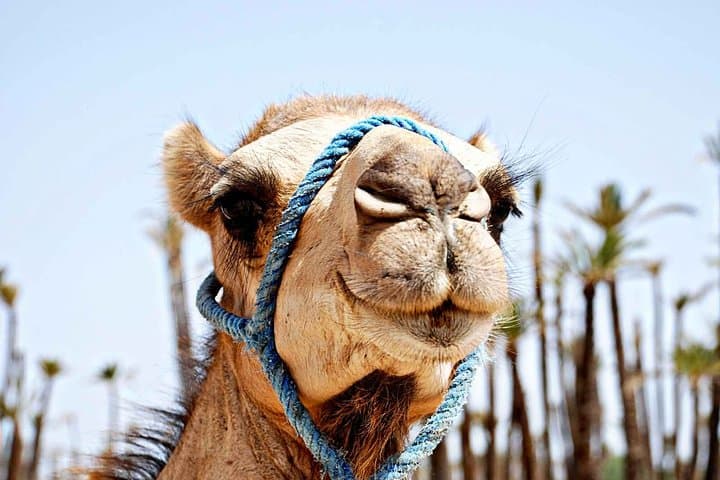
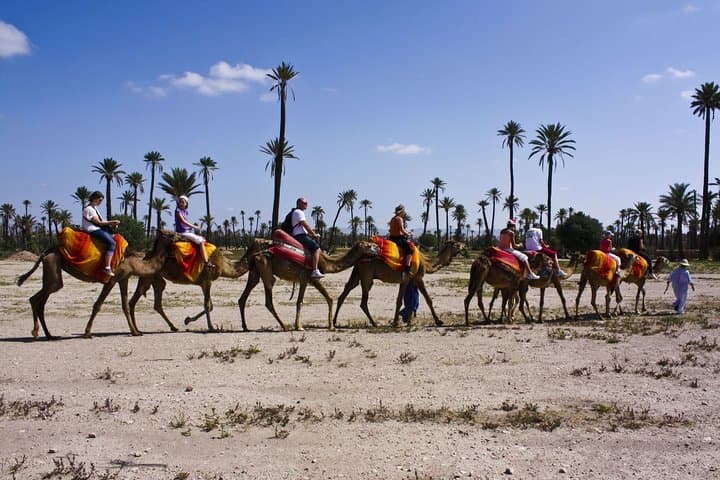
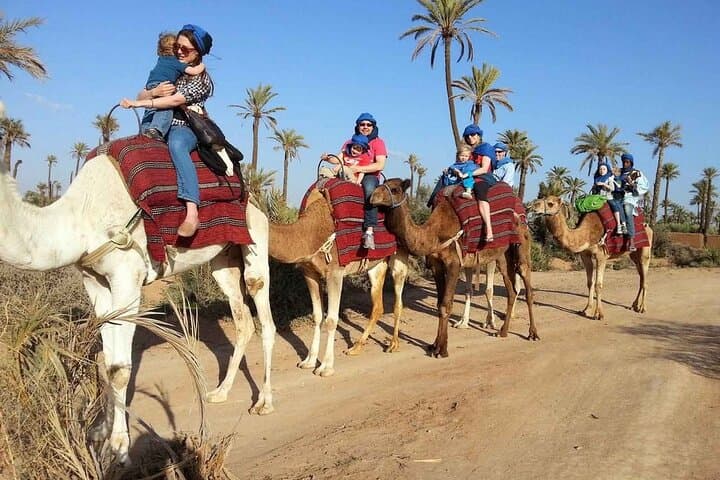
The sun first finds the fronds in Marrakech’s Palmeraie, light slicing between tall date palms as a line of camels pads across sandy tracks. Riders are handed a Tuareg scarf for sun protection and photos, then settle into a slow, rhythmic gait that changes the scale of the landscape: fields of palms, patches of orange trees, and the compact rise of the High Atlas on the far horizon.
The sun first finds the fronds in Marrakech’s Palmeraie, light slicing between tall date palms as a line of camels pads across sandy tracks. Riders are handed a Tuareg scarf for sun protection and photos, then settle into a slow, rhythmic gait that changes the scale of the landscape: fields of palms, patches of orange trees, and the compact rise of the High Atlas on the far horizon.
The Palmeraie dates to the Almoravid era when large-scale irrigation turned this edge of the plain into a working palm oasis; the palms sit on alluvial soils and old irrigation channels that still dictate paths and plantings. Cultural threads are visible everywhere — Berber and Tuareg textiles, the ritual of mint tea, and the domesticated relationship between handler and camel that’s been practiced for centuries.
Expect an easy, mostly flat ride: the camel segment runs about an hour, while the full excursion (pickup, transfer, ride, tea) takes roughly four hours. Terrain is sandy tracks and compact earth; mounting requires basic mobility. Wildlife is modest but present — small birds flit between palms, and the camels themselves dominate the scene.
Practical notes: morning or late-afternoon departures are cooler and photographically best; wear closed-toe shoes for walking to saddles, bring water and sunscreen, and plan for hotel pickup and drop-off. Guides typically offer mint tea under shade after the ride — a local pause that frames the experience. For travelers seeking a gentle, culturally rich outdoor hour, the Palmeraie camel trek is direct, accessible, and quietly memorable.