THE ADVENTURE COLLECTIVE® · Independent discovery and booking for outdoor travel

Walk Monticello’s courthouse circle and preserved Main Street with an offline audio guide that traces the town’s conversion from frontier outpost to cotton-shipping hub. This self-guided VoiceMap tour blends turn-by-turn directions with local history and cultural context over roughly 75–105 minutes.
Walk Monticello’s courthouse circle and preserved Main Street with an offline audio guide that traces the town’s conversion from frontier outpost to cotton-shipping hub. This self-guided VoiceMap tour blends turn-by-turn directions with local history and cultural context over roughly 75–105 minutes.
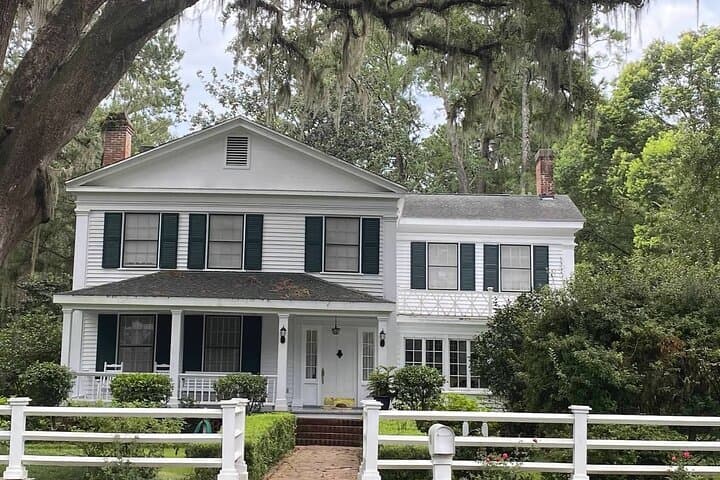
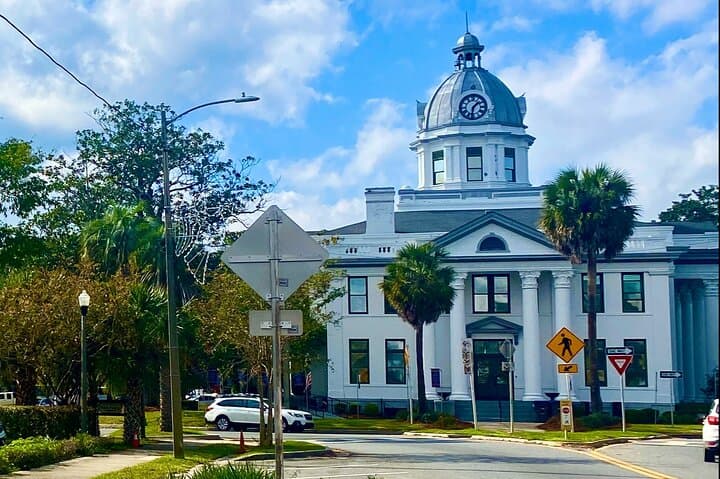
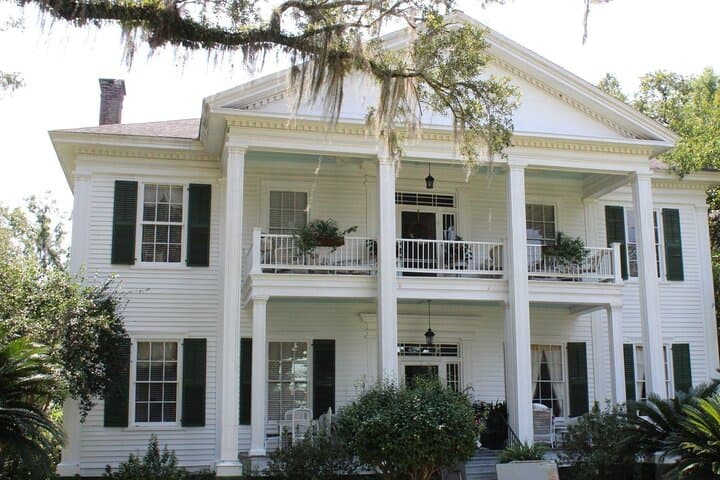
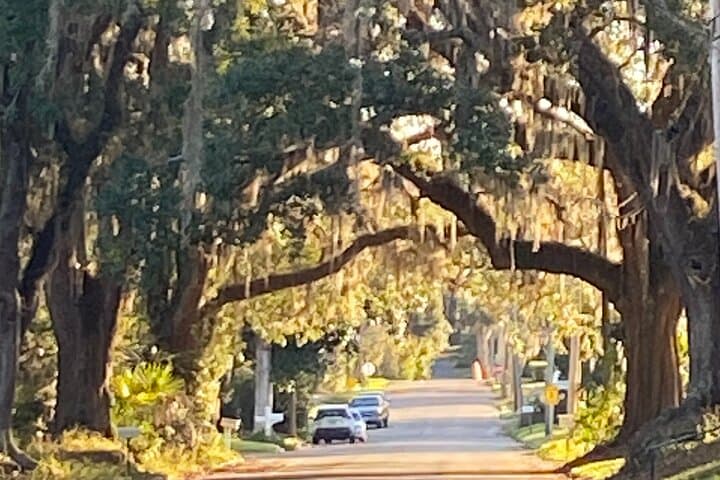
You step onto the warm brick at Jefferson County Courthouse Circle and the town exhales history: courthouse steps where 1845 statehood news gathered neighbors, a straight street of storefronts that once shipped cotton to distant ports. The voice in your ear—delivered through the VoiceMap app—guides you past clapboard homes, the hush of Christ Episcopal Church, and low-lying lots that remember plantation-era cotton fields.
Verified experiences and guided adventures in the surrounding area.
Operated by VoiceMap Audio Tours · Monticello, Florida
You step onto the warm brick at Jefferson County Courthouse Circle and the town exhales history: courthouse steps where 1845 statehood news gathered neighbors, a straight street of storefronts that once shipped cotton to distant ports. The voice in your ear—delivered through the VoiceMap app—guides you past clapboard homes, the hush of Christ Episcopal Church, and low-lying lots that remember plantation-era cotton fields.
Monticello’s story is plain in its streets. Founded by settlers from South Carolina, the so-called Palmetto Pioneers turned a frontier outpost into a cotton-shipping center and one of Florida’s politically active counties in the antebellum era. Brick and wood buildings here reflect 19th-century trade and local governance rather than grand monuments; the town’s preserved commercial corridor still shows the practical geometry of a shipping economy.
Geologically the area is gentle—soluble limestone under thin soils—so streets, sidewalks, and low-rise architecture dominate the experience. Culturally, small-town civic life pulses at the courthouse and local businesses like CowHaus Coffee, your tour’s end point.
Practically, expect 75–105 minutes of mostly flat walking on sidewalks and quiet residential roads. Download the audio and maps ahead of time; the tour runs offline and uses GPS waypoints to trigger narrative segments. Bring headphones, a charged phone, water, and sun protection—the southern sun can push the pace. Allow extra time to pause at plaques, photograph historic façades, or linger in a café; the guided format gives you turn-by-turn structure with freedom to explore.
This is a walking tour more about context than exertion: a compact, thoughtful way to read a Southern town’s past through its streets.
easy.
75–105 minutes.
Suitable for most fitness levels; mainly flat walking on sidewalks and paved streets
The route takes about 75–105 minutes with mostly flat, paved walking on sidewalks and quiet streets—plan for short stops to read plaques and take photos.
Yes—download the VoiceMap app and enter the code sent to your booking email to download the tour for offline use; the same code works for your whole party.
The tour is rated easy and suitable for most people; however, sidewalks and some curb cuts may be uneven—contact local resources if you need specific accessibility information.
It begins at the parking area on E Washington at Courthouse Circle and ends at CowHaus Coffee Company on North Jefferson; you can pause or finish early if needed.
Monticello’s prominence rose in the 19th century as settlers from South Carolina established cotton production; Jefferson County was among Florida’s largest slave‑holding counties and a swift supporter of secession.
The town’s historic district is preserved through local ordinances and community stewardship—stay on public routes, avoid disturbing private property, and support local businesses to help maintain historic assets.
VoiceMap Audio Tours operates guided outdoor trips and adventures with an emphasis on safety, stewardship, and memorable experiences.
You step onto the warm brick at Jefferson County Courthouse Circle and the town exhales history: courthouse steps where 1845 statehood news gathered neighbors, a straight street of storefronts that once shipped cotton to distant ports. The voice in your ear—delivered through the VoiceMap app—guides you past clapboard homes, the hush of Christ Episcopal Church, and low-lying lots that remember plantation-era cotton fields.
You step onto the warm brick at Jefferson County Courthouse Circle and the town exhales history: courthouse steps where 1845 statehood news gathered neighbors, a straight street of storefronts that once shipped cotton to distant ports. The voice in your ear—delivered through the VoiceMap app—guides you past clapboard homes, the hush of Christ Episcopal Church, and low-lying lots that remember plantation-era cotton fields.
Monticello’s story is plain in its streets. Founded by settlers from South Carolina, the so-called Palmetto Pioneers turned a frontier outpost into a cotton-shipping center and one of Florida’s politically active counties in the antebellum era. Brick and wood buildings here reflect 19th-century trade and local governance rather than grand monuments; the town’s preserved commercial corridor still shows the practical geometry of a shipping economy.
Geologically the area is gentle—soluble limestone under thin soils—so streets, sidewalks, and low-rise architecture dominate the experience. Culturally, small-town civic life pulses at the courthouse and local businesses like CowHaus Coffee, your tour’s end point.
Practically, expect 75–105 minutes of mostly flat walking on sidewalks and quiet residential roads. Download the audio and maps ahead of time; the tour runs offline and uses GPS waypoints to trigger narrative segments. Bring headphones, a charged phone, water, and sun protection—the southern sun can push the pace. Allow extra time to pause at plaques, photograph historic façades, or linger in a café; the guided format gives you turn-by-turn structure with freedom to explore.
This is a walking tour more about context than exertion: a compact, thoughtful way to read a Southern town’s past through its streets.