THE ADVENTURE COLLECTIVE® · Independent discovery and booking for outdoor travel

Ride a camel through Marrakech’s Palmeraie as the sun drops behind the Atlas foothills. This short private tour pairs a palm-grove route with a visit to a Berber village for mint tea and a simple dinner.
Ride a camel through Marrakech’s Palmeraie as the sun drops behind the Atlas foothills. This short private tour pairs a palm-grove route with a visit to a Berber village for mint tea and a simple dinner.
The camels shift and sigh as the sun slides low over the palm crowns, their slow cadence setting the pace for an evening that feels both deliberate and immediate. You leave Marrakech’s stone heat for the Palmeraie — a spread of date palms that leans toward the desert — and settle into a rhythm measured by hoof and horizon.
Verified experiences and guided adventures in the surrounding area.
Operated by Marrakesh Indeed · Marrakech, Marrakesh-Safi
The camels shift and sigh as the sun slides low over the palm crowns, their slow cadence setting the pace for an evening that feels both deliberate and immediate. You leave Marrakech’s stone heat for the Palmeraie — a spread of date palms that leans toward the desert — and settle into a rhythm measured by hoof and horizon.
The Palmeraie is an engineered oasis: centuries of irrigation and human work turned sandy flats into productive palm groves that provided shade, dates and respite for caravans and local estates. The ride threads between cultivated rows and low sand ridges, where geology gives way from urban red clay to wind-polished sands. A stop in a nearby Berber village brings hot mint tea and rustic flatbread — a brief cultural exchange that foregrounds Amazigh hospitality and rural life outside the medina.
Expect a relaxed, roughly three-hour outing: hotel pickup, an introductory camel ride, the village stop for tea and a simple dinner, then a return under the lowering light. Camels here move deliberately; riders sit high and steady. Weather governs the mood — summer evenings can be sharp with heat, while winter light is clean and cool.
Practical notes: wear closed-toe shoes, a hat and layered clothing for shifting temperatures; bring sunscreen and a small pack for water and camera. The operator provides bottled water, a guide and private transport; ask ahead about age restrictions and accessibility. For a short slice of oasis life and a sunset framed by palms, this is accessible, low-impact desert travel that puts you in direct contact with local landscape and culture.
easy.
3 hours.
Suitable for most fitness levels; riders should be able to mount and sit unaided for short periods.
Yes — the tour lists hotel pickup and drop-off as included; confirm your pickup location at booking.
The operator notes a minimum age of 18 years—double-check with the provider if booking for teenagers or children.
Smart-casual is requested; comfortable pants, closed-toe shoes, sun protection, and a modest top are appropriate for both riding and the village visit.
Camels are handled by experienced handlers; riders should be able to mount independently. Ask the operator about accessibility and infant seating options before booking.
The Palmeraie developed over centuries as an irrigated palm oasis supplying dates and shade; in modern times it became a leisure landscape around Marrakech’s expanding outskirts.
The Palmeraie faces pressure from development and tourism; stick to marked paths, avoid littering, and support operators who respect local water use and palm maintenance.
Marrakesh Indeed operates guided outdoor trips and adventures with an emphasis on safety, stewardship, and memorable experiences.

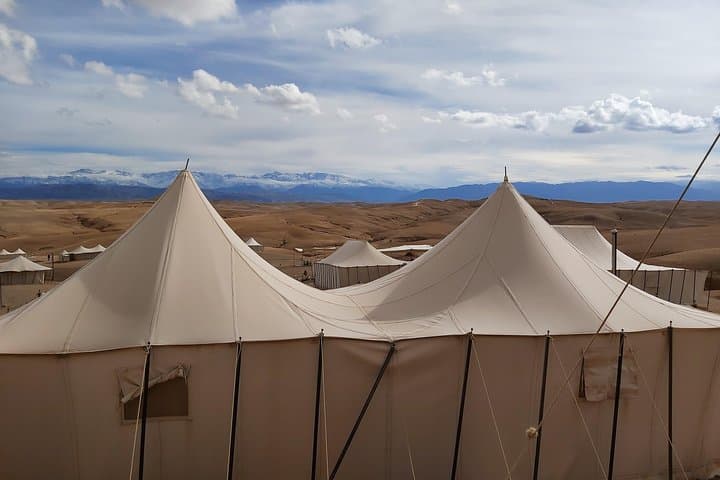


The camels shift and sigh as the sun slides low over the palm crowns, their slow cadence setting the pace for an evening that feels both deliberate and immediate. You leave Marrakech’s stone heat for the Palmeraie — a spread of date palms that leans toward the desert — and settle into a rhythm measured by hoof and horizon.
The camels shift and sigh as the sun slides low over the palm crowns, their slow cadence setting the pace for an evening that feels both deliberate and immediate. You leave Marrakech’s stone heat for the Palmeraie — a spread of date palms that leans toward the desert — and settle into a rhythm measured by hoof and horizon.
The Palmeraie is an engineered oasis: centuries of irrigation and human work turned sandy flats into productive palm groves that provided shade, dates and respite for caravans and local estates. The ride threads between cultivated rows and low sand ridges, where geology gives way from urban red clay to wind-polished sands. A stop in a nearby Berber village brings hot mint tea and rustic flatbread — a brief cultural exchange that foregrounds Amazigh hospitality and rural life outside the medina.
Expect a relaxed, roughly three-hour outing: hotel pickup, an introductory camel ride, the village stop for tea and a simple dinner, then a return under the lowering light. Camels here move deliberately; riders sit high and steady. Weather governs the mood — summer evenings can be sharp with heat, while winter light is clean and cool.
Practical notes: wear closed-toe shoes, a hat and layered clothing for shifting temperatures; bring sunscreen and a small pack for water and camera. The operator provides bottled water, a guide and private transport; ask ahead about age restrictions and accessibility. For a short slice of oasis life and a sunset framed by palms, this is accessible, low-impact desert travel that puts you in direct contact with local landscape and culture.