THE ADVENTURE COLLECTIVE® · Independent discovery and booking for outdoor travel

A short, guided camel trek through Marrakech’s Palmeraie with traditional clothing, local tea and photo stops among palm-lined tracks. Ideal for travelers seeking an accessible cultural ride with minimal exertion.
A short, guided camel trek through Marrakech’s Palmeraie with traditional clothing, local tea and photo stops among palm-lined tracks. Ideal for travelers seeking an accessible cultural ride with minimal exertion.
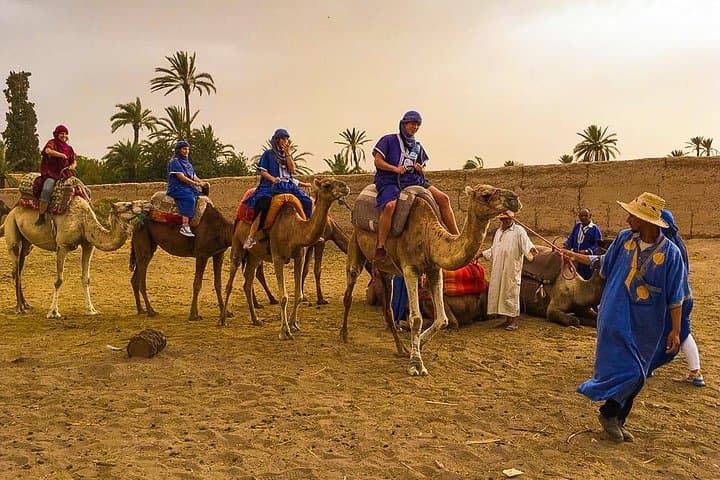
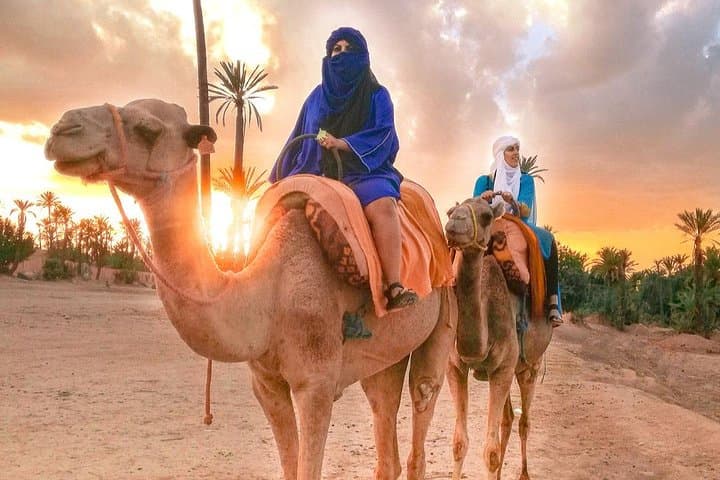
The sun leans across the palms as your driver threads out of the city and into Marrakech’s Palmeraie — a green sprawl of date palms, sandy tracks and villas that marks the city’s fringe. You change into a blue indigo scarf and the camel guide shows you how to mount; the animal exhales and rocks you forward, steady and deliberate, like a slow, living ferry.
Verified experiences and guided adventures in the surrounding area.
Operated by Trendy Travel · Marrakech, Marrakesh-Safi
The sun leans across the palms as your driver threads out of the city and into Marrakech’s Palmeraie — a green sprawl of date palms, sandy tracks and villas that marks the city’s fringe. You change into a blue indigo scarf and the camel guide shows you how to mount; the animal exhales and rocks you forward, steady and deliberate, like a slow, living ferry.
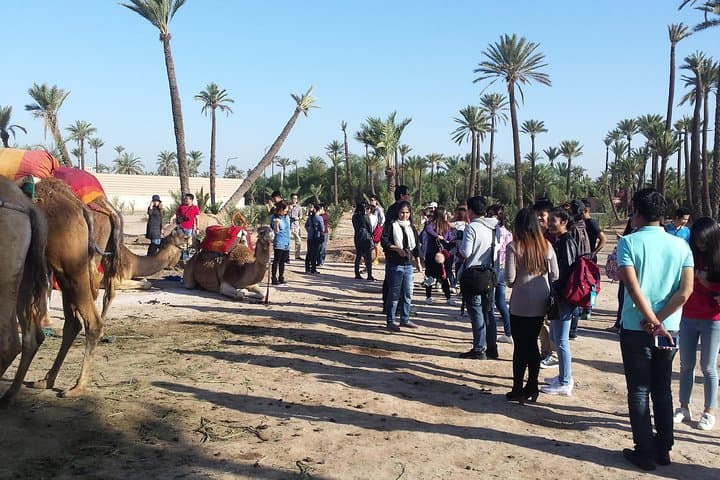
This short camel trek follows low dunes and shaded alleys cut by nomad tracks. Historically the Palmeraie fed Marrakech with dates and shade and later became a place for irrigation experiments and private estates; the landscape you ride through is part cultivated palm grove, part rewilding edge where sand reasserts itself. The region’s soil is wind-blown sands over an ancient river terrace, so expect soft footing and occasional exposed roots.
Culturally the ride blends Berber and Tuareg influences — you may be offered traditional clothing for photos and a mint tea served by a local family at the end, a ritual of hospitality in southern Morocco. Wildlife is subtle: lizards sun on stones and birds quarter the palms.
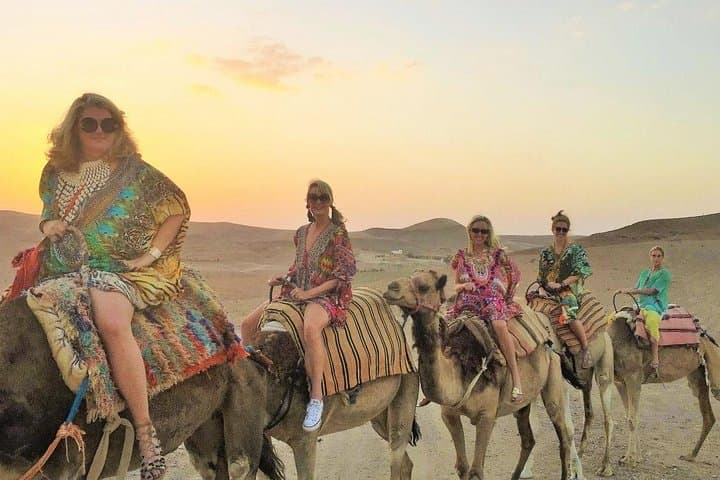
Practical guidance: the activity lasts about an hour on-site (allow extra time for pickup), and is suitable for most fitness levels. Wear closed shoes with grip for mounting, bring sun protection and a small bottle of water. Morning and late afternoon slots have softer light and cooler temperatures; mid-day can be hot and dusty. Respect local customs when taking photos and follow your guide’s instructions for mounting, dismounting and interacting with the camels.
easy.
1–1.5 hours.
Suitable for most people who can climb a low step and sit for an hour; minimal endurance required.
The on-site camel trek is roughly 45–60 minutes; transfers to and from Marrakech will add time depending on your hotel location.
Yes—this is a low-intensity activity, but children and those with mobility issues should check with the operator about assistance mounting and weight limits.
Yes, operators typically offer Touareg-style scarves and robes for photos, and photos are encouraged but always ask permission before photographing hosts.
Basic onsite facilities are common but may be simple; accessibility is limited due to sandy ground and camel saddles, so contact the provider for specific needs.
The Palmeraie developed as an irrigated oasis feeding Marrakech; over time private estates and tourism transformed parts of the grove while traditional irrigation (khettara) shaped the local landscape.
The Palmeraie faces pressure from development and water use; favor operators who limit group size, respect private land boundaries and support local families rather than large-scale alteration.
Trendy Travel operates guided outdoor trips and adventures with an emphasis on safety, stewardship, and memorable experiences.
The sun leans across the palms as your driver threads out of the city and into Marrakech’s Palmeraie — a green sprawl of date palms, sandy tracks and villas that marks the city’s fringe. You change into a blue indigo scarf and the camel guide shows you how to mount; the animal exhales and rocks you forward, steady and deliberate, like a slow, living ferry.
The sun leans across the palms as your driver threads out of the city and into Marrakech’s Palmeraie — a green sprawl of date palms, sandy tracks and villas that marks the city’s fringe. You change into a blue indigo scarf and the camel guide shows you how to mount; the animal exhales and rocks you forward, steady and deliberate, like a slow, living ferry.
This short camel trek follows low dunes and shaded alleys cut by nomad tracks. Historically the Palmeraie fed Marrakech with dates and shade and later became a place for irrigation experiments and private estates; the landscape you ride through is part cultivated palm grove, part rewilding edge where sand reasserts itself. The region’s soil is wind-blown sands over an ancient river terrace, so expect soft footing and occasional exposed roots.
Culturally the ride blends Berber and Tuareg influences — you may be offered traditional clothing for photos and a mint tea served by a local family at the end, a ritual of hospitality in southern Morocco. Wildlife is subtle: lizards sun on stones and birds quarter the palms.
Practical guidance: the activity lasts about an hour on-site (allow extra time for pickup), and is suitable for most fitness levels. Wear closed shoes with grip for mounting, bring sun protection and a small bottle of water. Morning and late afternoon slots have softer light and cooler temperatures; mid-day can be hot and dusty. Respect local customs when taking photos and follow your guide’s instructions for mounting, dismounting and interacting with the camels.