THE ADVENTURE COLLECTIVE® · Independent discovery and booking for outdoor travel

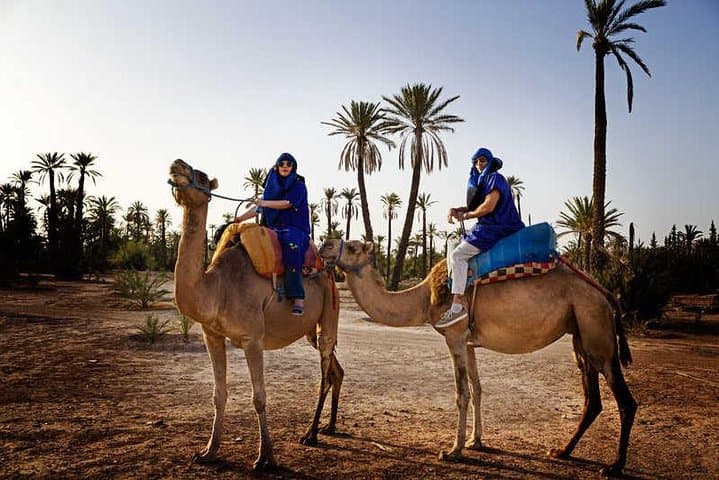
Experience a one-hour camel trek through Marrakech’s Palmeraie, followed by traditional mint tea beneath date palms. This short, family-friendly outing includes private pickup from central Marrakech and Touareg-style sun coverings for photos.
Experience a one-hour camel trek through Marrakech’s Palmeraie, followed by traditional mint tea beneath date palms. This short, family-friendly outing includes private pickup from central Marrakech and Touareg-style sun coverings for photos.
The camel rises and falls with a patient rhythm beneath a spine of date palms; dust lifts in the animal’s wake and the city’s silhouette stays folded behind you. In the Palmeraie, the air smells faintly of dry earth and crushed palm fronds as a string of camels threads a shaded track, and the guide points out old irrigation channels carved to feed the oasis.
Verified experiences and guided adventures in the surrounding area.
Operated by Gboo Morocco Tours · Marrakech, Marrakech-Safi
The camel rises and falls with a patient rhythm beneath a spine of date palms; dust lifts in the animal’s wake and the city’s silhouette stays folded behind you. In the Palmeraie, the air smells faintly of dry earth and crushed palm fronds as a string of camels threads a shaded track, and the guide points out old irrigation channels carved to feed the oasis.
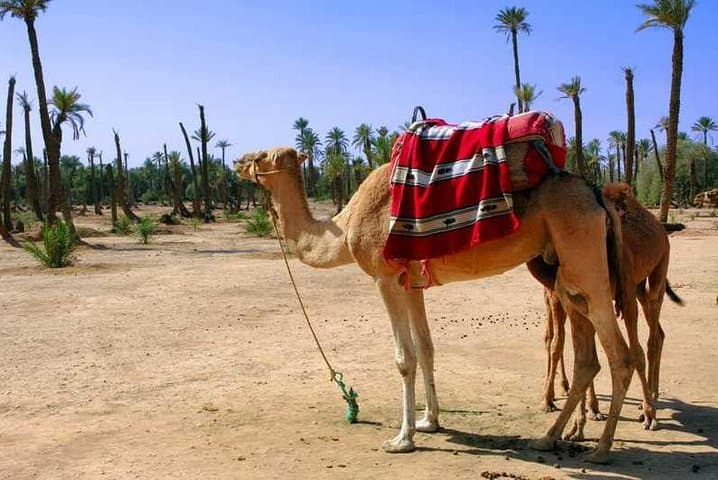
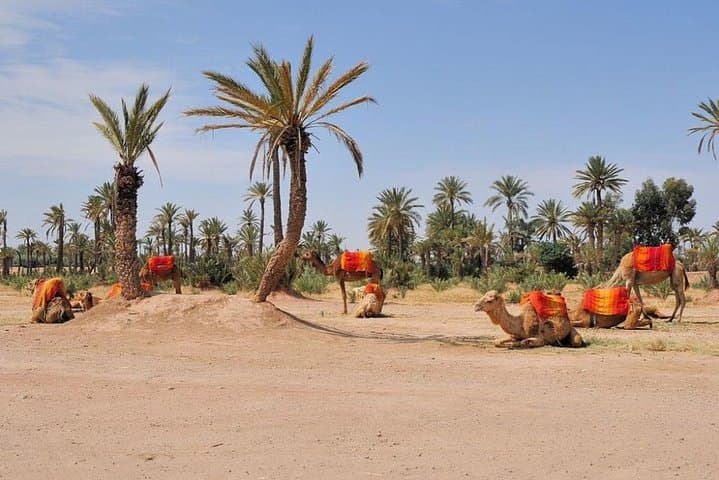
The Palmeraie dates to Marrakech’s early irrigation projects and expanded over centuries into the sprawling palm grove that buffers the city. Geologically the area sits on alluvial plains where shallow groundwater supports clustered palms rather than true desert dunes; culturally the grove has long been a place for leisure and local craft. Visitors often pass Berber-style tents and small stables where handlers maintain the dromedaries used for short treks.
Practical details: the full excursion runs about two hours with round-trip private transfer from central Marrakech and roughly one hour on camelback. Traditional Touareg-style head coverings and a short orientation are provided. Terrain is flat sand tracks and packed earth—no technical skill required—but mounting and dismounting a camel is awkward for some.
Bring sun protection, a full water bottle, and closed-toe shoes. Aim for morning light for cooler temperatures and better photos; late-afternoon can be pleasant but busier. Respect handlers’ directions, keep camera straps secure, and accept the mint tea offered at the grove’s shade as part of the cultural exchange that closes the ride.
easy.
2 hours.
Suitable for most fitness levels; requires ability to mount/dismount a camel and sit for about an hour
Yes—private round-trip transportation from central Marrakech is included in the two-hour excursion.
Children are allowed; operators often have smaller camels and may provide special seating or insist infants sit on a guardian’s lap.
The camel trek lasts around one hour, with additional time for pickup, transfers and a mint tea stop.
No previous experience is required; handlers give a short orientation and assist with mounting and dismounting.
The Palmeraie grew from historical irrigation systems and estate plantings around Marrakech; over centuries it became an expanded palm oasis used for shade, agriculture, and leisure.
The oasis relies on groundwater and careful management—stick to paths, avoid litter, and choose operators who prioritize animal welfare and limit off-track driving.
Gboo Morocco Tours operates guided outdoor trips and adventures with an emphasis on safety, stewardship, and memorable experiences.
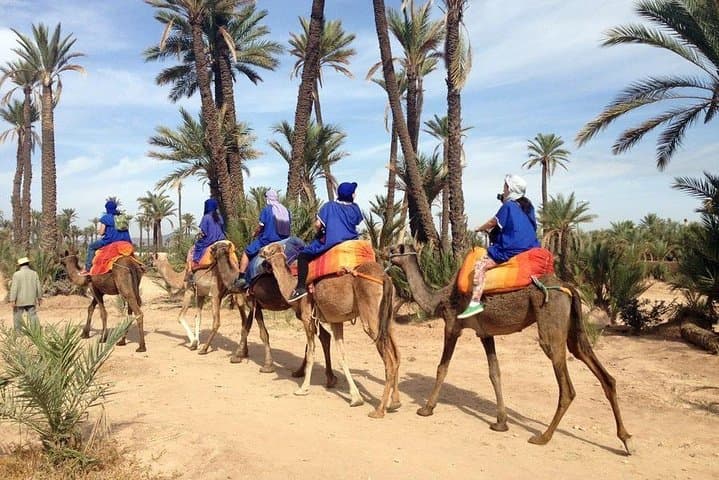
The camel rises and falls with a patient rhythm beneath a spine of date palms; dust lifts in the animal’s wake and the city’s silhouette stays folded behind you. In the Palmeraie, the air smells faintly of dry earth and crushed palm fronds as a string of camels threads a shaded track, and the guide points out old irrigation channels carved to feed the oasis.
The camel rises and falls with a patient rhythm beneath a spine of date palms; dust lifts in the animal’s wake and the city’s silhouette stays folded behind you. In the Palmeraie, the air smells faintly of dry earth and crushed palm fronds as a string of camels threads a shaded track, and the guide points out old irrigation channels carved to feed the oasis.
The Palmeraie dates to Marrakech’s early irrigation projects and expanded over centuries into the sprawling palm grove that buffers the city. Geologically the area sits on alluvial plains where shallow groundwater supports clustered palms rather than true desert dunes; culturally the grove has long been a place for leisure and local craft. Visitors often pass Berber-style tents and small stables where handlers maintain the dromedaries used for short treks.
Practical details: the full excursion runs about two hours with round-trip private transfer from central Marrakech and roughly one hour on camelback. Traditional Touareg-style head coverings and a short orientation are provided. Terrain is flat sand tracks and packed earth—no technical skill required—but mounting and dismounting a camel is awkward for some.
Bring sun protection, a full water bottle, and closed-toe shoes. Aim for morning light for cooler temperatures and better photos; late-afternoon can be pleasant but busier. Respect handlers’ directions, keep camera straps secure, and accept the mint tea offered at the grove’s shade as part of the cultural exchange that closes the ride.