THE ADVENTURE COLLECTIVE® · Independent discovery and booking for outdoor travel

Take a one‑hour camel ride through Marrakech’s Palmeraie palm grove to see Berber villages, irrigation ditches and desert plateaus. Ideal for first‑time riders, the tour includes hotel pickup, a mint tea break and photo stops amid towering date palms.
Take a one‑hour camel ride through Marrakech’s Palmeraie palm grove to see Berber villages, irrigation ditches and desert plateaus. Ideal for first‑time riders, the tour includes hotel pickup, a mint tea break and photo stops amid towering date palms.
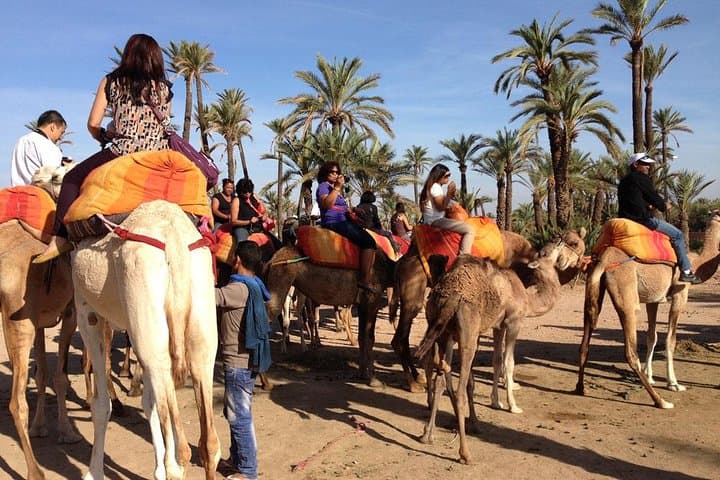
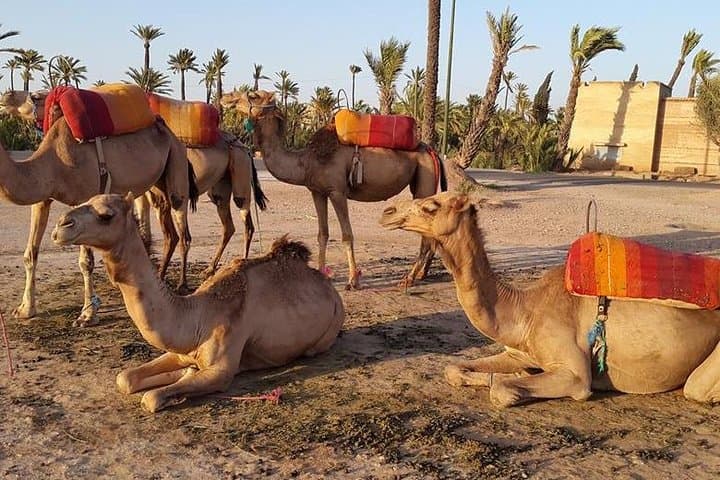
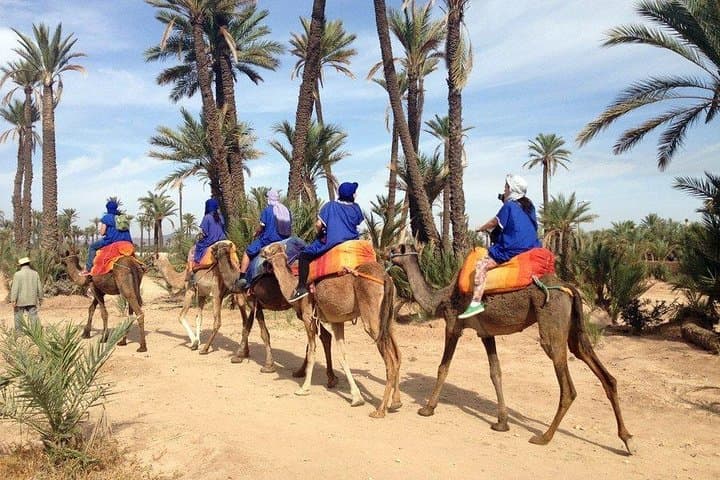
Morning light cuts through ranks of tall date palms as camel bells click across sandy tracks — the Palmeraie opens like a living map just beyond Marrakech’s city walls.
Verified experiences and guided adventures in the surrounding area.
Operated by Tafraout Voyage · Marrakech, Marrakesh-Safi
Morning light cuts through ranks of tall date palms as camel bells click across sandy tracks — the Palmeraie opens like a living map just beyond Marrakech’s city walls.
The grove began as an irrigated oasis supplying the medina; centuries-old khettara channels still shape how water moves here and how the palms thrive on the edge of the plateau. You’ll pass small Berber settlements, vegetable plots and stretches of scrubby plateau that hint at the region’s semi-arid geology: stony soils, thin loess cover and the occasional wind-polished outcrop.
On a standard one‑hour ride you follow a low, steady rhythm: the camel’s gait pushes you forward while the guide points out palm clusters, traditional irrigation ditches and nearby kasbah silhouettes. The tour typically includes mint tea and minivan transfer from hotels or a nearby meeting point in the medina.
Practical notes matter here: the ride is gentle but can jostle the lower back, so travelers with spinal issues should sit out. Aim for early morning or late afternoon to avoid the heat and get better light for photos. Wear closed shoes, bring water and a sun hat, and keep valuables secured — dusty trails and swinging saddles don’t mix with loose cameras.
Local operators vary: choose a provider that limits group size, treats camels ethically and includes clear pickup instructions. A short ride like this is both an easy introduction to Morocco’s oasis landscapes and a clear reminder that even brief outdoor experiences reward basic preparation.
easy.
1–2 hours.
Suitable for most fitness levels; riders should be able to mount a low saddle and hold basic posture for an hour.
The advertised activity lasts about one hour on the camel, with total pickup‑to‑dropoff time typically around two hours.
Yes — most operators include hotel pickup in Marrakech or a nearby meeting point if you’re in a riad in the medina.
Children can usually ride but must be accompanied by an adult; operators may provide infant seats and require small children to sit on laps.
Comfortable, modest clothing that covers shoulders and knees is recommended, plus closed‑toe shoes and sun protection.
The Palmeraie developed as an irrigated oasis tied to Marrakech’s khettara (underground water) systems and has long supplied shade and resources to nearby communities.
Stick to marked riding routes, avoid feeding animals and choose guides who prioritize camel welfare to reduce environmental and animal stress.
Tafraout Voyage operates guided outdoor trips and adventures with an emphasis on safety, stewardship, and memorable experiences.

Morning light cuts through ranks of tall date palms as camel bells click across sandy tracks — the Palmeraie opens like a living map just beyond Marrakech’s city walls.
Morning light cuts through ranks of tall date palms as camel bells click across sandy tracks — the Palmeraie opens like a living map just beyond Marrakech’s city walls.
The grove began as an irrigated oasis supplying the medina; centuries-old khettara channels still shape how water moves here and how the palms thrive on the edge of the plateau. You’ll pass small Berber settlements, vegetable plots and stretches of scrubby plateau that hint at the region’s semi-arid geology: stony soils, thin loess cover and the occasional wind-polished outcrop.
On a standard one‑hour ride you follow a low, steady rhythm: the camel’s gait pushes you forward while the guide points out palm clusters, traditional irrigation ditches and nearby kasbah silhouettes. The tour typically includes mint tea and minivan transfer from hotels or a nearby meeting point in the medina.
Practical notes matter here: the ride is gentle but can jostle the lower back, so travelers with spinal issues should sit out. Aim for early morning or late afternoon to avoid the heat and get better light for photos. Wear closed shoes, bring water and a sun hat, and keep valuables secured — dusty trails and swinging saddles don’t mix with loose cameras.
Local operators vary: choose a provider that limits group size, treats camels ethically and includes clear pickup instructions. A short ride like this is both an easy introduction to Morocco’s oasis landscapes and a clear reminder that even brief outdoor experiences reward basic preparation.