THE ADVENTURE COLLECTIVE® · Independent discovery and booking for outdoor travel

Throttle up through palm-lined tracks beneath Atlas views, then slow to camel pace for mint tea and desert perspective. This 3–4 hour Palmeraie combo blends adrenaline and local insight with hotel pickup for an effortless adventure.
Throttle up through palm-lined tracks beneath Atlas views, then slow to camel pace for mint tea and desert perspective. This 3–4 hour Palmeraie combo blends adrenaline and local insight with hotel pickup for an effortless adventure.
Engines hum to life and the palm grove opens like a moving map: sun-slick trunks, wind-swept sand, and a horizon where the Atlas Mountains cut a jagged line against the sky.
Verified experiences and guided adventures in the surrounding area.
Operated by Noun Travel · Marrakech, Marrakech-Safi
Engines hum to life and the palm grove opens like a moving map: sun-slick trunks, wind-swept sand, and a horizon where the Atlas Mountains cut a jagged line against the sky.
This Palmeraie experience pairs high-adrenaline quad tracks with a quieter camel ride—two ways of reading the same landscape. The Palmeraie itself is an expanse of cultivated palm oases on the northern edge of Marrakech’s Haouz plain, shaped by centuries of irrigation and local land use. Geologically you’re on a broad alluvial basin with sand pockets and hard-packed tracks; the Atlas to the south is younger, uplifted terrain whose snow-capped ridgelines can be visible in cooler months.
Culturally, the route skirts small Berber settlements and private estates; guides often pause to explain traditional water management and offer Morocco’s Ataye (mint tea). Expect a mix of sandy tracks, short dune sections and compacted service roads, with minimal elevation change—this is terrain for skill-building rather than mountaineering.
Practical guidance: tours run about 3–4 hours total with hotel pickup, a safety briefing and helmet provided. Morning departures avoid midday heat; bring closed-toe shoes, sunglasses and a light scarf for wind and dust. Follow the guide’s line—riding off-route disturbs fragile desert soils and private property. Hydrate before and after, and keep camera gear secure on bumpy sections.
For travelers wanting an immediate taste of Morocco’s desert fringe, this combo balances speed and cultural pause—an accessible, well-supported way to meet the Palmeraie’s wild edges.
moderate.
3–4 hours.
Light to moderate fitness; you should be able to mount an ATV and handle short bursts of physical effort.
No—tours cater to beginners with a safety briefing and guided formation, though basic coordination helps.
Camel segments are short and seated; they’re gentle and intended as a cultural pause rather than a trek.
Yes—most bookings include round-trip pickup and drop-off by air-conditioned vehicle within Marrakech city limits.
Closed-toe shoes, breathable layers, sun protection, and a scarf for dust; avoid loose skirts or long flowing garments.
The Palmeraie developed over centuries as an irrigated palm cultivation zone on Marrakech’s northern edge, supporting local settlements and traditional agriculture.
Stick to designated tracks to avoid trampling regenerating palms and disrupting soil crusts; many operators limit route impact and support local communities.
Noun Travel operates guided outdoor trips and adventures with an emphasis on safety, stewardship, and memorable experiences.
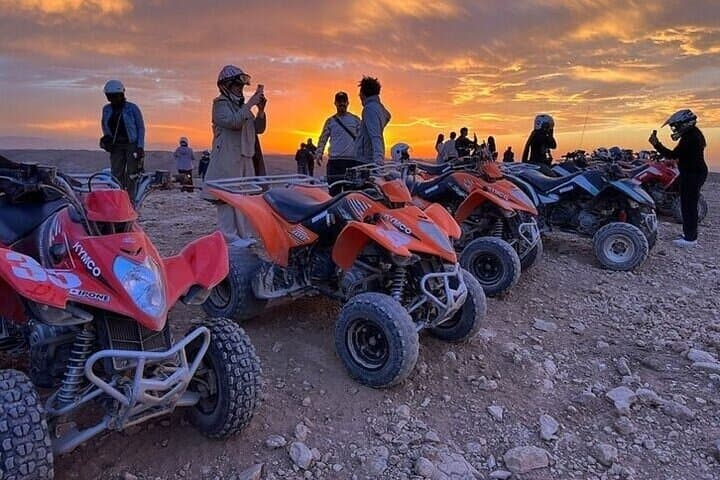
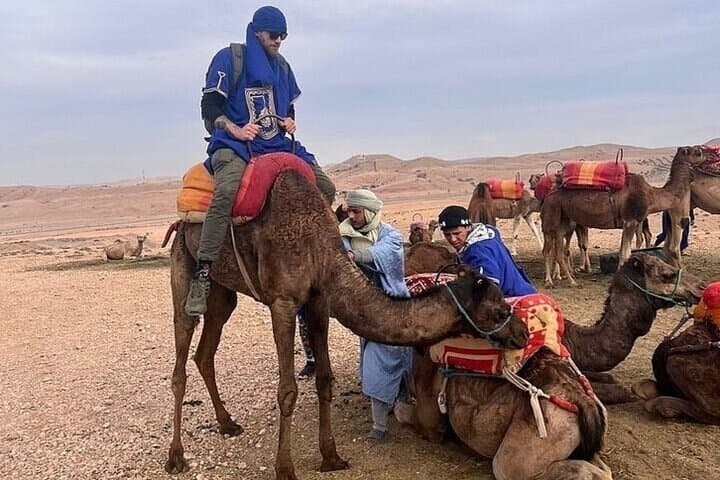
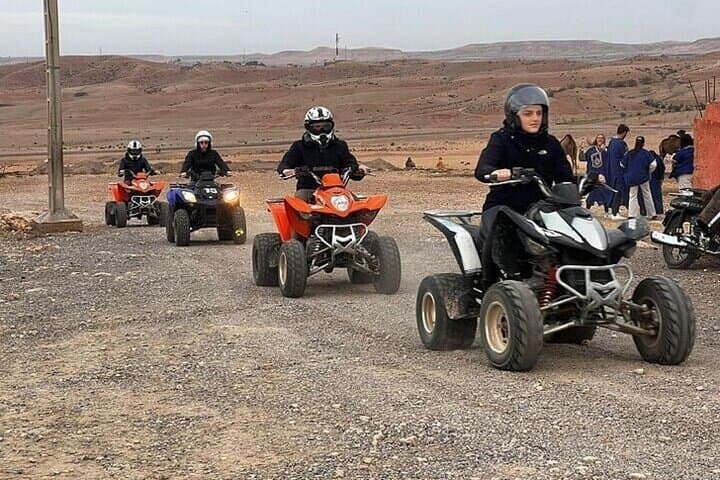
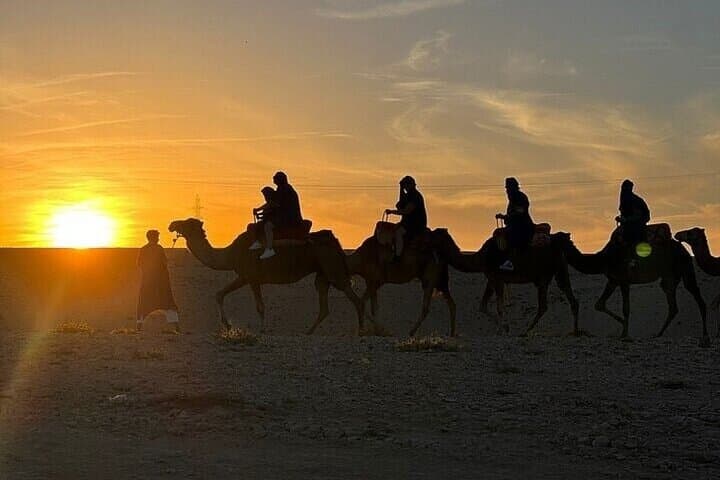
Engines hum to life and the palm grove opens like a moving map: sun-slick trunks, wind-swept sand, and a horizon where the Atlas Mountains cut a jagged line against the sky.
Engines hum to life and the palm grove opens like a moving map: sun-slick trunks, wind-swept sand, and a horizon where the Atlas Mountains cut a jagged line against the sky.
This Palmeraie experience pairs high-adrenaline quad tracks with a quieter camel ride—two ways of reading the same landscape. The Palmeraie itself is an expanse of cultivated palm oases on the northern edge of Marrakech’s Haouz plain, shaped by centuries of irrigation and local land use. Geologically you’re on a broad alluvial basin with sand pockets and hard-packed tracks; the Atlas to the south is younger, uplifted terrain whose snow-capped ridgelines can be visible in cooler months.
Culturally, the route skirts small Berber settlements and private estates; guides often pause to explain traditional water management and offer Morocco’s Ataye (mint tea). Expect a mix of sandy tracks, short dune sections and compacted service roads, with minimal elevation change—this is terrain for skill-building rather than mountaineering.
Practical guidance: tours run about 3–4 hours total with hotel pickup, a safety briefing and helmet provided. Morning departures avoid midday heat; bring closed-toe shoes, sunglasses and a light scarf for wind and dust. Follow the guide’s line—riding off-route disturbs fragile desert soils and private property. Hydrate before and after, and keep camera gear secure on bumpy sections.
For travelers wanting an immediate taste of Morocco’s desert fringe, this combo balances speed and cultural pause—an accessible, well-supported way to meet the Palmeraie’s wild edges.