THE ADVENTURE COLLECTIVE® · Independent discovery and booking for outdoor travel

Drive northwest from Punta Arenas into a basaltic landscape of crater rims, lava fields and shipwrecks. This full-day outing to Pali Aike combines easy crater walks, archaeological interest and wide-open Patagonian views.
Drive northwest from Punta Arenas into a basaltic landscape of crater rims, lava fields and shipwrecks. This full-day outing to Pali Aike combines easy crater walks, archaeological interest and wide-open Patagonian views.
A wind-swept plain opens before the van as it leaves Punta Arenas, a low horizon broken by round crater rims and black basalt. In minutes the city’s lights are a memory and the pampas begin to stretch, the grasslands bending to the constant Patagonian wind that seems to push visitors onward.
Verified experiences and guided adventures in the surrounding area.
Operated by Amigos Patagonia · Punta Arenas, Magallanes Region
A wind-swept plain opens before the van as it leaves Punta Arenas, a low horizon broken by round crater rims and black basalt. In minutes the city’s lights are a memory and the pampas begin to stretch, the grasslands bending to the constant Patagonian wind that seems to push visitors onward.
Pali Aike National Park is a compact volcanic field whose scoria cones, lava tubes and shallow craters record eruptions from the late Pleistocene to the Holocene. Archaeologists have found early human sites here, some of the oldest in southern South America, and the nearby Estancia San Gregorio preserves 19th-century stories — including beached shipwrecks that still lie near the shoreline.
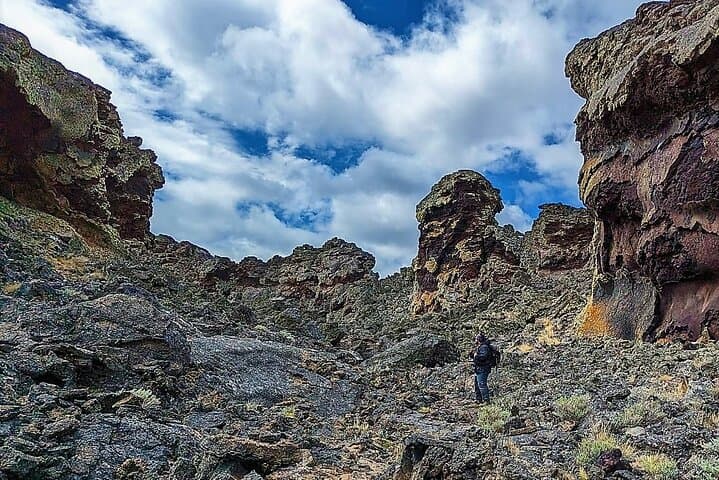
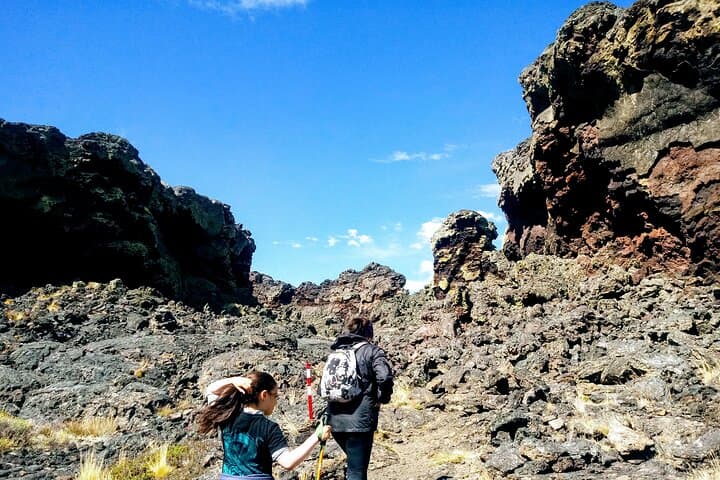
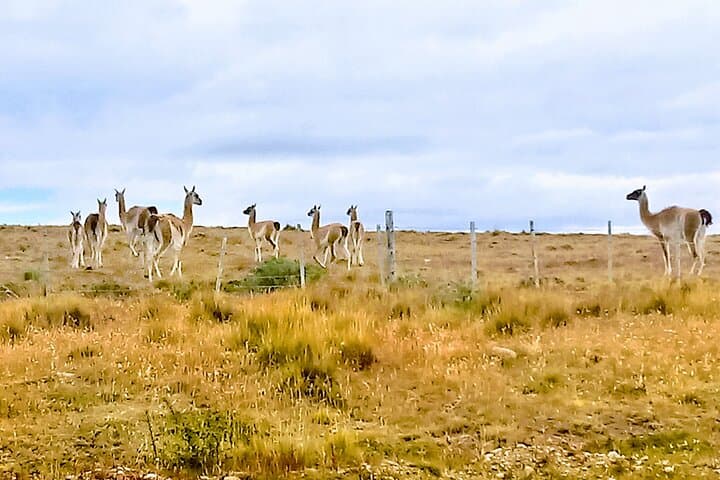
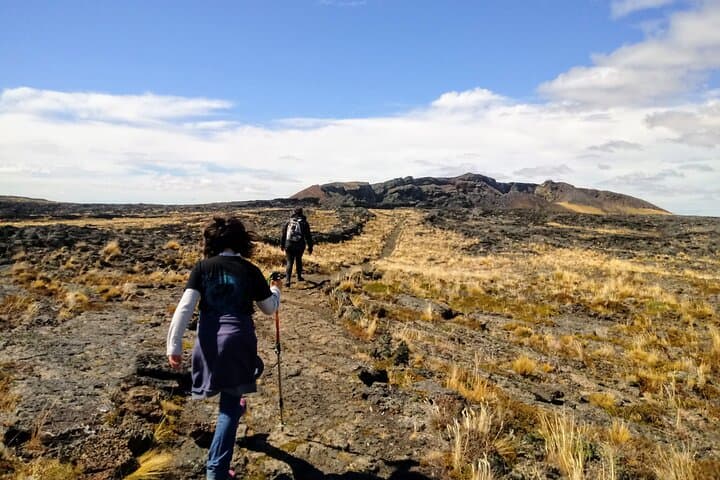
On-trail, expect uneven basaltic rock, flat plateaus with intermittent scrub, and short, steep sidles into crater rims. Elevation change is modest (typically under 200 m per short walk) but the hard, broken ground rewards sturdy boots. Wildlife is shy but present: guanacos pick at the grass and large flighted birds patrol thermals.
Practically: this is a long day (6–8 hours door-to-door with 200 km of driving round-trip) with roughly four hours of park exploration. Bring layered windproof clothing, sun protection and at least 2–3 liters of water. Photography is best in low-angle light when crater shadows and basalt contrast sharply. Guides handle logistics and entrance fees; visitors should respect fragile soils and cultural sites by staying on marked trails.
For travelers seeking an otherworldly short trek with geological breadth and a dose of Patagonian history, Pali Aike delivers a concentrated, accessible wilderness day trip.
moderate.
6–8 hours (including transport).
Suitable for travelers with moderate fitness — able to walk 4 hours across uneven ground and handle long vehicle transfers.
Expect approximately 100–120 km each way depending on route, with total tour transport time included in a 6–8 hour day.
Guided tours commonly include park entrance fees; verify with the operator before booking.
The walks are moderate but the day includes long vehicle transfers; children and older travelers should be comfortable with extended time in a vehicle and walking on uneven ground.
Guanacos and ground-dwelling birds like Darwin's rhea or other large Patagonian birds are possible; sightings are opportunistic and not guaranteed.
Pali Aike’s volcanic features sit amid archaeological sites with evidence of early human presence in southern Patagonia; nearby Estancia San Gregorio preserves 19th-century maritime and ranching history.
The park’s steppe soils and archaeological sites are fragile — stick to paths, pack out waste and avoid disturbing flora, fauna or cultural deposits.
Amigos Patagonia operates guided outdoor trips and adventures with an emphasis on safety, stewardship, and memorable experiences.
A wind-swept plain opens before the van as it leaves Punta Arenas, a low horizon broken by round crater rims and black basalt. In minutes the city’s lights are a memory and the pampas begin to stretch, the grasslands bending to the constant Patagonian wind that seems to push visitors onward.
A wind-swept plain opens before the van as it leaves Punta Arenas, a low horizon broken by round crater rims and black basalt. In minutes the city’s lights are a memory and the pampas begin to stretch, the grasslands bending to the constant Patagonian wind that seems to push visitors onward.
Pali Aike National Park is a compact volcanic field whose scoria cones, lava tubes and shallow craters record eruptions from the late Pleistocene to the Holocene. Archaeologists have found early human sites here, some of the oldest in southern South America, and the nearby Estancia San Gregorio preserves 19th-century stories — including beached shipwrecks that still lie near the shoreline.
On-trail, expect uneven basaltic rock, flat plateaus with intermittent scrub, and short, steep sidles into crater rims. Elevation change is modest (typically under 200 m per short walk) but the hard, broken ground rewards sturdy boots. Wildlife is shy but present: guanacos pick at the grass and large flighted birds patrol thermals.
Practically: this is a long day (6–8 hours door-to-door with 200 km of driving round-trip) with roughly four hours of park exploration. Bring layered windproof clothing, sun protection and at least 2–3 liters of water. Photography is best in low-angle light when crater shadows and basalt contrast sharply. Guides handle logistics and entrance fees; visitors should respect fragile soils and cultural sites by staying on marked trails.
For travelers seeking an otherworldly short trek with geological breadth and a dose of Patagonian history, Pali Aike delivers a concentrated, accessible wilderness day trip.