THE ADVENTURE COLLECTIVE® · Independent discovery and booking for outdoor travel

Explore Palermo on a focused two‑hour walking tour from Piazza Politeama to the Cathedral, through lively markets and Arab‑Norman alleys. A licensed guide threads history, architecture and street life into a compact city introduction.
Explore Palermo on a focused two‑hour walking tour from Piazza Politeama to the Cathedral, through lively markets and Arab‑Norman alleys. A licensed guide threads history, architecture and street life into a compact city introduction.
The walk opens in Piazza Politeama where tram tracks hum and the city exhales into wide boulevards. Guides lead small groups down Via Ruggero Settimo — Palermo’s “living room” — past cafés and late‑19th‑century façades until the massing of stone and columns announces Teatro Massimo; its portico frames the city’s theatrical pulse.
Verified experiences and guided adventures in the surrounding area.
Operated by ITALYGONIA TRAVEL · Palermo, Sicily
The walk opens in Piazza Politeama where tram tracks hum and the city exhales into wide boulevards. Guides lead small groups down Via Ruggero Settimo — Palermo’s “living room” — past cafés and late‑19th‑century façades until the massing of stone and columns announces Teatro Massimo; its portico frames the city’s theatrical pulse.
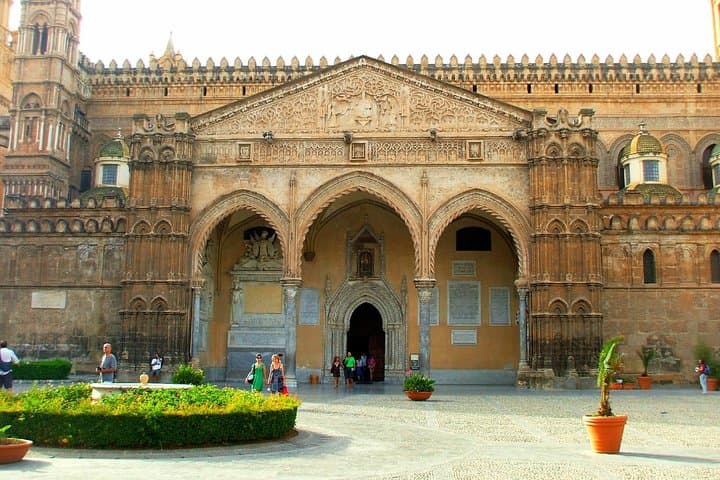
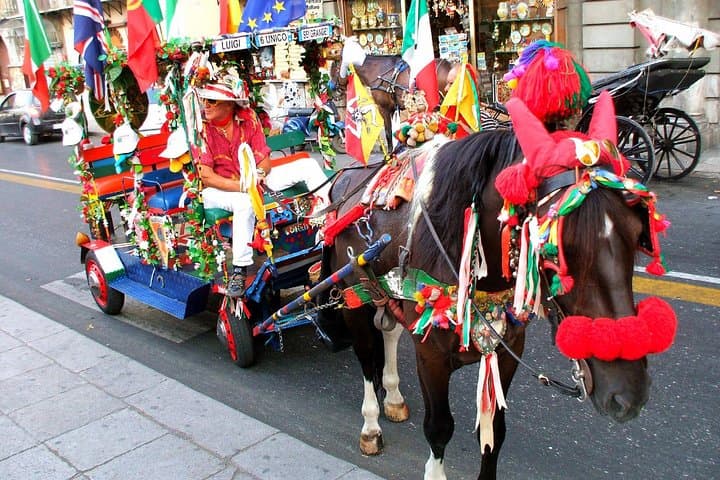
From there the route narrows into the alleys of the old Arab quarter: stone arches, street vendors, and the cadence of Sicilian dialect. Markets arrive like chapters — Capo Market spills produce and fish onto the pavement while Vucciria still trades in voices and quick bargains. The itinerary reaches Palermo Cathedral, where the royal tomb of Frederick II anchors a medieval story of cross‑Mediterranean power.
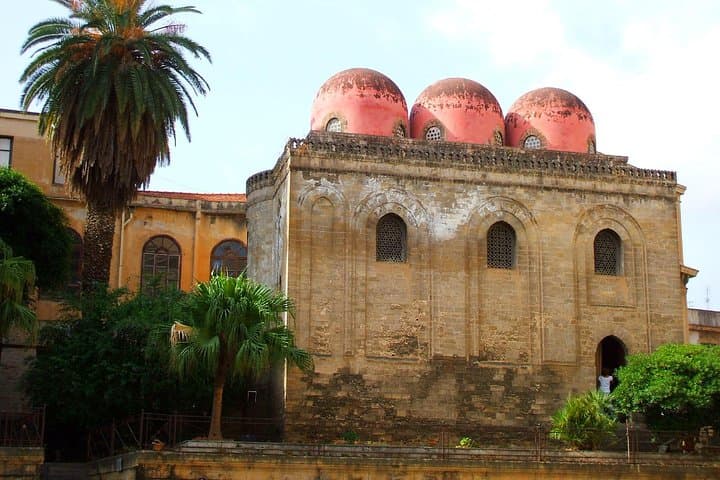
Geology and history meet in the city’s buildings: Arab-Norman mosaics, Norman stonework, Byzantine domes and later Baroque re‑workings reflect centuries of conquest and commerce; the UNESCO designation groups Palermo with Monreale and Cefalù for their hybrid architecture.
Practicalities are simple and civic: this private, two‑hour walking tour is accessible for most people, moves at a steady urban pace, and uses paved streets and narrow alleys. Expect frequent stops for explanation and photo ops, and brief market negotiations if you linger. Bring sun protection, comfortable shoes, and a small water bottle; be ready to walk on cobbles and stand for short periods. Morning or late afternoon departures avoid the midday heat and make the markets livelier. A licensed guide adds context that turns recognizable monuments into connective stories of trade, faith and urban life.
easy.
2 hours.
Suitable for most fitness levels; requires ability to walk on uneven pavement and stand for short talks.
The tour lasts about two hours and covers paved streets and alleys with frequent short stops — plan on moderate, continuous walking.
This walking tour focuses on exteriors and markets; admissions to interior sites (e.g., Teatro Massimo or cathedral interior) are typically not included and can be added separately.
Yes; it’s rated easy and suitable for most ages, though cobblestones and standing may be challenging for some; notify the guide of special needs when booking.
This listing notes private tours; inquire with the operator about slight route adjustments or timing when booking.
Palermo’s center reflects layered rule — Byzantine, Arab, Norman and Spanish influences — officially recognized as a UNESCO site for its Arab‑Norman architecture.
Markets and historic streets are vulnerable to litter and overuse; support local vendors, avoid single‑use plastics and follow guidance on protected monuments.
ITALYGONIA TRAVEL operates guided outdoor trips and adventures with an emphasis on safety, stewardship, and memorable experiences.
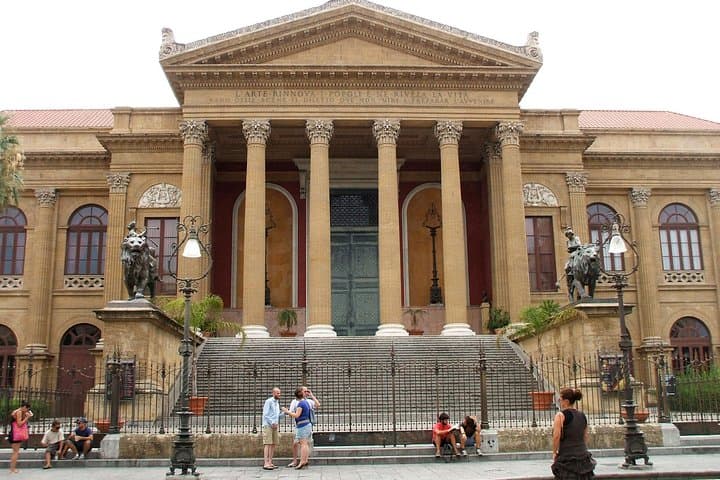
The walk opens in Piazza Politeama where tram tracks hum and the city exhales into wide boulevards. Guides lead small groups down Via Ruggero Settimo — Palermo’s “living room” — past cafés and late‑19th‑century façades until the massing of stone and columns announces Teatro Massimo; its portico frames the city’s theatrical pulse.
The walk opens in Piazza Politeama where tram tracks hum and the city exhales into wide boulevards. Guides lead small groups down Via Ruggero Settimo — Palermo’s “living room” — past cafés and late‑19th‑century façades until the massing of stone and columns announces Teatro Massimo; its portico frames the city’s theatrical pulse.
From there the route narrows into the alleys of the old Arab quarter: stone arches, street vendors, and the cadence of Sicilian dialect. Markets arrive like chapters — Capo Market spills produce and fish onto the pavement while Vucciria still trades in voices and quick bargains. The itinerary reaches Palermo Cathedral, where the royal tomb of Frederick II anchors a medieval story of cross‑Mediterranean power.
Geology and history meet in the city’s buildings: Arab-Norman mosaics, Norman stonework, Byzantine domes and later Baroque re‑workings reflect centuries of conquest and commerce; the UNESCO designation groups Palermo with Monreale and Cefalù for their hybrid architecture.
Practicalities are simple and civic: this private, two‑hour walking tour is accessible for most people, moves at a steady urban pace, and uses paved streets and narrow alleys. Expect frequent stops for explanation and photo ops, and brief market negotiations if you linger. Bring sun protection, comfortable shoes, and a small water bottle; be ready to walk on cobbles and stand for short periods. Morning or late afternoon departures avoid the midday heat and make the markets livelier. A licensed guide adds context that turns recognizable monuments into connective stories of trade, faith and urban life.