THE ADVENTURE COLLECTIVE® · Independent discovery and booking for outdoor travel

Walk from Teatro Massimo to the Quattro Canti on a four-hour guided tour that blends Norman cathedrals, baroque squares and living street markets. Perfect for travelers who want history, local flavor and manageable urban walking.
Walk from Teatro Massimo to the Quattro Canti on a four-hour guided tour that blends Norman cathedrals, baroque squares and living street markets. Perfect for travelers who want history, local flavor and manageable urban walking.
The sun hits the broad steps of Teatro Massimo and the city exhales: voices, motor scooters, the scent of orange oil from a nearby stall. Starting in front of the opera house, this four-hour walking tour threads through Palermo’s stone streets where façades shift from Norman severity to exuberant Baroque at the Quattro Canti.
Verified experiences and guided adventures in the surrounding area.
Operated by JustSicily · Palermo, Sicily
The sun hits the broad steps of Teatro Massimo and the city exhales: voices, motor scooters, the scent of orange oil from a nearby stall. Starting in front of the opera house, this four-hour walking tour threads through Palermo’s stone streets where façades shift from Norman severity to exuberant Baroque at the Quattro Canti.
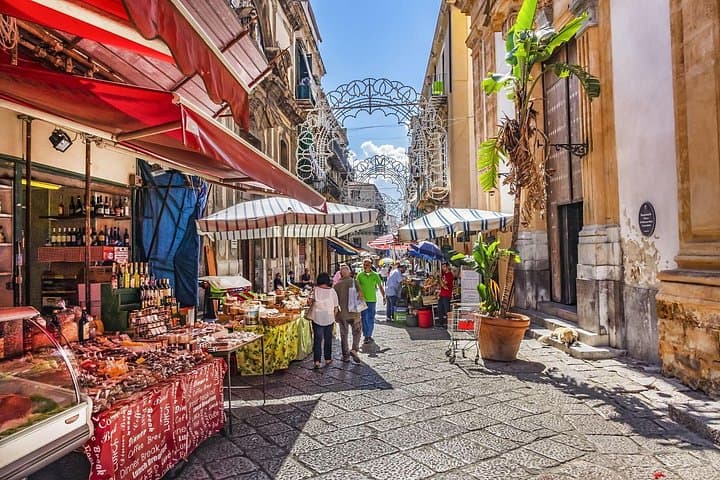
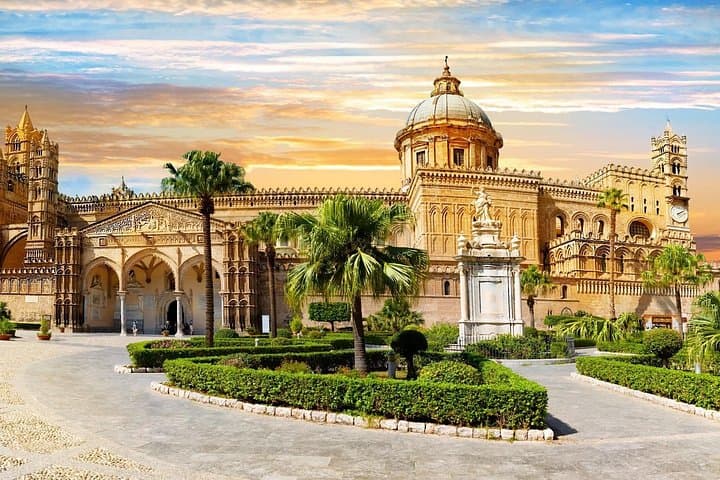
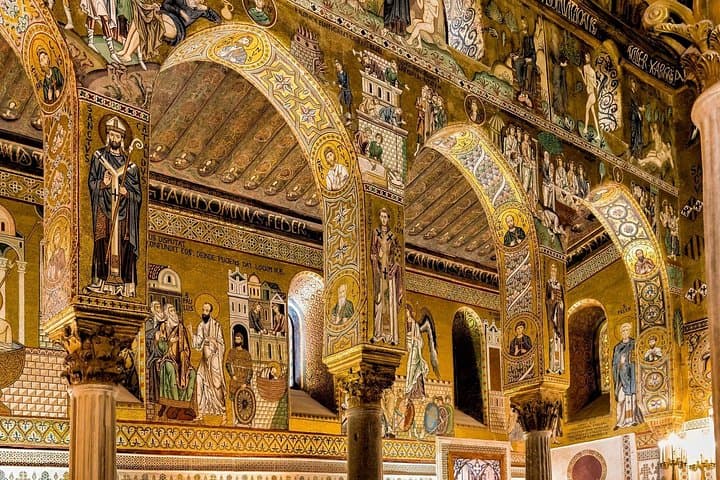
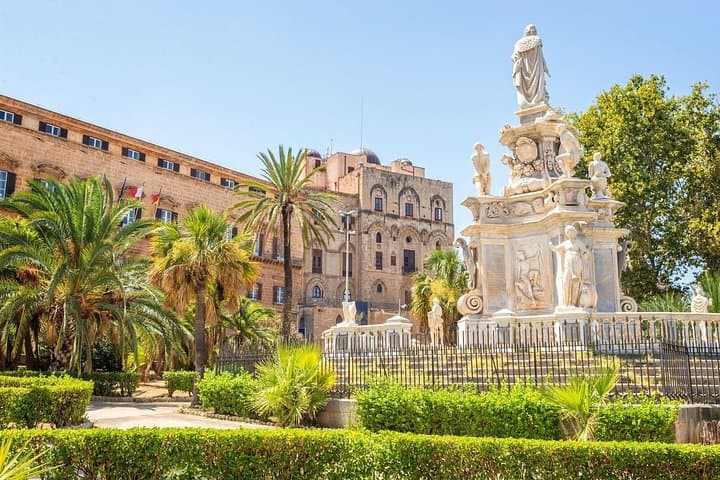
Palermo’s streets are a palimpsest of Mediterranean history — Phoenician-to-Norman layers sitting on a limestone coastal plain shaped by distant tectonics and the wider shadow of Mount Etna’s volcanic presence. The tour highlights social life as much as monuments: market alleys where Arabs and Spaniards once traded spices, the Norman cathedral with the tomb of Frederick II, and the Royal Palace’s Palatine Chapel where Byzantine mosaics and Arab geometric patterns share wall space.
You’ll move between markets and courtyards, pausing to sample street food and to read the city’s politics in carved coats of arms and theater steps. Guides knit local anecdotes to architecture, explaining how medieval quarters adapted to modern life and where residents still gather.
Practical side: expect cobblestones, some narrow alleys, and intermittent steps—comfortable shoes and a moderate fitness level make the loop easier. Mornings are cooler and markets liveliest; late afternoons offer softer light for photos. Carry water, a light layer for sea breezes, and awareness of busy streets. For travelers who want history with human scale, this guided walk offers a concentrated, walkable portrait of Palermo’s layered public life.
moderate.
4 hours.
Moderate — suitable for people comfortable walking on uneven pavement for several hours
The tour runs about four hours and finishes at the Quattro Canti.
Admissions are not included; the itinerary notes visits may be external or subject to monument availability.
Yes if participants are comfortable walking up to four hours with short breaks; mobility issues may limit access to some interiors.
Language depends on the guide assigned — confirm at booking. The tour listing indicates a professional guide is included.
Palermo’s urban fabric reflects centuries of rule by Arabs, Byzantines and Normans — the Palatine Chapel’s mosaics are a clear legacy of cultural fusion.
Heavy foot traffic affects fragile historic sites; favor local vendors, avoid touching mosaics, and use refillable bottles to reduce waste.
JustSicily operates guided outdoor trips and adventures with an emphasis on safety, stewardship, and memorable experiences.
The sun hits the broad steps of Teatro Massimo and the city exhales: voices, motor scooters, the scent of orange oil from a nearby stall. Starting in front of the opera house, this four-hour walking tour threads through Palermo’s stone streets where façades shift from Norman severity to exuberant Baroque at the Quattro Canti.
The sun hits the broad steps of Teatro Massimo and the city exhales: voices, motor scooters, the scent of orange oil from a nearby stall. Starting in front of the opera house, this four-hour walking tour threads through Palermo’s stone streets where façades shift from Norman severity to exuberant Baroque at the Quattro Canti.
Palermo’s streets are a palimpsest of Mediterranean history — Phoenician-to-Norman layers sitting on a limestone coastal plain shaped by distant tectonics and the wider shadow of Mount Etna’s volcanic presence. The tour highlights social life as much as monuments: market alleys where Arabs and Spaniards once traded spices, the Norman cathedral with the tomb of Frederick II, and the Royal Palace’s Palatine Chapel where Byzantine mosaics and Arab geometric patterns share wall space.
You’ll move between markets and courtyards, pausing to sample street food and to read the city’s politics in carved coats of arms and theater steps. Guides knit local anecdotes to architecture, explaining how medieval quarters adapted to modern life and where residents still gather.
Practical side: expect cobblestones, some narrow alleys, and intermittent steps—comfortable shoes and a moderate fitness level make the loop easier. Mornings are cooler and markets liveliest; late afternoons offer softer light for photos. Carry water, a light layer for sea breezes, and awareness of busy streets. For travelers who want history with human scale, this guided walk offers a concentrated, walkable portrait of Palermo’s layered public life.