THE ADVENTURE COLLECTIVE® · Independent discovery and booking for outdoor travel

A half-day walking tour that stitches Palermo’s piazzas, markets and the Palatine Chapel into a single, informative route. Perfect for travelers short on time who want a guided introduction to the city’s layered history.
A half-day walking tour that stitches Palermo’s piazzas, markets and the Palatine Chapel into a single, informative route. Perfect for travelers short on time who want a guided introduction to the city’s layered history.
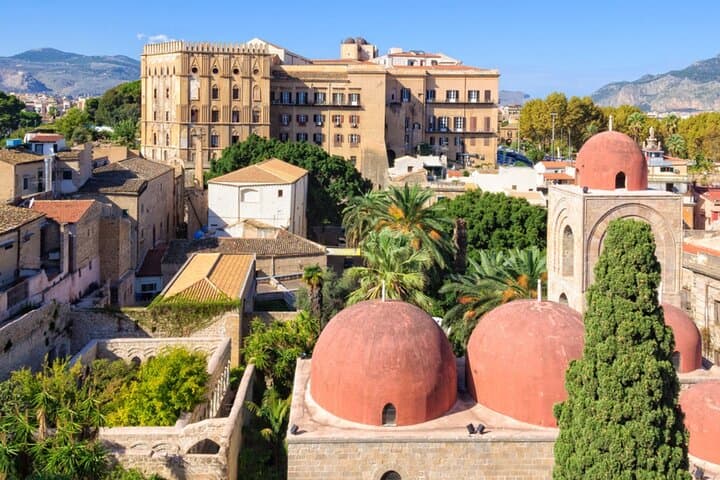
Morning light washes the stone of Via Volturno as the group gathers at Towns Cooking School and steps into Palermo’s rhythm: narrow alleys, market cries and the scent of espresso. The walk threads from Teatro Massimo through Quattro Canti and the Praetorian Fountain, each piazza a pause that reveals Palermo’s layers—Roman foundations, Norman palaces and Baroque façades sharpening as the day warms.
Verified experiences and guided adventures in the surrounding area.
Operated by Towns of Italy · Palermo, Sicily
Morning light washes the stone of Via Volturno as the group gathers at Towns Cooking School and steps into Palermo’s rhythm: narrow alleys, market cries and the scent of espresso. The walk threads from Teatro Massimo through Quattro Canti and the Praetorian Fountain, each piazza a pause that reveals Palermo’s layers—Roman foundations, Norman palaces and Baroque façades sharpening as the day warms.
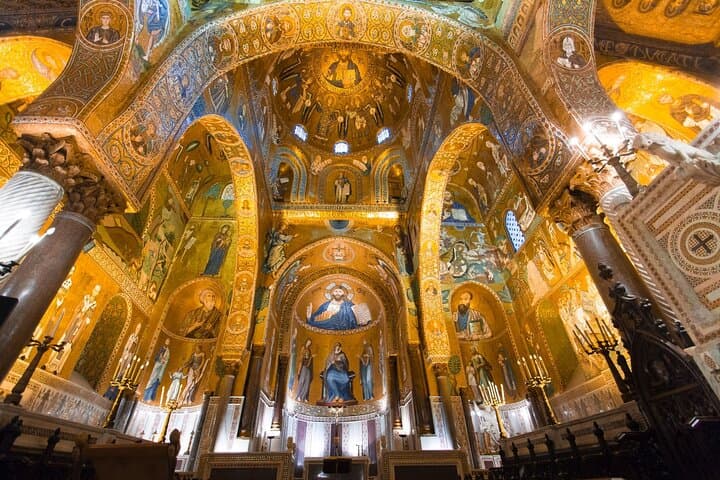
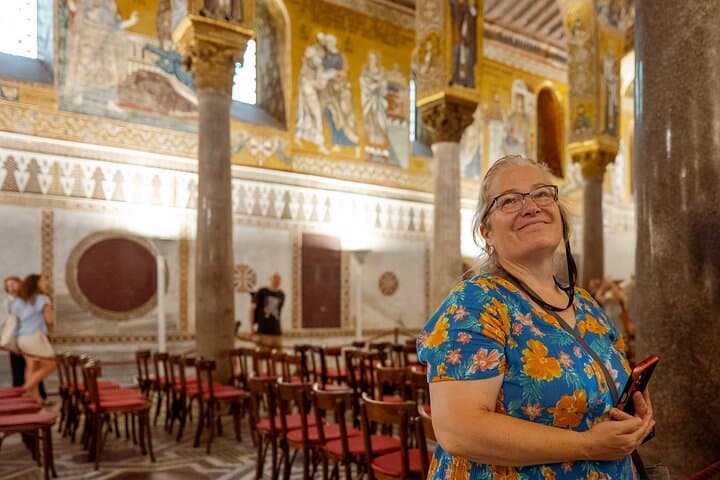
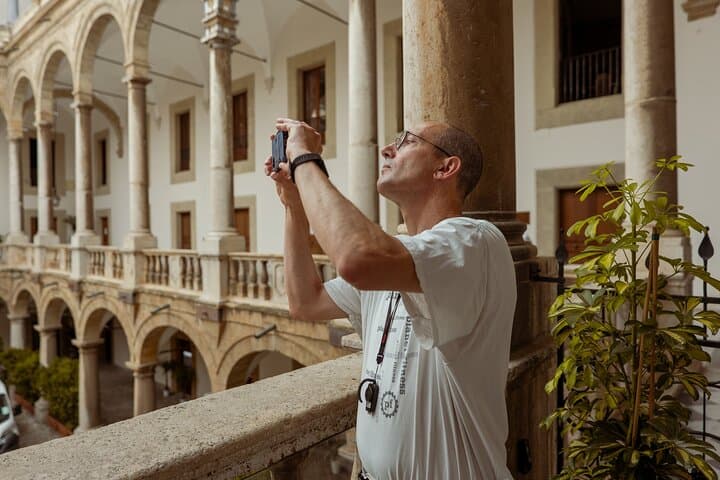
The tour culminates at the Palazzo dei Normanni, Europe’s oldest royal residence. Inside, the Palatine Chapel’s gold mosaics and interlaced arches make visible the island’s tricultural past: Byzantine artisans, Arab decorative motifs and Norman architecture converging under one vaulted roof. This mix reflects Sicily’s history as a medieval crossroads—an era when rulers borrowed styles as readily as they borrowed ports.
Beyond architecture, the itinerary moves through living culture: the frantic stalls of Vucciria, the civic presence of San Domenico and the city’s obsession with public fountains. Geology quietly frames the walk—the city built on limestone terraces that tilt toward the Tyrrhenian, producing the tight, sun-baked streets and occasional sudden viewpoints over distant water.
Practical notes: expect around 5–6 hours of mostly flat walking on cobbles and uneven pavement, with two meeting points (08:45 Via Volturno; 12:45 Piazza del Parlamento). Modest dress is requested for chapel entry. Carry water, wear soles that handle cobbles, and leave large luggage at your hotel—Palermo’s lanes reward mobility. The route is accessible to most travelers and designed to showcase the city’s compact historic core efficiently.
easy.
5–6 hours.
Basic walking fitness; suitable for most travelers who can stand and walk for several hours
Meet at Towns Cooking School, Via Volturno 44, at 08:45 for the walking portion; for the Norman Palace segment meet at Piazza del Parlamento at 12:45.
Yes—the tour includes tickets and a guided visit to the Norman Palace complex and the Palatine Chapel.
Children are welcome, but narrow alleys and steps in historic buildings can make strollers difficult; infants must sit on laps according to booking notes.
Late arrivals cannot be accommodated; you are responsible for reaching the meeting points on time and no refunds are issued for missed departures.
The Palazzo dei Normanni and its Palatine Chapel reflect Sicily’s 12th-century tricultural court where Norman rulers sponsored Byzantine mosaics and Arab-inspired decoration.
Mosaic and fresco surfaces are delicate—follow signage, avoid touching artwork, and use non-flash photography where allowed to protect interiors.
Towns of Italy operates guided outdoor trips and adventures with an emphasis on safety, stewardship, and memorable experiences.
Morning light washes the stone of Via Volturno as the group gathers at Towns Cooking School and steps into Palermo’s rhythm: narrow alleys, market cries and the scent of espresso. The walk threads from Teatro Massimo through Quattro Canti and the Praetorian Fountain, each piazza a pause that reveals Palermo’s layers—Roman foundations, Norman palaces and Baroque façades sharpening as the day warms.
Morning light washes the stone of Via Volturno as the group gathers at Towns Cooking School and steps into Palermo’s rhythm: narrow alleys, market cries and the scent of espresso. The walk threads from Teatro Massimo through Quattro Canti and the Praetorian Fountain, each piazza a pause that reveals Palermo’s layers—Roman foundations, Norman palaces and Baroque façades sharpening as the day warms.
The tour culminates at the Palazzo dei Normanni, Europe’s oldest royal residence. Inside, the Palatine Chapel’s gold mosaics and interlaced arches make visible the island’s tricultural past: Byzantine artisans, Arab decorative motifs and Norman architecture converging under one vaulted roof. This mix reflects Sicily’s history as a medieval crossroads—an era when rulers borrowed styles as readily as they borrowed ports.
Beyond architecture, the itinerary moves through living culture: the frantic stalls of Vucciria, the civic presence of San Domenico and the city’s obsession with public fountains. Geology quietly frames the walk—the city built on limestone terraces that tilt toward the Tyrrhenian, producing the tight, sun-baked streets and occasional sudden viewpoints over distant water.
Practical notes: expect around 5–6 hours of mostly flat walking on cobbles and uneven pavement, with two meeting points (08:45 Via Volturno; 12:45 Piazza del Parlamento). Modest dress is requested for chapel entry. Carry water, wear soles that handle cobbles, and leave large luggage at your hotel—Palermo’s lanes reward mobility. The route is accessible to most travelers and designed to showcase the city’s compact historic core efficiently.