THE ADVENTURE COLLECTIVE® · Independent discovery and booking for outdoor travel

Taste Palermo’s markets on a three-hour walking tour led by a chef. Sample arancina, panelle, sfincione and more while learning the multicultural history behind Sicilian street food.
Taste Palermo’s markets on a three-hour walking tour led by a chef. Sample arancina, panelle, sfincione and more while learning the multicultural history behind Sicilian street food.
A warm evening in Palermo unfolds under the arcades and lamp-lit alleys of the historic center as a chef-led group moves from stall to stall, sampling fried rice, chickpea fritters and the famous spongy sfincione. The streets themselves seem to push you forward: crowds part, vendors call, and passages steeped in centuries of trade guide the palate.
Verified experiences and guided adventures in the surrounding area.
Operated by eatwith · Palermo, Sicily
A warm evening in Palermo unfolds under the arcades and lamp-lit alleys of the historic center as a chef-led group moves from stall to stall, sampling fried rice, chickpea fritters and the famous spongy sfincione. The streets themselves seem to push you forward: crowds part, vendors call, and passages steeped in centuries of trade guide the palate.
Palermo’s street food owes its character to Arab, Norman and Spanish layers — a culinary history visible in saffron-tinted rice balls, sweet-and-sour notes, and the bread-with-milza that anchors the market culture. Geology matters here too: the city sits on coastal limestone plains where sea breezes carried spices inland for centuries, feeding markets that grew around port trade.
Culturally, markets like Ballarò and the Vucciria are as much living rooms as food courts; expect overlapping languages, quick bargains and vendors who measure time in tastes. Chef Fulvio (the host) pairs tastings with local wine or beer, and stops include short history notes about market façades and old guild streets.
Practical guidance: the walk lasts about three hours, covers roughly 2–3 km on uneven cobbles, and moves at an easy, tasting-focused pace. Communicate allergies before booking, bring a light jacket for sea breezes, and keep a small wallet for any extra purchases. Evening departures reduce summer heat; mornings are brighter for photos. This tour places you in Palermo’s rhythm—fast voices, slow meals, and the city’s appetite for good company.
easy.
3 hours.
Suitable for most fitness levels; participants should be able to walk 2–3 km on uneven surfaces and stand for short periods during tastings.
The tour covers roughly 2–3 km over three hours, moving at a relaxed, tasting-focused pace through historic market streets.
Yes — wine and beer are included with the tastings as part of the experience.
Vegetarian or allergy-friendly options may be accommodated if you inform the operator when booking; communicate restrictions in advance.
The meeting point is in Palermo’s historic center near the markets; the route is generally stroller-accessible though cobbles and crowds can be challenging in places.
Palermo’s street food developed under Arab and Norman influence, blending North African spices, Mediterranean produce and Spanish-era techniques into today’s market specialties.
Support small vendors by buying directly, avoid single-use plastics where possible, and take only what you can eat to reduce food waste.
eatwith operates guided outdoor trips and adventures with an emphasis on safety, stewardship, and memorable experiences.

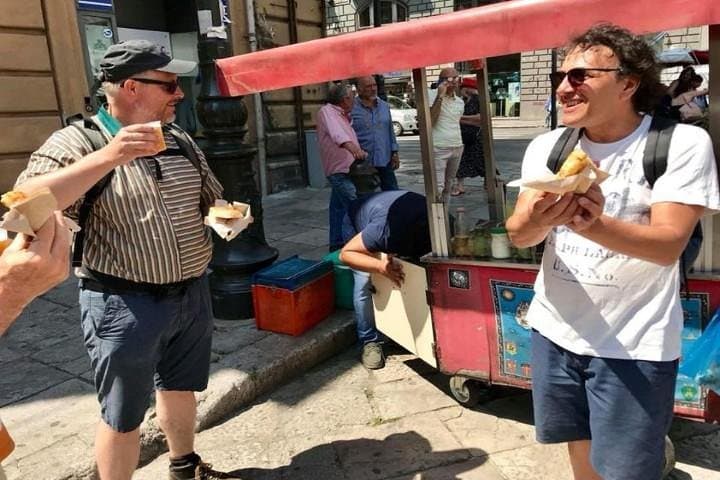

A warm evening in Palermo unfolds under the arcades and lamp-lit alleys of the historic center as a chef-led group moves from stall to stall, sampling fried rice, chickpea fritters and the famous spongy sfincione. The streets themselves seem to push you forward: crowds part, vendors call, and passages steeped in centuries of trade guide the palate.
A warm evening in Palermo unfolds under the arcades and lamp-lit alleys of the historic center as a chef-led group moves from stall to stall, sampling fried rice, chickpea fritters and the famous spongy sfincione. The streets themselves seem to push you forward: crowds part, vendors call, and passages steeped in centuries of trade guide the palate.
Palermo’s street food owes its character to Arab, Norman and Spanish layers — a culinary history visible in saffron-tinted rice balls, sweet-and-sour notes, and the bread-with-milza that anchors the market culture. Geology matters here too: the city sits on coastal limestone plains where sea breezes carried spices inland for centuries, feeding markets that grew around port trade.
Culturally, markets like Ballarò and the Vucciria are as much living rooms as food courts; expect overlapping languages, quick bargains and vendors who measure time in tastes. Chef Fulvio (the host) pairs tastings with local wine or beer, and stops include short history notes about market façades and old guild streets.
Practical guidance: the walk lasts about three hours, covers roughly 2–3 km on uneven cobbles, and moves at an easy, tasting-focused pace. Communicate allergies before booking, bring a light jacket for sea breezes, and keep a small wallet for any extra purchases. Evening departures reduce summer heat; mornings are brighter for photos. This tour places you in Palermo’s rhythm—fast voices, slow meals, and the city’s appetite for good company.