THE ADVENTURE COLLECTIVE® · Independent discovery and booking for outdoor travel

Explore Paleokastritsa’s cliffside monastery, optional boat cruise and the storied streets of Corfu Town on a private half‑day tour. Practical route, historic context and coastal viewpoints combine with flexible pacing for first‑time visitors.
Explore Paleokastritsa’s cliffside monastery, optional boat cruise and the storied streets of Corfu Town on a private half‑day tour. Practical route, historic context and coastal viewpoints combine with flexible pacing for first‑time visitors.
A visitor steps off an air‑conditioned minivan onto a sun-washed promontory above seas the color of oxidized emeralds. The wind here has an agenda: it pushes the pine-scented air across terraces and scrubs, carries the distant hum of fishing boats, and frames the 13th‑century Virgin Mary Monastery as a compact island of stone and shadow overlooking the “Boat of Odysseus.”
Verified experiences and guided adventures in the surrounding area.
Operated by Gaia Routes · Paleokastritsa, Ionian Islands
A visitor steps off an air‑conditioned minivan onto a sun-washed promontory above seas the color of oxidized emeralds. The wind here has an agenda: it pushes the pine-scented air across terraces and scrubs, carries the distant hum of fishing boats, and frames the 13th‑century Virgin Mary Monastery as a compact island of stone and shadow overlooking the “Boat of Odysseus.”
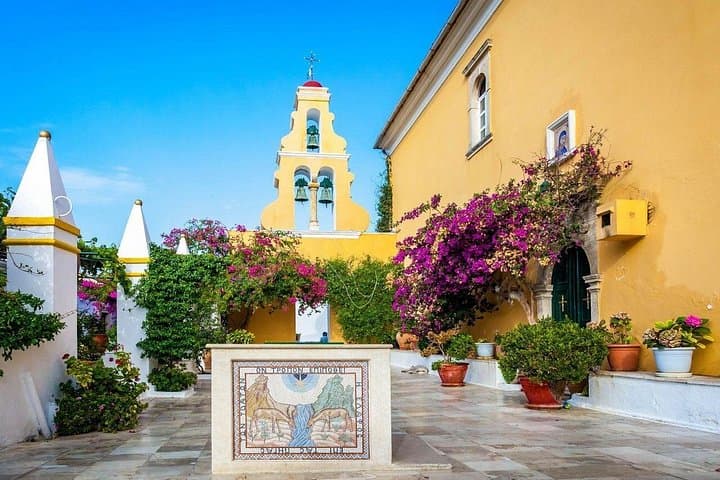
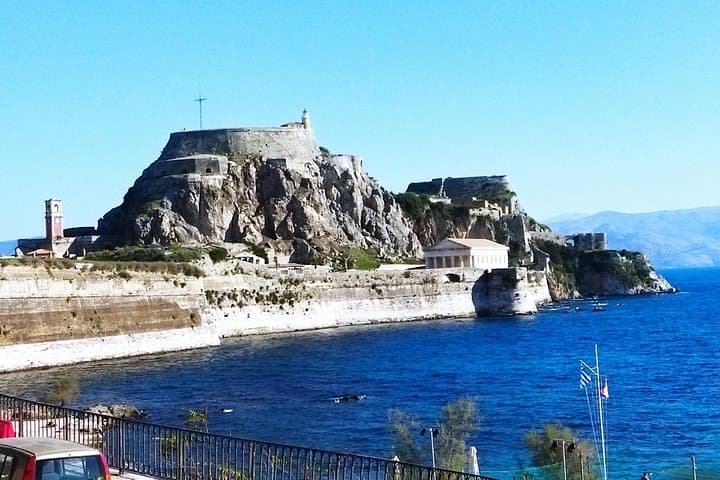
The monastery reflects layers of Corfu’s past — Byzantine iconography, Venetian fortification logic, and later Greek devotion — concentrated into an arched courtyard and a small museum of icons. The coastline around Paleokastritsa is limestoney and folded: uplifted marine terraces and collapsed caves give the cliffs sharp profiles that catch light differently through the day. In Corfu Town, Venetian ramparts, the grand Esplanade and the Old Fortress narrate centuries of contested Mediterranean trade and maritime defense; the streets still follow Genoese and Venetian circulation patterns.
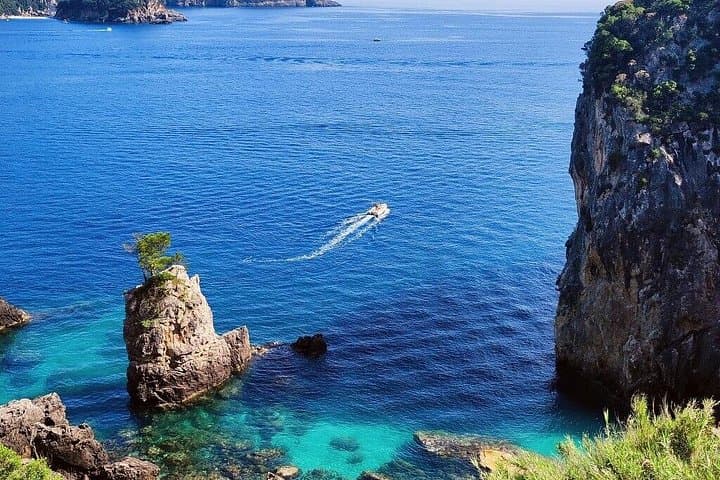
Practically speaking, the tour balances short site walks with seated transit; optional 35‑minute boat cruises reveal sea‑carved caves and shoreline not visible from the road. Expect cobbled lanes, short stair sections at the monastery and fortress, and shaded cafe stops in town squares. Timing matters — late morning light opens the coves for photography, while early afternoon brings stronger breezes and quieter museums. Hydrate, wear solid walking shoes for uneven stone, and plan a weather‑proof layer for coastal gusts. For first‑time visitors, the private format lets you prioritize the boat, a focused walking tour, or relaxed town wandering — a compact Corfu primer built around views, history, and a sharply coastal geology.
easy.
4–5 hours.
Suitable for light activity; participants should be comfortable walking short uphill sections and steps.
The monastery has terraces and steps; access to some viewpoints involves stairs, but the main courtyard and museum have relatively short approaches—ask the operator about specific accessibility assistance.
Monastery museum admission is handled locally and may require a small fee; the tour listing notes admissions are not included, so bring cash for onsite tickets.
The optional boat is about 35 minutes and circles sea caves, headlands and the coastal formations around Paleokastritsa that are inaccessible from shore.
The tour offers private transport with pickup options in Corfu Town and nearby ports; confirm your preferred pickup point during booking.
Paleokastritsa’s monastery dates to the 13th century and the architecture and icons reflect Byzantine and later Venetian influences that shaped Corfu’s strategic role in the Ionian Sea.
Coastal caves and scrubland are sensitive to erosion and visitor pressure; stick to marked paths, minimize single‑use plastics and respect museum rules around icons.
Gaia Routes operates guided outdoor trips and adventures with an emphasis on safety, stewardship, and memorable experiences.
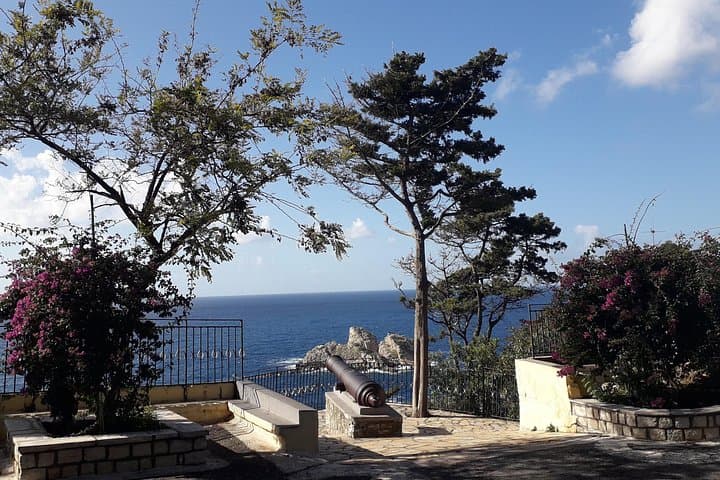
A visitor steps off an air‑conditioned minivan onto a sun-washed promontory above seas the color of oxidized emeralds. The wind here has an agenda: it pushes the pine-scented air across terraces and scrubs, carries the distant hum of fishing boats, and frames the 13th‑century Virgin Mary Monastery as a compact island of stone and shadow overlooking the “Boat of Odysseus.”
A visitor steps off an air‑conditioned minivan onto a sun-washed promontory above seas the color of oxidized emeralds. The wind here has an agenda: it pushes the pine-scented air across terraces and scrubs, carries the distant hum of fishing boats, and frames the 13th‑century Virgin Mary Monastery as a compact island of stone and shadow overlooking the “Boat of Odysseus.”
The monastery reflects layers of Corfu’s past — Byzantine iconography, Venetian fortification logic, and later Greek devotion — concentrated into an arched courtyard and a small museum of icons. The coastline around Paleokastritsa is limestoney and folded: uplifted marine terraces and collapsed caves give the cliffs sharp profiles that catch light differently through the day. In Corfu Town, Venetian ramparts, the grand Esplanade and the Old Fortress narrate centuries of contested Mediterranean trade and maritime defense; the streets still follow Genoese and Venetian circulation patterns.
Practically speaking, the tour balances short site walks with seated transit; optional 35‑minute boat cruises reveal sea‑carved caves and shoreline not visible from the road. Expect cobbled lanes, short stair sections at the monastery and fortress, and shaded cafe stops in town squares. Timing matters — late morning light opens the coves for photography, while early afternoon brings stronger breezes and quieter museums. Hydrate, wear solid walking shoes for uneven stone, and plan a weather‑proof layer for coastal gusts. For first‑time visitors, the private format lets you prioritize the boat, a focused walking tour, or relaxed town wandering — a compact Corfu primer built around views, history, and a sharply coastal geology.