THE ADVENTURE COLLECTIVE® · Independent discovery and booking for outdoor travel

Skip the crowds at Vinicunca and head to Palcoyo for a quieter, shorter climb to multicolored ridgelines and wide Ausangate views. This private day tour from Cusco combines high‑altitude hiking, wildlife sightings, and a colonial bridge visit.
Skip the crowds at Vinicunca and head to Palcoyo for a quieter, shorter climb to multicolored ridgelines and wide Ausangate views. This private day tour from Cusco combines high‑altitude hiking, wildlife sightings, and a colonial bridge visit.
Morning light thins over puna grass as your minivan climbs out of Cusco and the high plateau opens ahead. Air at 5,000 meters is thin and crisp; alpacas graze like punctuation marks across rust-red hills while the Palcoyo ridgeline looms—bands of iron-rich ochre, green clay, and pink volcanic dust stacked across a quiet slope.
Verified experiences and guided adventures in the surrounding area.
Operated by Into Peru · Cusco, Cusco
Morning light thins over puna grass as your minivan climbs out of Cusco and the high plateau opens ahead. Air at 5,000 meters is thin and crisp; alpacas graze like punctuation marks across rust-red hills while the Palcoyo ridgeline looms—bands of iron-rich ochre, green clay, and pink volcanic dust stacked across a quiet slope.
Geology here is blunt and visible: layered mineral sediments tilted by Andean uplift and exposed by millennia of wind and ice. Unlike the busier Vinicunca, Palcoyo feels reserved; trails are shorter, viewpoints more spread-out, and the vistas include Ausangate’s glaciated mass, a cultural landmark for local Quechua communities that have herded llamas and woven in these valleys for centuries.
Expect a 40–50 minute uphill walk from the pass to the primary viewpoint at roughly 5,000 m (16,400 ft). The terrain is high-altitude puna—rocky, uneven, with short tussock grass—so each step demands attention and respect. You’ll stop to photograph three distinct rainbow peaks, watch condors thermalling at distance, and visit a colonial bridge at Checacupe on return.
Practical edge: acclimatize in Cusco for 24–48 hours if possible, layer for wind and intense sun, pace yourself on the ascent, and carry extra water and snacks. Roads to the new Palcoyo access are still partially unpaved; the ride can be bumpy. A private tour offers flexible pacing and a local guide who manages logistics, but the altitude is the real guide here—listen to it.
moderate.
10–11 hours.
Moderate fitness recommended; ability to walk uphill at high altitude for up to 50 minutes is required
The main walk is 40–50 minutes uphill at about 5,000 m (16,400 ft); it's short but strenuous because of altitude—take breaks and go at your own pace.
Fitness matters more than age; children and seniors with moderate fitness can usually do it if they’re acclimatized, but those with cardiovascular or spinal issues should avoid it.
Typical inclusions are private transport from/to Cusco, a professional guide, hotel pickup/drop-off, and a local lunch; check your booking for specifics.
The dry season (May–September) offers the most stable weather and clear views; rainy season (Nov–Mar) brings muddy roads and clouds.
The colorful bands are exposed sedimentary layers altered by mineralization and uplift during Andean orogeny; the Ausangate area remains important to local Quechua spiritual practices.
High‑altitude soils and sparse vegetation are fragile—stay on designated trails, pack out waste, and support local guides who prioritize low‑impact visitation.
Into Peru operates guided outdoor trips and adventures with an emphasis on safety, stewardship, and memorable experiences.
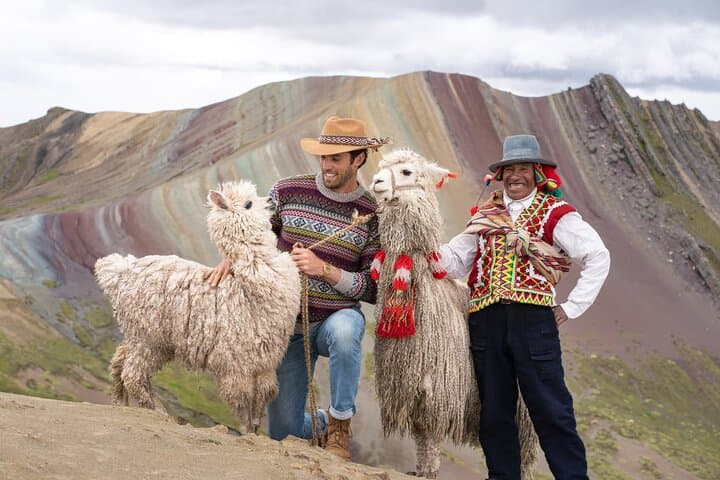
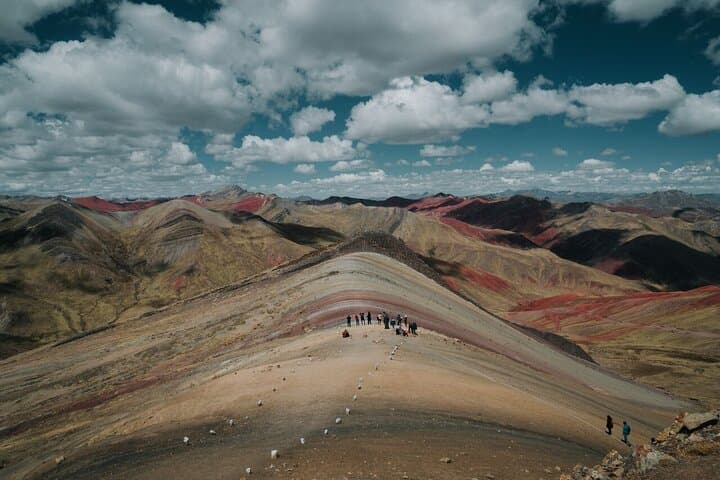
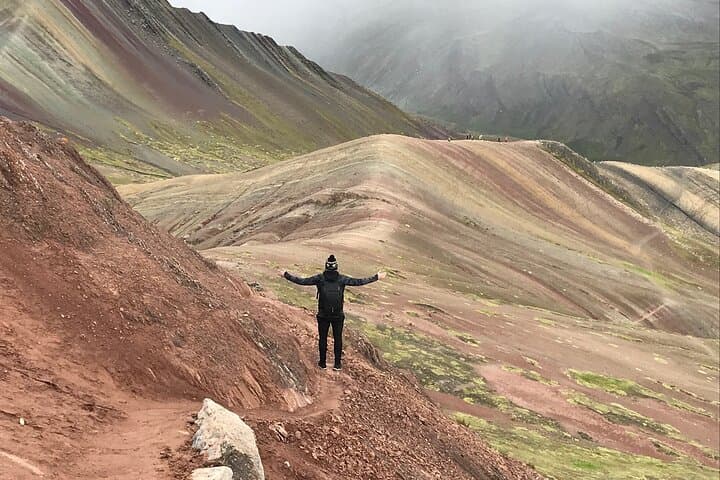
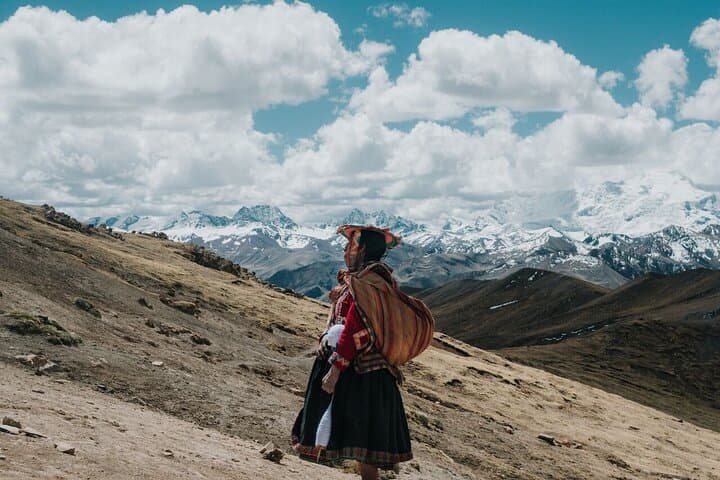
Morning light thins over puna grass as your minivan climbs out of Cusco and the high plateau opens ahead. Air at 5,000 meters is thin and crisp; alpacas graze like punctuation marks across rust-red hills while the Palcoyo ridgeline looms—bands of iron-rich ochre, green clay, and pink volcanic dust stacked across a quiet slope.
Morning light thins over puna grass as your minivan climbs out of Cusco and the high plateau opens ahead. Air at 5,000 meters is thin and crisp; alpacas graze like punctuation marks across rust-red hills while the Palcoyo ridgeline looms—bands of iron-rich ochre, green clay, and pink volcanic dust stacked across a quiet slope.
Geology here is blunt and visible: layered mineral sediments tilted by Andean uplift and exposed by millennia of wind and ice. Unlike the busier Vinicunca, Palcoyo feels reserved; trails are shorter, viewpoints more spread-out, and the vistas include Ausangate’s glaciated mass, a cultural landmark for local Quechua communities that have herded llamas and woven in these valleys for centuries.
Expect a 40–50 minute uphill walk from the pass to the primary viewpoint at roughly 5,000 m (16,400 ft). The terrain is high-altitude puna—rocky, uneven, with short tussock grass—so each step demands attention and respect. You’ll stop to photograph three distinct rainbow peaks, watch condors thermalling at distance, and visit a colonial bridge at Checacupe on return.
Practical edge: acclimatize in Cusco for 24–48 hours if possible, layer for wind and intense sun, pace yourself on the ascent, and carry extra water and snacks. Roads to the new Palcoyo access are still partially unpaved; the ride can be bumpy. A private tour offers flexible pacing and a local guide who manages logistics, but the altitude is the real guide here—listen to it.