THE ADVENTURE COLLECTIVE® · Independent discovery and booking for outdoor travel

A full-day guided outing from Cusco to Palcoyo offers vivid, multicolored rock formations and fewer crowds than Vinicunca. This high-altitude ridge hike combines sweeping Andean views with accessible terrain for moderately fit travelers.
A full-day guided outing from Cusco to Palcoyo offers vivid, multicolored rock formations and fewer crowds than Vinicunca. This high-altitude ridge hike combines sweeping Andean views with accessible terrain for moderately fit travelers.
A predawn minivan eases out of Cusco and the windows fog with quiet conversation. By first light the high plateau opens—pasture, stone corrals, and a ribbon of trail leading to Palcoyo’s striped slopes. Wind carries the Andes’ cool, dry air; colors that look painted into the rock reveal themselves as you climb: ochres, pinks, and iron-rich russets that change with every angle of sun.
Verified experiences and guided adventures in the surrounding area.
Operated by Mega Expeditions · Cusco, Cusco
A predawn minivan eases out of Cusco and the windows fog with quiet conversation. By first light the high plateau opens—pasture, stone corrals, and a ribbon of trail leading to Palcoyo’s striped slopes. Wind carries the Andes’ cool, dry air; colors that look painted into the rock reveal themselves as you climb: ochres, pinks, and iron-rich russets that change with every angle of sun.
Geology here is straightforward and dramatic: layered sedimentary beds uplifted and exposed by millennia of tectonic pressure and glacial scraping, then stained by mineral oxides. The area sits down-valley from the Ausangate massif, a peak with cultural weight for local Quechua communities who still herd camelids across these puna grasslands. Palcoyo gained attention as a quieter alternative to nearby Vinicunca—less traffic, gentler approaches, and broad ridge-line views that feel expansive rather than crowded.
Expect a steady, unpaved hike of roughly 1.5–2 hours round-trip from the trailhead, with sustained slopes and exposed high-altitude terrain. Wildlife is subtle: grazing alpacas, the occasional vicuña, and low-flying Andean birds. Practically, acclimatize in Cusco for at least 48 hours, pack layered windproof clothing, high-elevation sun protection, and carry water—altitude saps strength faster than distance does. Guides commonly include breakfast, a safety briefing, and shuttle transport that turns a long day into a well-managed outing. Time your visit for morning light to catch the best color and avoid the harsher sun and increased wind that build in the afternoon. Stay on marked trails to protect fragile soils and to keep the experience safe and respectful of local lands.
moderate.
10–12 hours (including transport and breaks).
Good aerobic base recommended; able to hike 1.5–2 hours on unpaved, uphill trails at high altitude.
Palcoyo sits around 4,800–4,900 meters; many visitors experience mild altitude symptoms—headache or breathlessness—so rest, hydrate, and acclimatize beforehand.
From the trailhead the main walk is roughly 1.5–2 hours round-trip, with time added for photography and breaks; total tour time including transport is about 10–12 hours.
Yes—Palcoyo is generally less steep and offers ridge-line views with shorter walking segments, making it a good alternative for those seeking fewer crowds and gentler climbs.
Basic facilities exist at community checkpoints and the tour typically includes a light breakfast and buffet lunch; bring toilet paper and hand sanitizer just in case.
The area lies within traditional Quechua territory; Ausangate is a sacred mountain in local cosmology and nearby communities maintain herding and textile traditions.
Puna grasslands are fragile—stick to official trails, avoid disturbing camelids, and pack out all waste to limit erosion and protect local water sources.
Mega Expeditions operates guided outdoor trips and adventures with an emphasis on safety, stewardship, and memorable experiences.
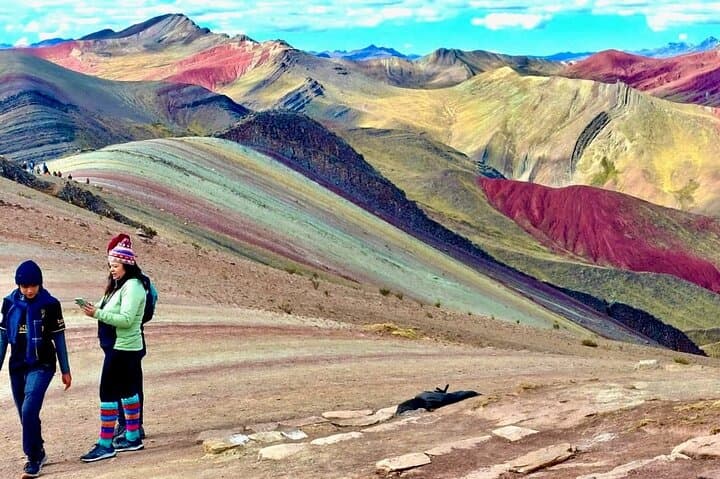
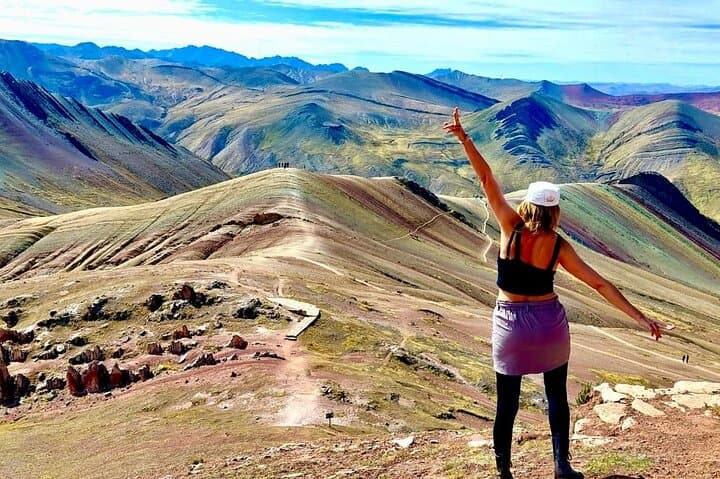
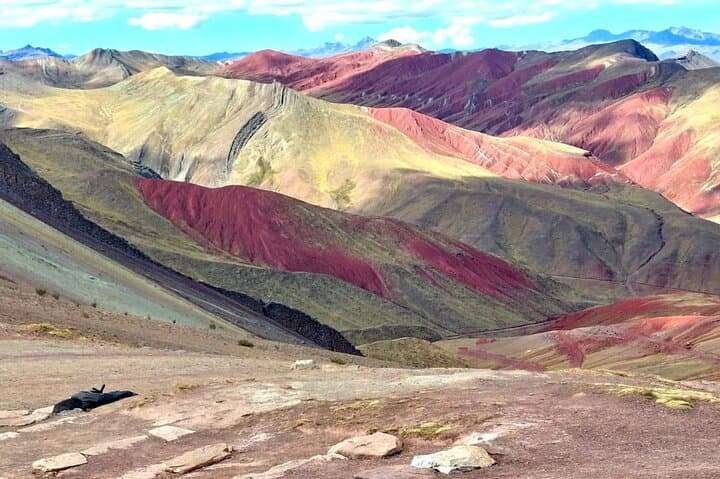
A predawn minivan eases out of Cusco and the windows fog with quiet conversation. By first light the high plateau opens—pasture, stone corrals, and a ribbon of trail leading to Palcoyo’s striped slopes. Wind carries the Andes’ cool, dry air; colors that look painted into the rock reveal themselves as you climb: ochres, pinks, and iron-rich russets that change with every angle of sun.
A predawn minivan eases out of Cusco and the windows fog with quiet conversation. By first light the high plateau opens—pasture, stone corrals, and a ribbon of trail leading to Palcoyo’s striped slopes. Wind carries the Andes’ cool, dry air; colors that look painted into the rock reveal themselves as you climb: ochres, pinks, and iron-rich russets that change with every angle of sun.
Geology here is straightforward and dramatic: layered sedimentary beds uplifted and exposed by millennia of tectonic pressure and glacial scraping, then stained by mineral oxides. The area sits down-valley from the Ausangate massif, a peak with cultural weight for local Quechua communities who still herd camelids across these puna grasslands. Palcoyo gained attention as a quieter alternative to nearby Vinicunca—less traffic, gentler approaches, and broad ridge-line views that feel expansive rather than crowded.
Expect a steady, unpaved hike of roughly 1.5–2 hours round-trip from the trailhead, with sustained slopes and exposed high-altitude terrain. Wildlife is subtle: grazing alpacas, the occasional vicuña, and low-flying Andean birds. Practically, acclimatize in Cusco for at least 48 hours, pack layered windproof clothing, high-elevation sun protection, and carry water—altitude saps strength faster than distance does. Guides commonly include breakfast, a safety briefing, and shuttle transport that turns a long day into a well-managed outing. Time your visit for morning light to catch the best color and avoid the harsher sun and increased wind that build in the afternoon. Stay on marked trails to protect fragile soils and to keep the experience safe and respectful of local lands.