THE ADVENTURE COLLECTIVE® · Independent discovery and booking for outdoor travel

A full-day, accessible alternative to Vinicunca that brings you to colorful Palcoyo and a wind-sculpted Stone Forest beneath the watch of Ausangate. Expect gentle walking, high-altitude air, and rich Andean vistas, with breakfast and lunch included.
A full-day, accessible alternative to Vinicunca that brings you to colorful Palcoyo and a wind-sculpted Stone Forest beneath the watch of Ausangate. Expect gentle walking, high-altitude air, and rich Andean vistas, with breakfast and lunch included.
The bus eases out of Cusco at dawn and the high plains open like a living map: wind scouring the grass, distant peaks holding snow like weathered crowns. By mid-morning you step onto the Palcoyo plateau, where low, mostly flat trails lead you across burnt-ochre and cream bands of sediment—colors that seem to ripple when the sun shifts. The colored strata rise in gentle ridges; Ausangate looms beyond, patient and immense, its glaciers watching the valley.
Verified experiences and guided adventures in the surrounding area.
Operated by Machupicchu Holiday · Cusco, Cusco
The bus eases out of Cusco at dawn and the high plains open like a living map: wind scouring the grass, distant peaks holding snow like weathered crowns. By mid-morning you step onto the Palcoyo plateau, where low, mostly flat trails lead you across burnt-ochre and cream bands of sediment—colors that seem to ripple when the sun shifts. The colored strata rise in gentle ridges; Ausangate looms beyond, patient and immense, its glaciers watching the valley.
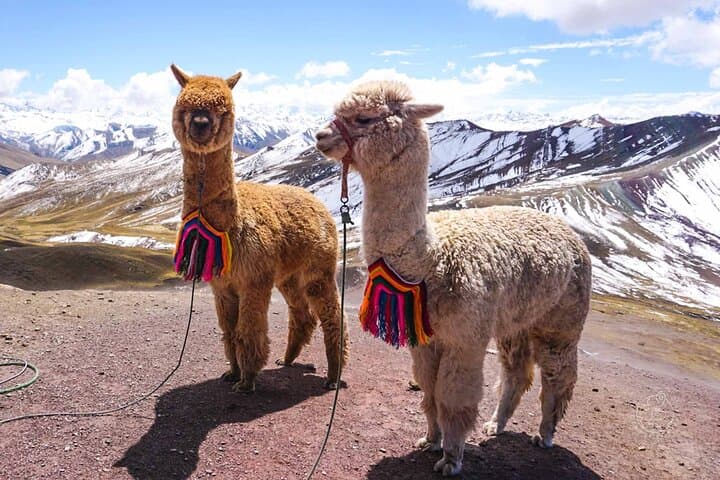
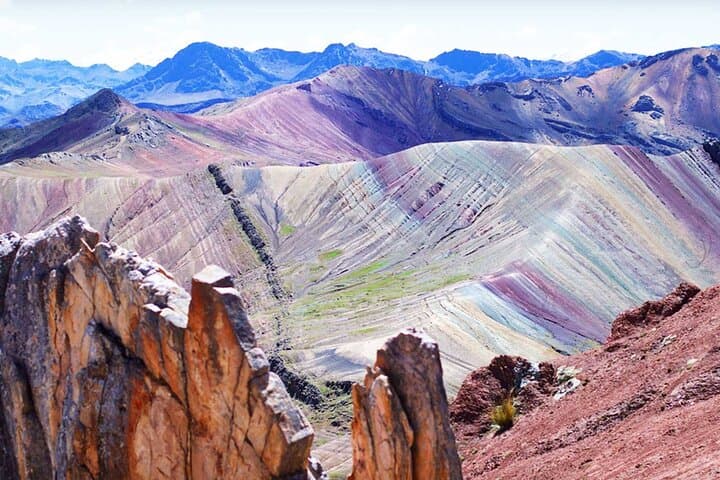
Geologically, Palcoyo is a long, eroded outcrop of sedimentary layers uplifted by the same tectonic forces that shaped the Andes; iron and mineral oxides give the slopes their chromatic stripes. Culturally, the route threads through Andean pastoral lands where Quechua communities tend llamas and alpacas; Ausangate is still regarded as an Apu, a sacred mountain, in local cosmology. Nearby the Stone Forest offers wind-carved pillars that favor dramatic silhouettes at golden hour.
Practically, this is a lower-impact alternative to Vinicunca: trails are gentler and shorter, but the altitude (over 4,000 m) is the primary challenge. Walk slowly, keep breathing steady and drink frequently. The tour includes pickup from Cusco, breakfast in Cusipata, and a return after lunch, so plan for a full day with some vehicle time.
Wear sturdy boots with ankle support, layer for rapid temperature swings, and carry cash for small purchases. Photograph early and late light for the richest colors, and give the plateau space—these high‑altitude grasslands recover slowly from trampling.
moderate.
10–12 hours.
Moderate fitness recommended; must be acclimatized to high altitude and able to walk on uneven ground for up to a few hours.
Palcoyo is easier: trails are generally flatter and shorter, though altitude still makes it a moderate outing.
Local access fees can apply in some seasons—your tour operator usually covers permits or will advise if cash is needed.
The terrain is gentle, but altitude affects everyone differently; children and older adults should consult a physician and consider acclimatization time.
Descend slowly, hydrate, rest, and seek oxygen or medical attention if symptoms worsen; operators often carry oxygen for emergencies.
The Palcoyo area sits on ancestral Quechua lands near Ausangate, a mountain long revered as an Apu (sacred protector) with centuries of pastoral traditions.
High‑altitude puna grasslands are fragile—stick to trails, pack out waste, and avoid disturbing grazing areas to help this landscape recover.
Machupicchu Holiday operates guided outdoor trips and adventures with an emphasis on safety, stewardship, and memorable experiences.
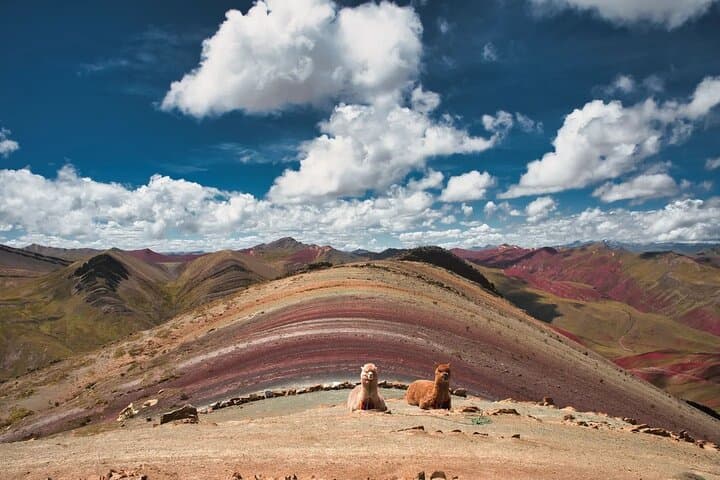
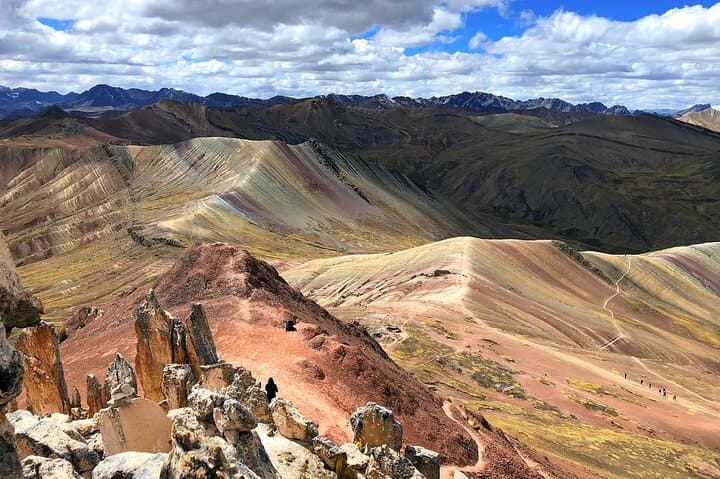
The bus eases out of Cusco at dawn and the high plains open like a living map: wind scouring the grass, distant peaks holding snow like weathered crowns. By mid-morning you step onto the Palcoyo plateau, where low, mostly flat trails lead you across burnt-ochre and cream bands of sediment—colors that seem to ripple when the sun shifts. The colored strata rise in gentle ridges; Ausangate looms beyond, patient and immense, its glaciers watching the valley.
The bus eases out of Cusco at dawn and the high plains open like a living map: wind scouring the grass, distant peaks holding snow like weathered crowns. By mid-morning you step onto the Palcoyo plateau, where low, mostly flat trails lead you across burnt-ochre and cream bands of sediment—colors that seem to ripple when the sun shifts. The colored strata rise in gentle ridges; Ausangate looms beyond, patient and immense, its glaciers watching the valley.
Geologically, Palcoyo is a long, eroded outcrop of sedimentary layers uplifted by the same tectonic forces that shaped the Andes; iron and mineral oxides give the slopes their chromatic stripes. Culturally, the route threads through Andean pastoral lands where Quechua communities tend llamas and alpacas; Ausangate is still regarded as an Apu, a sacred mountain, in local cosmology. Nearby the Stone Forest offers wind-carved pillars that favor dramatic silhouettes at golden hour.
Practically, this is a lower-impact alternative to Vinicunca: trails are gentler and shorter, but the altitude (over 4,000 m) is the primary challenge. Walk slowly, keep breathing steady and drink frequently. The tour includes pickup from Cusco, breakfast in Cusipata, and a return after lunch, so plan for a full day with some vehicle time.
Wear sturdy boots with ankle support, layer for rapid temperature swings, and carry cash for small purchases. Photograph early and late light for the richest colors, and give the plateau space—these high‑altitude grasslands recover slowly from trampling.