THE ADVENTURE COLLECTIVE® · Independent discovery and booking for outdoor travel

A high‑altitude full‑day from Cusco to Palcoyo reveals bands of painted hills, sweeping views of Ausangate and a compact stone forest—reachable by an easy but altitude‑tested walk. This guide explains what to expect from terrain, culture and practical prep.
A high‑altitude full‑day from Cusco to Palcoyo reveals bands of painted hills, sweeping views of Ausangate and a compact stone forest—reachable by an easy but altitude‑tested walk. This guide explains what to expect from terrain, culture and practical prep.
Before dawn you leave Cusco and the Andes rearrange themselves under a sky turning from indigo to light. By the time the van climbs toward 4,800–4,900 meters, the air is thin and the first bands of ochre, rose and yellow begin to cut across the hills like brushstrokes. At Palcoyo, a short, steady walk delivers you to multiple viewpoints where colored mineral strata sweep across ridgelines and Ausangate—an enormous, glaciated peak—hovers on the horizon.
Verified experiences and guided adventures in the surrounding area.
Operated by Allyn Pacha Cusco · Cusco, Cusco
Before dawn you leave Cusco and the Andes rearrange themselves under a sky turning from indigo to light. By the time the van climbs toward 4,800–4,900 meters, the air is thin and the first bands of ochre, rose and yellow begin to cut across the hills like brushstrokes. At Palcoyo, a short, steady walk delivers you to multiple viewpoints where colored mineral strata sweep across ridgelines and Ausangate—an enormous, glaciated peak—hovers on the horizon.
Geology explains the show: iron, copper and manganese oxidized under different depositional conditions to create distinct bands. The area’s human history is older than the paint—local Quechua communities have grazed alpacas here for generations, and stone corrals and pathways whisper pastoral life still practiced on these high plateaus.
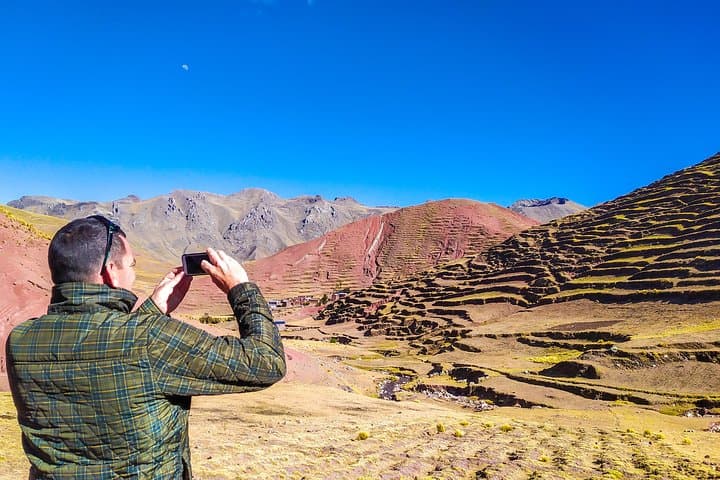
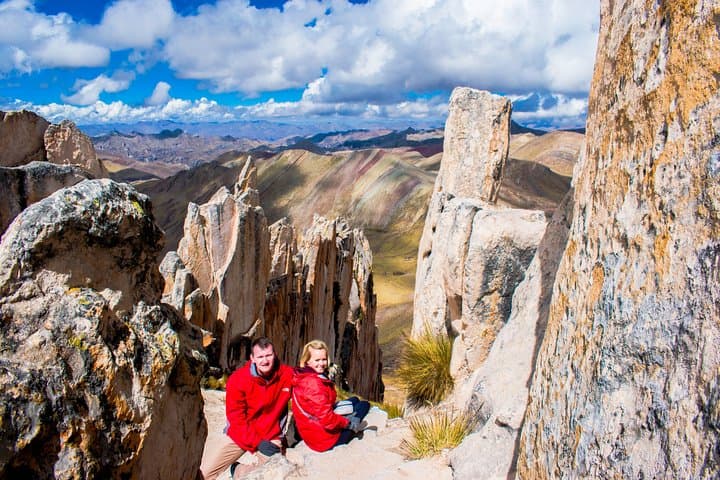
Expect wide-open puna grasslands, sudden gusts that press against your jacket, and the odd vicuña or Andean goose watching the procession of walkers. The so-called stone forest nearby offers vertical sedimentary shapes that feel almost intentional—fossilized gestures of an ancient river and glacial sculpting.
Practically: the hike to viewpoints is short (30–60 minutes) but altitude makes it demanding; plan for slow, steady pacing, frequent breaks, and layered clothing. Guides typically include transport and lunch in a nearby community; bring water, sunscreen, and snacks. Aim to acclimatize in Cusco for 48–72 hours first, and schedule this as a full-day outing—you’ll return tired, sunburned and thoroughly satisfied by an Andean landscape that insists on being seen up close.
moderate.
10–12 hours.
Should have good cardiovascular fitness for an 11‑hour day at high altitude; even short walks feel harder above 4,500 m.
The viewpoints are reached by short, mostly gentle walks (30–60 minutes), but high elevation makes the effort feel moderate—go slowly and rest often.
Most people can join, but you should be acclimatized to altitude; those with heart or serious respiratory problems should avoid it or consult a doctor.
Yes—this tour typically includes lunch in a local community as part of the full‑day itinerary.
On clear days Ausangate is visible as a towering, glaciated peak; snow presence depends on season and recent weather.
The high puna around Palcoyo has been used for pastoralism by Quechua communities for centuries; the colored hills are a product of ancient sedimentary deposits exposed by uplift and glaciation.
Trails and viewpoints see increasing visitors; stick to marked paths, avoid littering and support local guides who work with communities to protect grazing lands.
Allyn Pacha Cusco operates guided outdoor trips and adventures with an emphasis on safety, stewardship, and memorable experiences.
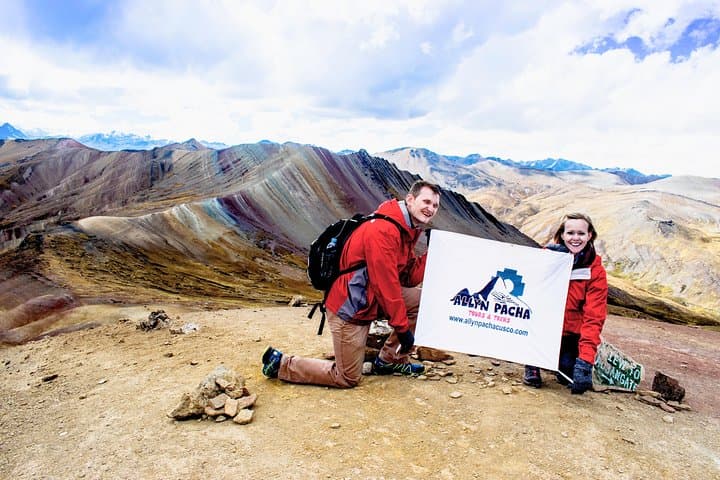
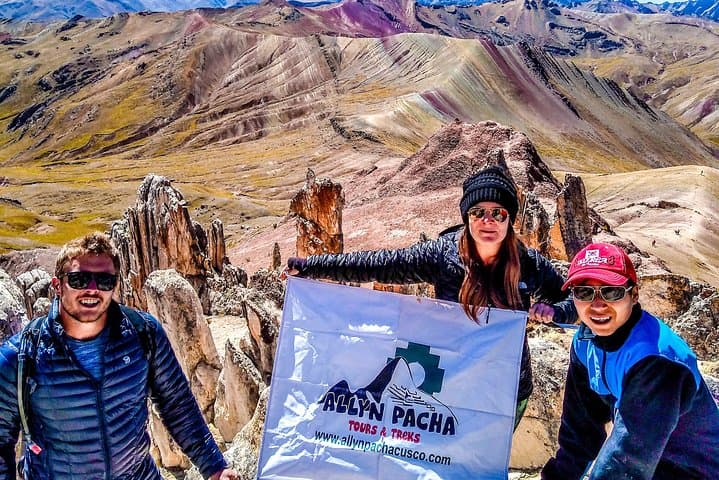
Before dawn you leave Cusco and the Andes rearrange themselves under a sky turning from indigo to light. By the time the van climbs toward 4,800–4,900 meters, the air is thin and the first bands of ochre, rose and yellow begin to cut across the hills like brushstrokes. At Palcoyo, a short, steady walk delivers you to multiple viewpoints where colored mineral strata sweep across ridgelines and Ausangate—an enormous, glaciated peak—hovers on the horizon.
Before dawn you leave Cusco and the Andes rearrange themselves under a sky turning from indigo to light. By the time the van climbs toward 4,800–4,900 meters, the air is thin and the first bands of ochre, rose and yellow begin to cut across the hills like brushstrokes. At Palcoyo, a short, steady walk delivers you to multiple viewpoints where colored mineral strata sweep across ridgelines and Ausangate—an enormous, glaciated peak—hovers on the horizon.
Geology explains the show: iron, copper and manganese oxidized under different depositional conditions to create distinct bands. The area’s human history is older than the paint—local Quechua communities have grazed alpacas here for generations, and stone corrals and pathways whisper pastoral life still practiced on these high plateaus.
Expect wide-open puna grasslands, sudden gusts that press against your jacket, and the odd vicuña or Andean goose watching the procession of walkers. The so-called stone forest nearby offers vertical sedimentary shapes that feel almost intentional—fossilized gestures of an ancient river and glacial sculpting.
Practically: the hike to viewpoints is short (30–60 minutes) but altitude makes it demanding; plan for slow, steady pacing, frequent breaks, and layered clothing. Guides typically include transport and lunch in a nearby community; bring water, sunscreen, and snacks. Aim to acclimatize in Cusco for 48–72 hours first, and schedule this as a full-day outing—you’ll return tired, sunburned and thoroughly satisfied by an Andean landscape that insists on being seen up close.