THE ADVENTURE COLLECTIVE® · Independent discovery and booking for outdoor travel

Skip the crowds at Vinicunca and head to Palccoyo for a shorter, quieter high‑altitude experience. This full‑day tour from Cusco includes a 40–50 minute uphill walk at 5,000 m, scenic viewpoints, alpaca sightings, and a visit to the colonial Checacupe bridge.
Skip the crowds at Vinicunca and head to Palccoyo for a shorter, quieter high‑altitude experience. This full‑day tour from Cusco includes a 40–50 minute uphill walk at 5,000 m, scenic viewpoints, alpaca sightings, and a visit to the colonial Checacupe bridge.
You arrive before sunrise, the minibus humming as the Andes wake. The road pitches and dips, and at 3.5 hours the landscape opens to scrubby puna and distant glaciers. At the Palccoyo pass a short, steady climb puts the three striped summits within arm’s reach: bands of iron-rich red, green clays and ochre that the wind seems to sharpen into edges.
Verified experiences and guided adventures in the surrounding area.
Operated by Into Peru · Cusco, Cusco
You arrive before sunrise, the minibus humming as the Andes wake. The road pitches and dips, and at 3.5 hours the landscape opens to scrubby puna and distant glaciers. At the Palccoyo pass a short, steady climb puts the three striped summits within arm’s reach: bands of iron-rich red, green clays and ochre that the wind seems to sharpen into edges.
Palccoyo’s colors are younger on the tourist radar than Vinicunca’s; geologically they’re the same high‑altitude sedimentary layers pushed and oxidized by millennia of uplift from the Ausangate massif. This region carries Andean history—herding traditions persist, and nearby colonial bridges like Checacupe recall Spanish-era transport routes layered onto older trade paths.
Practical details: the trip is a long day (about 11 hours total), with roughly 3.5 hours driving out, a 40–50 minute uphill walk to the viewpoint at ~5,000 m (16,400 ft), an hour for photos, a stop at Checacupe, then a 2.5-hour drive back to Cusco arriving mid‑late afternoon. Roads can be very bumpy for an hour each way; operators typically include private transport, lunch, oxygen canisters and a bilingual guide. Expect thin air—pace yourself, take the breaks offered, and use the included oxygen if needed.
What you’ll need: layered clothing for cold winds and strong sun, sturdy boots for uneven ground, sunscreen, and water. The site is quieter than Vinicunca and offers reliable alpaca sightings—bring a camera and respect local herders and fragile puna vegetation.
moderate.
11 hours.
Moderate fitness: able to walk uphill 40–50 minutes at high altitude and stand for photo stops; prior short‑walk conditioning helps.
The path is a steady uphill of about 40–50 minutes at roughly 5,000 m; it's not technical but the altitude makes it more strenuous than a similar walk at sea level.
The tour is marketed as suitable for many fitness levels, but not recommended for pregnant travelers or those with serious heart or spinal conditions—moderate fitness and prior acclimatization are advised.
Yes—herds of alpacas and llamas are commonly seen along the route and near the viewpoint; behave respectfully and avoid feeding them.
Operators may cancel in bad weather for safety; roads are unpaved in sections and can be very bumpy—check cancellation terms (full refund if cancelled 24+ hours prior).
The Ausangate area is sacred in Andean cosmology and has long supported pastoral communities; Palccoyo has become popular more recently as an accessible alternative to Vinicunca.
Puna grasslands are fragile—stick to trails, pack out waste, and avoid letting animals be fed by tourists; local communities and authorities are still working on sustainable visitor management.
Into Peru operates guided outdoor trips and adventures with an emphasis on safety, stewardship, and memorable experiences.

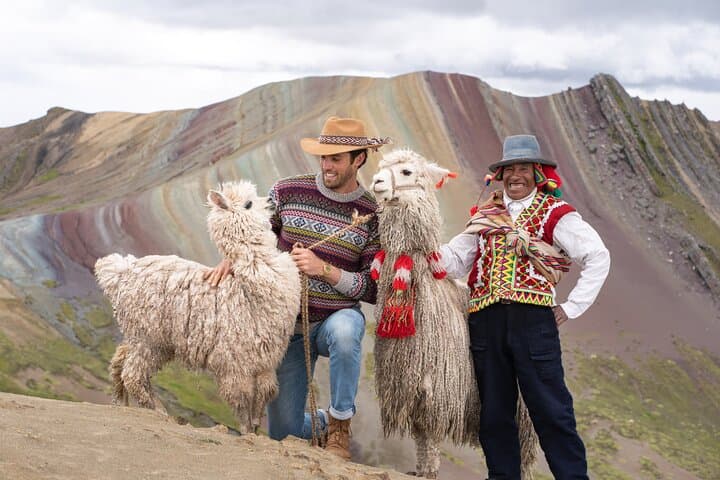


You arrive before sunrise, the minibus humming as the Andes wake. The road pitches and dips, and at 3.5 hours the landscape opens to scrubby puna and distant glaciers. At the Palccoyo pass a short, steady climb puts the three striped summits within arm’s reach: bands of iron-rich red, green clays and ochre that the wind seems to sharpen into edges.
You arrive before sunrise, the minibus humming as the Andes wake. The road pitches and dips, and at 3.5 hours the landscape opens to scrubby puna and distant glaciers. At the Palccoyo pass a short, steady climb puts the three striped summits within arm’s reach: bands of iron-rich red, green clays and ochre that the wind seems to sharpen into edges.
Palccoyo’s colors are younger on the tourist radar than Vinicunca’s; geologically they’re the same high‑altitude sedimentary layers pushed and oxidized by millennia of uplift from the Ausangate massif. This region carries Andean history—herding traditions persist, and nearby colonial bridges like Checacupe recall Spanish-era transport routes layered onto older trade paths.
Practical details: the trip is a long day (about 11 hours total), with roughly 3.5 hours driving out, a 40–50 minute uphill walk to the viewpoint at ~5,000 m (16,400 ft), an hour for photos, a stop at Checacupe, then a 2.5-hour drive back to Cusco arriving mid‑late afternoon. Roads can be very bumpy for an hour each way; operators typically include private transport, lunch, oxygen canisters and a bilingual guide. Expect thin air—pace yourself, take the breaks offered, and use the included oxygen if needed.
What you’ll need: layered clothing for cold winds and strong sun, sturdy boots for uneven ground, sunscreen, and water. The site is quieter than Vinicunca and offers reliable alpaca sightings—bring a camera and respect local herders and fragile puna vegetation.