THE ADVENTURE COLLECTIVE® · Independent discovery and booking for outdoor travel

Skip the crowds at Vinicunca and spend a day at Palccoyo—an easier, quieter colored-mountain hike from Cusco with vivid mineral stripes, a nearby Stone Forest and cultural insights from Quechua guides. Practical for acclimatized hikers seeking a full-day outing.
Skip the crowds at Vinicunca and spend a day at Palccoyo—an easier, quieter colored-mountain hike from Cusco with vivid mineral stripes, a nearby Stone Forest and cultural insights from Quechua guides. Practical for acclimatized hikers seeking a full-day outing.
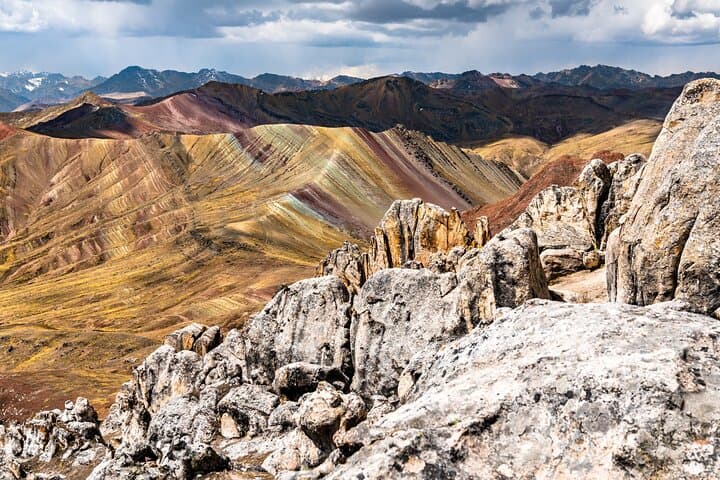
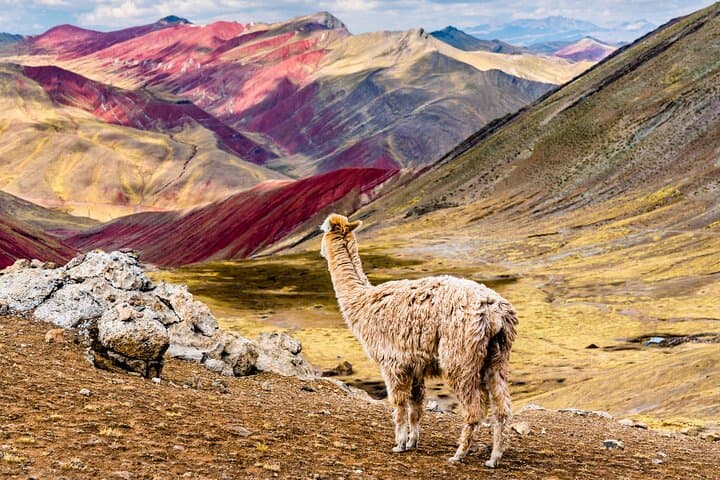
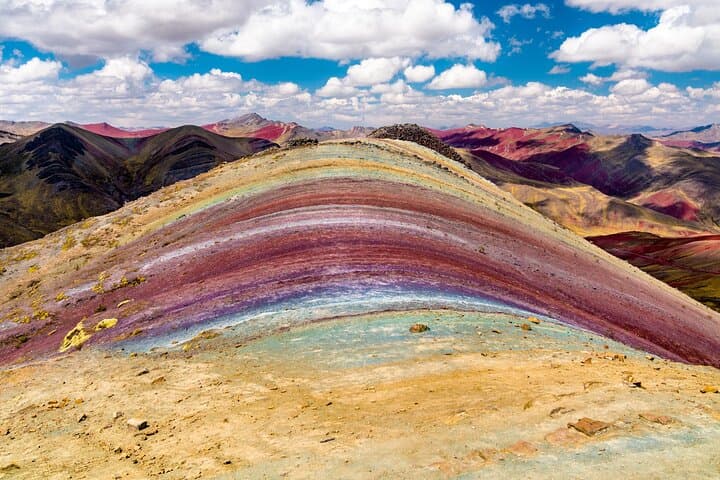
You step out before dawn into thin, cold air as the van eases out of Cusco toward high Andean plateaus, lights of farming communities slipping behind. By the time the sun fingers the ridgelines, the paler stripes of Palccoyo begin to glow—bands of ochre, rust and mint folding across rounded summits. The place moves slowly here: sheep graze on windswept slopes, and the mountains seem to shift color as clouds pass.
Verified experiences and guided adventures in the surrounding area.
Operated by Ausangate trail · Cusco, Cusco
You step out before dawn into thin, cold air as the van eases out of Cusco toward high Andean plateaus, lights of farming communities slipping behind. By the time the sun fingers the ridgelines, the paler stripes of Palccoyo begin to glow—bands of ochre, rust and mint folding across rounded summits. The place moves slowly here: sheep graze on windswept slopes, and the mountains seem to shift color as clouds pass.
Geologically the stripes are iron, copper and other mineral deposits exposed by uplift and erosion of the Vilcanota range. Culturally this landscape sits in the ancestral realm of Quechua communities; local guides often explain how mountains (apus) hold spiritual importance and how seasonal herding and potato cultivation shape life in these valleys.
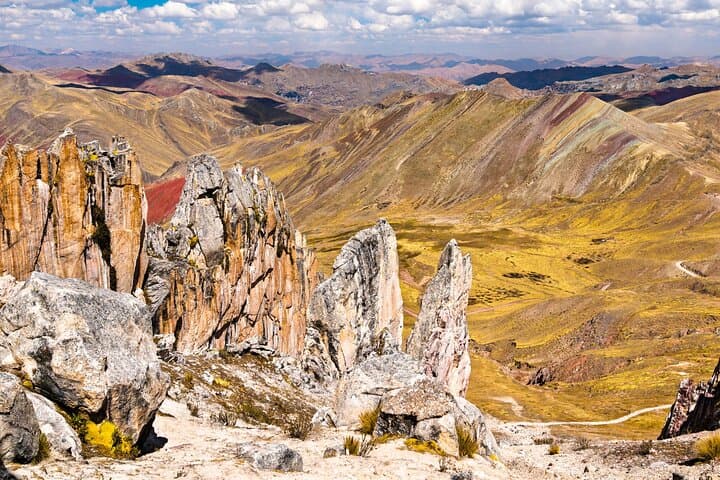
The walk to the viewpoints is short—roughly 30–45 minutes on mostly packed earth trails with some loose scree—making Palccoyo a lower-altitude, lower-crowd alternative to Vinicunca. Nearby the Stone Forest offers wind-carved pillars that feel like fossilized trees daring you to climb among them for different perspectives.
Practical notes: start early to avoid afternoon weather; bring layers for rapid temperature swings, sun protection and water for altitude exertion. The included breakfast and lunch give you time to recover and listen to local stories. Expect a long day (return mid-late afternoon) and moderate exertion at 4,200–4,600 m elevation—take your time, pace your breathing, and use trekking poles if you have them. This is a photographic, cultural and geological half-hike that rewards curiosity and patience.
moderate.
12–14 hours (round trip from Cusco).
Moderate cardio fitness recommended; ability to walk 30–45 minutes uphill at high altitude is required
Most groups walk about 30–45 minutes from the trailhead to the main viewpoints; time on-site for photos and exploration can add another 30–60 minutes.
The trailhead and viewpoints sit roughly between 4,200 and 4,600 meters (13,800–15,100 ft), so altitude symptoms are possible—ascend slowly and hydrate.
Yes, the route is relatively short and less steep than Vinicunca, but children and inexperienced hikers should be acclimatized and able to manage short uphill hikes at high elevation.
Yes—this tour includes hotel pickup in Cusco, tourist transport, breakfast and buffet lunch as stated in the inclusions.
The mountains are part of the larger Vilcanota/Ausangate region long inhabited by Quechua communities; locals regard certain peaks as apus, or protective mountain spirits.
Stay on designated trails to reduce erosion; local communities depend on grazing and small-scale agriculture, so respect pastures and avoid littering.
Ausangate trail operates guided outdoor trips and adventures with an emphasis on safety, stewardship, and memorable experiences.
You step out before dawn into thin, cold air as the van eases out of Cusco toward high Andean plateaus, lights of farming communities slipping behind. By the time the sun fingers the ridgelines, the paler stripes of Palccoyo begin to glow—bands of ochre, rust and mint folding across rounded summits. The place moves slowly here: sheep graze on windswept slopes, and the mountains seem to shift color as clouds pass.
You step out before dawn into thin, cold air as the van eases out of Cusco toward high Andean plateaus, lights of farming communities slipping behind. By the time the sun fingers the ridgelines, the paler stripes of Palccoyo begin to glow—bands of ochre, rust and mint folding across rounded summits. The place moves slowly here: sheep graze on windswept slopes, and the mountains seem to shift color as clouds pass.
Geologically the stripes are iron, copper and other mineral deposits exposed by uplift and erosion of the Vilcanota range. Culturally this landscape sits in the ancestral realm of Quechua communities; local guides often explain how mountains (apus) hold spiritual importance and how seasonal herding and potato cultivation shape life in these valleys.
The walk to the viewpoints is short—roughly 30–45 minutes on mostly packed earth trails with some loose scree—making Palccoyo a lower-altitude, lower-crowd alternative to Vinicunca. Nearby the Stone Forest offers wind-carved pillars that feel like fossilized trees daring you to climb among them for different perspectives.
Practical notes: start early to avoid afternoon weather; bring layers for rapid temperature swings, sun protection and water for altitude exertion. The included breakfast and lunch give you time to recover and listen to local stories. Expect a long day (return mid-late afternoon) and moderate exertion at 4,200–4,600 m elevation—take your time, pace your breathing, and use trekking poles if you have them. This is a photographic, cultural and geological half-hike that rewards curiosity and patience.