THE ADVENTURE COLLECTIVE® · Independent discovery and booking for outdoor travel

Skip long queues with timed-entry tickets and step directly into the Hall of Mirrors and the expansive Le Nôtre gardens. This guide explains what to expect, how to plan your visit, and practical tips for making the most of Versailles' palace and grounds.
Skip long queues with timed-entry tickets and step directly into the Hall of Mirrors and the expansive Le Nôtre gardens. This guide explains what to expect, how to plan your visit, and practical tips for making the most of Versailles' palace and grounds.
You step through the wrought-iron gates as a long avenue of plane trees squares the air; water from distant fountains announces the estate before the palace appears, its stone façade bright against a pale Parisian sky. Inside, the Hall of Mirrors tilts light like a staged sea, gilt frames and chandeliers catching every movement while the gardens outside, laid out with geometric intent, stretch into a landscape that dares you to walk every axis.
Verified experiences and guided adventures in the surrounding area.
You step through the wrought-iron gates as a long avenue of plane trees squares the air; water from distant fountains announces the estate before the palace appears, its stone façade bright against a pale Parisian sky. Inside, the Hall of Mirrors tilts light like a staged sea, gilt frames and chandeliers catching every movement while the gardens outside, laid out with geometric intent, stretch into a landscape that dares you to walk every axis.
Versailles grew from a 17th-century hunting lodge into King Louis XIV’s instrument of power. André Le Nôtre’s gardens rearranged earth and water to choreograph perspective, while the palace interiors were designed to project monarchy through art, sculpture, and ceremonial space. The estate sits on sedimentary plains of Île-de-France, where engineered canals and gravity-fed fountains remain feats of early hydraulic design. Local culture still orients around ritual—guided tours, music-fountain events, and weekend markets enliven the town of Versailles.
Practically: timed-entry tickets save hours in high season, and garden access is often free except on fountain-show days when a separate fee may apply. Allow 2–4 hours for the palace and another 1–3 hours for the formal gardens; wear sturdy shoes—paths are gravel and some slopes can be firm underfoot. Bring a refillable bottle, check the schedule for musical fountains, and arrive early or late afternoon to avoid peak coach crowds. Public transit (RER C or Versailles Rive-Gauche train) is efficient; parking is limited. Restrooms, cafés, and picnic spots exist but plan breaks—there’s a lot to see and the grounds demand slow feet and patient eyes.
easy.
2–4 hours (palace); add 1–3 hours for gardens.
Light to moderate walking fitness recommended; you’ll be on your feet and traversing gravel and paved paths
Timed tickets guarantee entry at your slot but you may still queue at security and ticket check; arrive 10–15 minutes early.
General garden access is usually included, but special events like Musical Fountains or Grand Canal shows may require a separate paid ticket.
Take RER C to Versailles Château–Rive Gauche (about 40 minutes) or SNCF trains to Versailles Chantiers; both are a short walk from the palace.
Key palace areas have ramps and elevators, but some historic sections and garden paths are uneven; contact site services in advance for assistance.
Versailles was transformed by Louis XIV into a central seat of power; its architecture and gardens were designed to control sightlines and social ritual in 17th-century France.
Ongoing conservation balances heavy visitor use with preservation—follow marked paths, avoid picking plants, and use waste bins to protect historic landscapes.
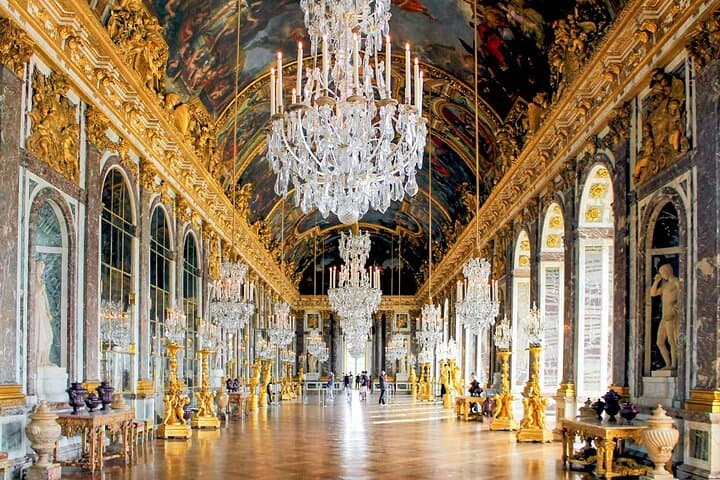
You step through the wrought-iron gates as a long avenue of plane trees squares the air; water from distant fountains announces the estate before the palace appears, its stone façade bright against a pale Parisian sky. Inside, the Hall of Mirrors tilts light like a staged sea, gilt frames and chandeliers catching every movement while the gardens outside, laid out with geometric intent, stretch into a landscape that dares you to walk every axis.
You step through the wrought-iron gates as a long avenue of plane trees squares the air; water from distant fountains announces the estate before the palace appears, its stone façade bright against a pale Parisian sky. Inside, the Hall of Mirrors tilts light like a staged sea, gilt frames and chandeliers catching every movement while the gardens outside, laid out with geometric intent, stretch into a landscape that dares you to walk every axis.
Versailles grew from a 17th-century hunting lodge into King Louis XIV’s instrument of power. André Le Nôtre’s gardens rearranged earth and water to choreograph perspective, while the palace interiors were designed to project monarchy through art, sculpture, and ceremonial space. The estate sits on sedimentary plains of Île-de-France, where engineered canals and gravity-fed fountains remain feats of early hydraulic design. Local culture still orients around ritual—guided tours, music-fountain events, and weekend markets enliven the town of Versailles.
Practically: timed-entry tickets save hours in high season, and garden access is often free except on fountain-show days when a separate fee may apply. Allow 2–4 hours for the palace and another 1–3 hours for the formal gardens; wear sturdy shoes—paths are gravel and some slopes can be firm underfoot. Bring a refillable bottle, check the schedule for musical fountains, and arrive early or late afternoon to avoid peak coach crowds. Public transit (RER C or Versailles Rive-Gauche train) is efficient; parking is limited. Restrooms, cafés, and picnic spots exist but plan breaks—there’s a lot to see and the grounds demand slow feet and patient eyes.