THE ADVENTURE COLLECTIVE® · Independent discovery and booking for outdoor travel

Walk the streets where the 1697 Paisley witch trial unfolded. This guided tour visits Paisley Abbey, the execution site at Gallows Green, and local memorials while contextualizing the social forces that led to the tragedy.
Walk the streets where the 1697 Paisley witch trial unfolded. This guided tour visits Paisley Abbey, the execution site at Gallows Green, and local memorials while contextualizing the social forces that led to the tragedy.
The afternoon air in Paisley carries the weight of old stone and whispered verdicts. You step from a modern high street into narrow lanes where footfall slackens and the Abbey’s crumbling walls seem to lean in to listen. Guides pause under carved gargoyles and point to a low patch of cobbles; here the town’s darkest chapter unfolded in 1697, when suspicion, illness and a flawed legal system culminated in one of Scotland’s last mass witch trials.
Verified experiences and guided adventures in the surrounding area.
Operated by Paisley Tours · Paisley, Scotland
The afternoon air in Paisley carries the weight of old stone and whispered verdicts. You step from a modern high street into narrow lanes where footfall slackens and the Abbey’s crumbling walls seem to lean in to listen. Guides pause under carved gargoyles and point to a low patch of cobbles; here the town’s darkest chapter unfolded in 1697, when suspicion, illness and a flawed legal system culminated in one of Scotland’s last mass witch trials.
The route threads Paisley Abbey, its graveyard, and the execution site at Gallows Green, tracing social and religious tensions of the late 17th century. Geology is subtle but present—local sandstone built the abbey and grave markers that now bear weathered moss—and the River Cart keeps its own slow calendar, daring pedestrians to remember how waterways shaped trade and rumor. Local culture surfaces in small details: a memorial plaque, a reborn civic conversation about justice, and a portion of ticket proceeds that supports the Renfrewshire Witch Hunt 1697 memorial fund.
Practically, expect 1–2 hours of mostly flat walking on cobbles and paved streets, some tight spaces and standing during storytelling. Wear sturdy shoes for uneven surfaces; bring a waterproof layer—the weather changes quickly in central Scotland—and arrive 10 minutes early for orientation. Guides recommend respectful silence at the memorial and an openness to hearing difficult histories told from community perspectives. For travelers who want context, pair the tour with a visit inside Paisley Abbey and a walk along the River Cart for quieter reflection.
moderate.
1–2 hours.
Moderate fitness required—ability to stand and walk up to two hours over uneven pavement.
The tour lasts approximately 60–120 minutes depending on group size and Q&A.
Older children can join, but the material is serious and may be distressing; infants are permitted but must sit on laps.
Yes—Paisley is served by regular trains and buses; the guide will list the exact meeting location on booking confirmation.
Full refunds are available if you cancel at least 24 hours before departure; the tour may be canceled for bad weather or insufficient travelers.
The 1697 Paisley witch trial saw seven people—mostly women—accused and sentenced to death, a case that revealed local tensions between folk belief and ecclesiastical authority.
The tour supports a local memorial fund; visitors are encouraged to stay on paths, avoid disturbing grave markers, and support preservation efforts through donations or respectful tourism.
Paisley Tours operates guided outdoor trips and adventures with an emphasis on safety, stewardship, and memorable experiences.
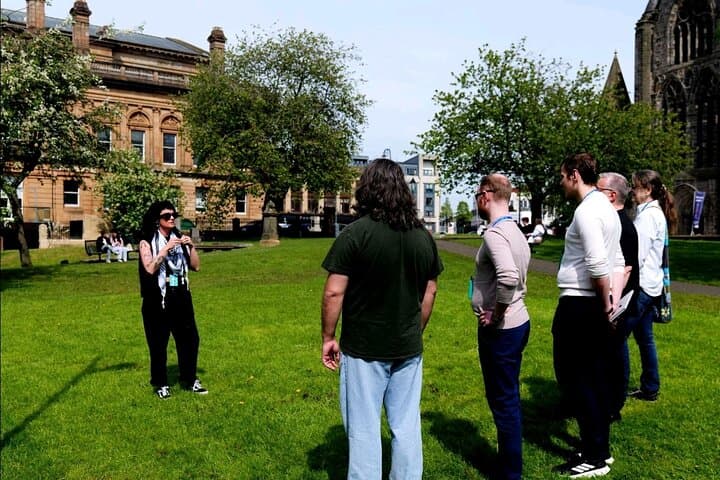
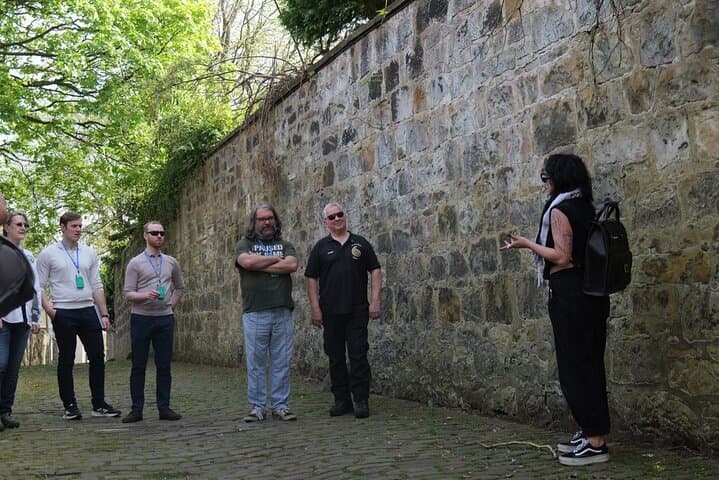
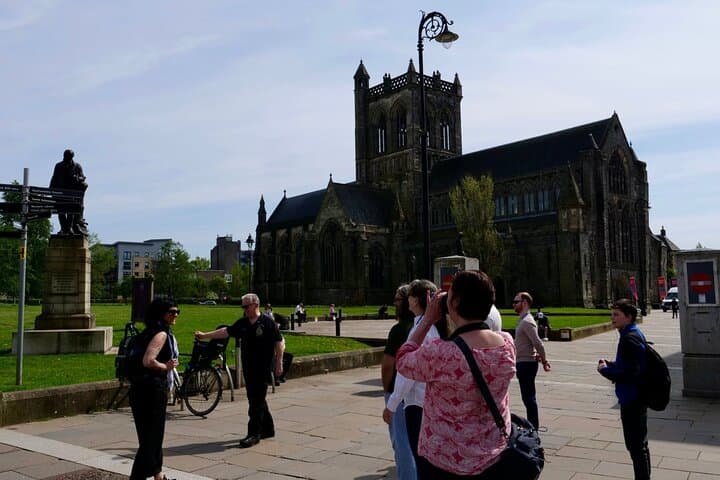
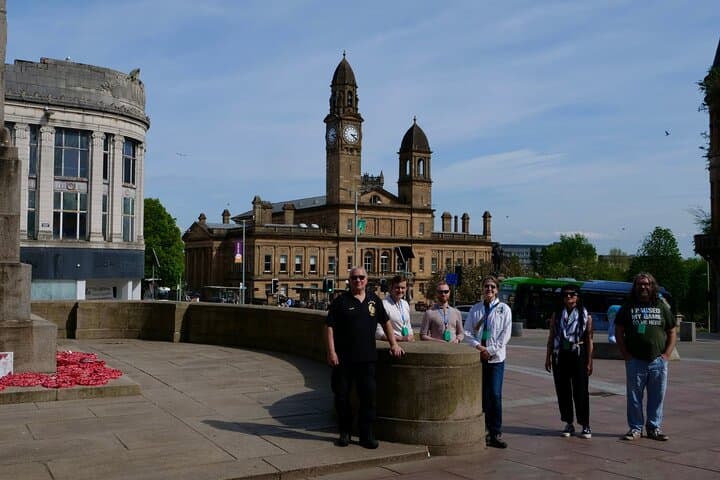
The afternoon air in Paisley carries the weight of old stone and whispered verdicts. You step from a modern high street into narrow lanes where footfall slackens and the Abbey’s crumbling walls seem to lean in to listen. Guides pause under carved gargoyles and point to a low patch of cobbles; here the town’s darkest chapter unfolded in 1697, when suspicion, illness and a flawed legal system culminated in one of Scotland’s last mass witch trials.
The afternoon air in Paisley carries the weight of old stone and whispered verdicts. You step from a modern high street into narrow lanes where footfall slackens and the Abbey’s crumbling walls seem to lean in to listen. Guides pause under carved gargoyles and point to a low patch of cobbles; here the town’s darkest chapter unfolded in 1697, when suspicion, illness and a flawed legal system culminated in one of Scotland’s last mass witch trials.
The route threads Paisley Abbey, its graveyard, and the execution site at Gallows Green, tracing social and religious tensions of the late 17th century. Geology is subtle but present—local sandstone built the abbey and grave markers that now bear weathered moss—and the River Cart keeps its own slow calendar, daring pedestrians to remember how waterways shaped trade and rumor. Local culture surfaces in small details: a memorial plaque, a reborn civic conversation about justice, and a portion of ticket proceeds that supports the Renfrewshire Witch Hunt 1697 memorial fund.
Practically, expect 1–2 hours of mostly flat walking on cobbles and paved streets, some tight spaces and standing during storytelling. Wear sturdy shoes for uneven surfaces; bring a waterproof layer—the weather changes quickly in central Scotland—and arrive 10 minutes early for orientation. Guides recommend respectful silence at the memorial and an openness to hearing difficult histories told from community perspectives. For travelers who want context, pair the tour with a visit inside Paisley Abbey and a walk along the River Cart for quieter reflection.