THE ADVENTURE COLLECTIVE® · Independent discovery and booking for outdoor travel

Walk Paisley’s streets with a local guide and personal audio for a compact, two‑hour look at the abbey, mills, weavers’ cottages and kiltmakers that shaped the town. Perfect for history lovers and first‑time visitors who want context and stories delivered clearly.
Walk Paisley’s streets with a local guide and personal audio for a compact, two‑hour look at the abbey, mills, weavers’ cottages and kiltmakers that shaped the town. Perfect for history lovers and first‑time visitors who want context and stories delivered clearly.
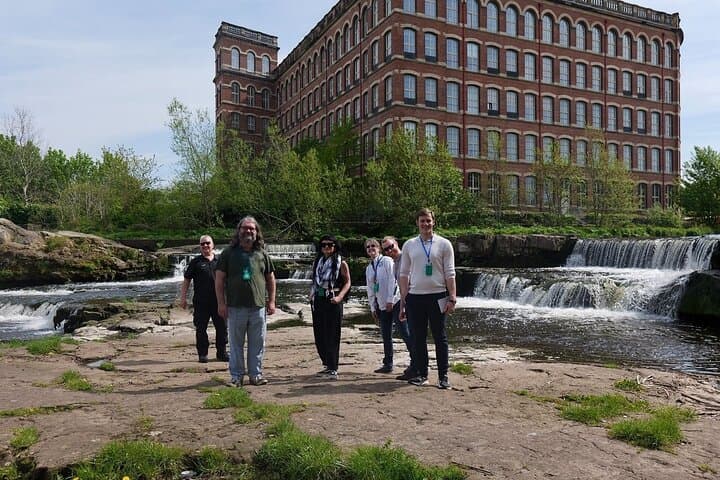
You step off the high street and into a town that still carries the rhythm of looms and the hush of monastic stone. The two-hour Paisley history walk moves at a human pace: narrow lanes, civic squares and the long facades of former mills framed by a skyline of spires and chimneys.
Verified experiences and guided adventures in the surrounding area.
Operated by Paisley Tours · Paisley, Renfrewshire
You step off the high street and into a town that still carries the rhythm of looms and the hush of monastic stone. The two-hour Paisley history walk moves at a human pace: narrow lanes, civic squares and the long facades of former mills framed by a skyline of spires and chimneys.
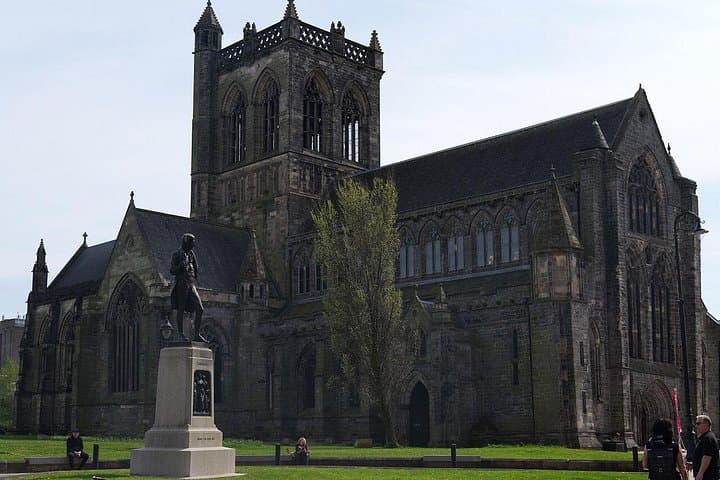
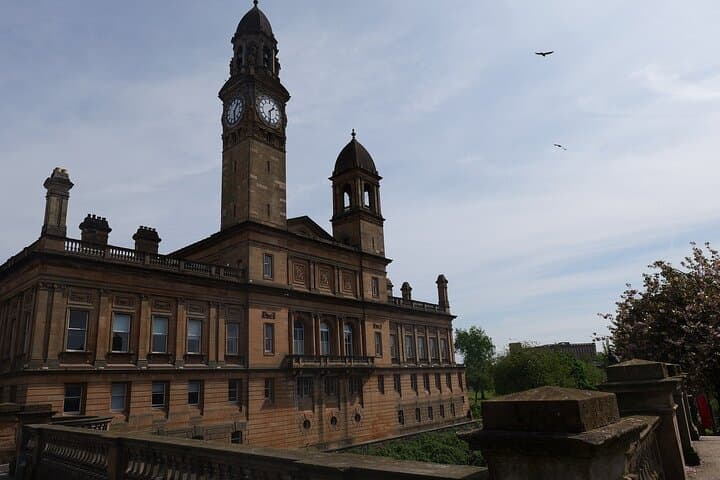
This route threads together Paisley’s medieval origins around the 12th‑century abbey, its transformation into a global textile centre famous for the Paisley pattern, and the civic confidence of Victorian and Art Deco public buildings. Guides use personal audio headsets so you can hear stories of radical weavers, local poets like Robert Tannahill, and the family-run kiltmakers whose workshop survives from the early 20th century.
Geology here is subtle—river gravel terraces of the White Cart and glacially scoured lowlands shaped where industry settled—but the real landscape is cultural: red‑brick mills, Gothic silhouettes, and well‑preserved weavers’ cottages that mark the town’s social geography.
Practical notes: expect about two hours of easy walking on paved streets with a few cobbles and short steps; comfortable footwear is advised. Public transport options to Paisley are frequent from Glasgow, and tours cap around 15 people for clarity over headsets. Bring a weatherproof layer—Scottish weather changes fast—and a small bottle of water. The tour balances storytelling with on‑the‑ground context, making it ideal for history buffs and casual walkers who want an efficient, sensory introduction to Paisley’s past.
easy.
2 hours.
Suitable for most fitness levels; participants should be able to stand and walk on paved surfaces for two hours.
Yes—personal audio headsets are included so you can hear the guide clearly in small groups.
The tour is generally on paved streets but includes short steps and cobbles; contact the operator with accessibility needs before booking.
Shared tours are capped at approximately 15 participants to keep the experience intimate and audible via headsets.
For a full refund cancel at least 24 hours before the scheduled start time; same‑day cancellations are not refundable.
Paisley grew from a medieval monastery site into a global textile centre; its iconic ‘Paisley’ shawl motif links local craft to 19th‑century trade networks.
Visitors are encouraged to stick to pavements and respect conservation signage; supporting local museums and shops helps maintain heritage buildings.
Paisley Tours operates guided outdoor trips and adventures with an emphasis on safety, stewardship, and memorable experiences.
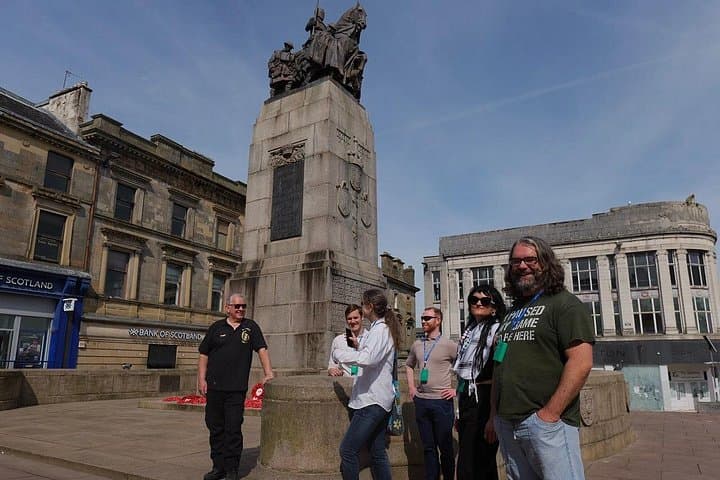
You step off the high street and into a town that still carries the rhythm of looms and the hush of monastic stone. The two-hour Paisley history walk moves at a human pace: narrow lanes, civic squares and the long facades of former mills framed by a skyline of spires and chimneys.
You step off the high street and into a town that still carries the rhythm of looms and the hush of monastic stone. The two-hour Paisley history walk moves at a human pace: narrow lanes, civic squares and the long facades of former mills framed by a skyline of spires and chimneys.
This route threads together Paisley’s medieval origins around the 12th‑century abbey, its transformation into a global textile centre famous for the Paisley pattern, and the civic confidence of Victorian and Art Deco public buildings. Guides use personal audio headsets so you can hear stories of radical weavers, local poets like Robert Tannahill, and the family-run kiltmakers whose workshop survives from the early 20th century.
Geology here is subtle—river gravel terraces of the White Cart and glacially scoured lowlands shaped where industry settled—but the real landscape is cultural: red‑brick mills, Gothic silhouettes, and well‑preserved weavers’ cottages that mark the town’s social geography.
Practical notes: expect about two hours of easy walking on paved streets with a few cobbles and short steps; comfortable footwear is advised. Public transport options to Paisley are frequent from Glasgow, and tours cap around 15 people for clarity over headsets. Bring a weatherproof layer—Scottish weather changes fast—and a small bottle of water. The tour balances storytelling with on‑the‑ground context, making it ideal for history buffs and casual walkers who want an efficient, sensory introduction to Paisley’s past.