THE ADVENTURE COLLECTIVE® · Independent discovery and booking for outdoor travel

Combine a boat ride into glowing slot canyons with a short rim hike to Horseshoe Bend and a tucked-away sand cave near town. This semi-guided day trip blends dramatic geology, easy access, and local flavor.
Combine a boat ride into glowing slot canyons with a short rim hike to Horseshoe Bend and a tucked-away sand cave near town. This semi-guided day trip blends dramatic geology, easy access, and local flavor.
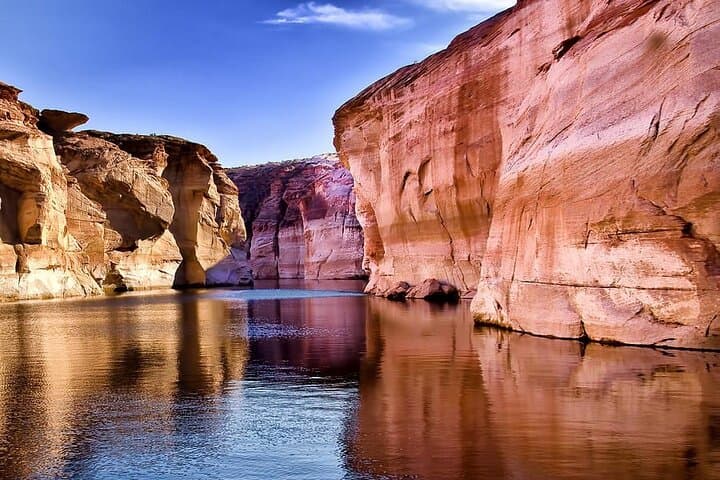
The day begins with a sun-bleached horizon over Page, Arizona, and a shuttle that threads you past red-baked mesas to the water’s edge. A boat slips forward and the lake accepts it, guiding you into a narrow slot where sandstone walls close like pages of a slow, patient story. Light slices the canyon; the water mirrors the ochre and gold.
Verified experiences and guided adventures in the surrounding area.
Operated by Lake & Stone · Page, Arizona
The day begins with a sun-bleached horizon over Page, Arizona, and a shuttle that threads you past red-baked mesas to the water’s edge. A boat slips forward and the lake accepts it, guiding you into a narrow slot where sandstone walls close like pages of a slow, patient story. Light slices the canyon; the water mirrors the ochre and gold.
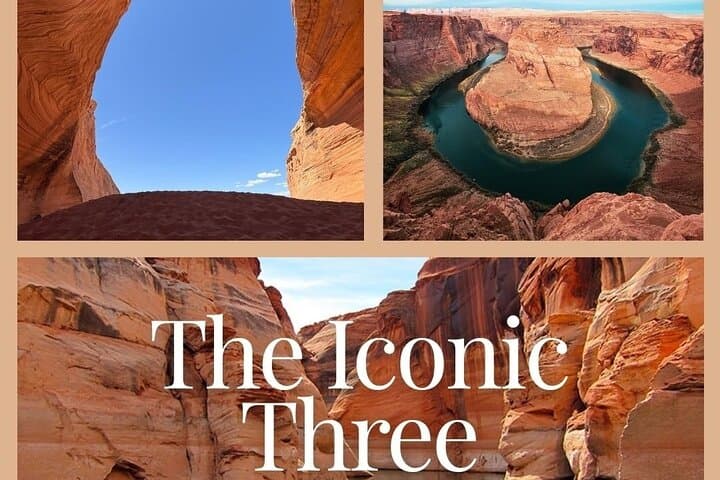
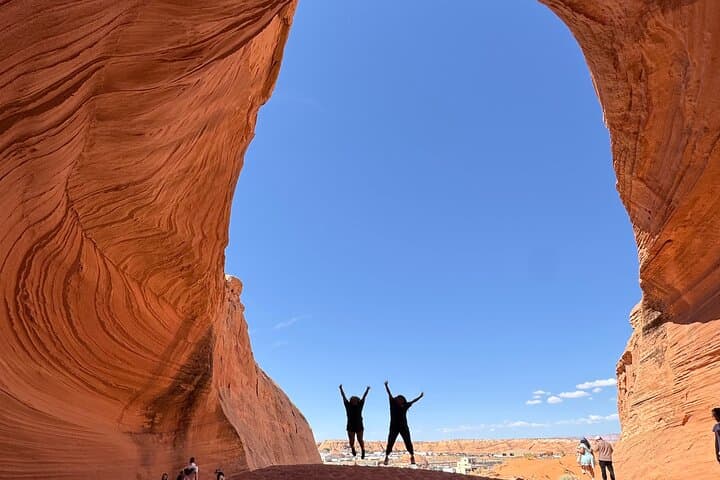
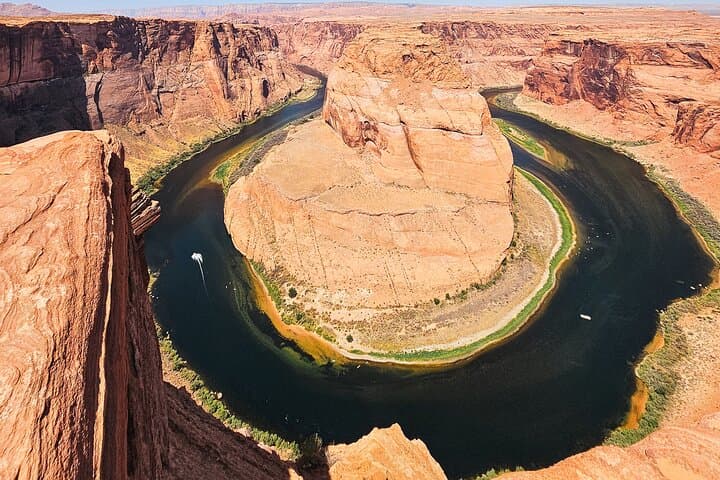
This route ties three distinct chapters of the Colorado Plateau. Antelope Canyon’s sinuous corridors are sculpted Navajo Sandstone shaped by millennia of water and wind, while Horseshoe Bend offers a panoramic rim view of the Colorado River making a perfect horseshoe some 1,000 feet below. Shell Cave, a short urban discovery tucked behind a Page gas station, reveals polished honey-hued surfaces that punk up any camera roll.
Expect roughly a 5–5.5 hour outing: a 60-minute boat passage into Antelope Canyon, a 1.2-mile round-trip walk to the Horseshoe Bend overlook, and short stops for Shell Cave and lunch at Brew It, a Native-owned cafe. The terrain is exposed sandstone and packed dirt with minimal shade; footing can be uneven. Stay hydrated, wear closed-toe shoes with traction, and time the visit for early morning or late afternoon to soften the light and avoid peak heat.
Culturally, these sites sit within traditional Navajo territory and around Glen Canyon’s reservoir; respect guide instructions and photography limits. Practically, bring sun protection, a charged camera, and modest layers for breezy canyon currents. The landscapes demand attention but reward with some of the Southwest’s purest rock-and-water drama.
moderate.
5–5.5 hours.
Moderate fitness: able to walk 1–2 miles over uneven ground and manage short stair or ladder sections on the boat entry/exit.
Yes, the tour includes entrance fees for Horseshoe Bend and Antelope Point Marina as well as a sit-down lunch with beverage choices.
Generally yes for children and active seniors, but participants should manage short walks and exposed overlooks; not recommended for those with serious back or heart conditions.
Access to Antelope Canyon areas on Navajo land is managed by licensed guides; this tour includes the necessary permits and guided access.
Tripods may be allowed depending on the guide and group size; drones are prohibited on Navajo lands and in many protected canyon areas.
The slot canyons and surrounding cliffs are Navajo Nation lands formed from Navajo Sandstone; Glen Canyon was dramatically altered after the Glen Canyon Dam and creation of Lake Powell in the 1960s.
These sandstone features are fragile; stay on trails, pack out trash, and follow tribal regulations to protect cultural sites and prevent erosion.
Lake & Stone operates guided outdoor trips and adventures with an emphasis on safety, stewardship, and memorable experiences.
The day begins with a sun-bleached horizon over Page, Arizona, and a shuttle that threads you past red-baked mesas to the water’s edge. A boat slips forward and the lake accepts it, guiding you into a narrow slot where sandstone walls close like pages of a slow, patient story. Light slices the canyon; the water mirrors the ochre and gold.
The day begins with a sun-bleached horizon over Page, Arizona, and a shuttle that threads you past red-baked mesas to the water’s edge. A boat slips forward and the lake accepts it, guiding you into a narrow slot where sandstone walls close like pages of a slow, patient story. Light slices the canyon; the water mirrors the ochre and gold.
This route ties three distinct chapters of the Colorado Plateau. Antelope Canyon’s sinuous corridors are sculpted Navajo Sandstone shaped by millennia of water and wind, while Horseshoe Bend offers a panoramic rim view of the Colorado River making a perfect horseshoe some 1,000 feet below. Shell Cave, a short urban discovery tucked behind a Page gas station, reveals polished honey-hued surfaces that punk up any camera roll.
Expect roughly a 5–5.5 hour outing: a 60-minute boat passage into Antelope Canyon, a 1.2-mile round-trip walk to the Horseshoe Bend overlook, and short stops for Shell Cave and lunch at Brew It, a Native-owned cafe. The terrain is exposed sandstone and packed dirt with minimal shade; footing can be uneven. Stay hydrated, wear closed-toe shoes with traction, and time the visit for early morning or late afternoon to soften the light and avoid peak heat.
Culturally, these sites sit within traditional Navajo territory and around Glen Canyon’s reservoir; respect guide instructions and photography limits. Practically, bring sun protection, a charged camera, and modest layers for breezy canyon currents. The landscapes demand attention but reward with some of the Southwest’s purest rock-and-water drama.