THE ADVENTURE COLLECTIVE® · Independent discovery and booking for outdoor travel

Walk among three towering Doric temples, explore a small museum that houses the Tomb of the Diver, and finish with a tasting at a local buffalo mozzarella producer. This guided 2–3 hour tour blends archaeology, geology, and local food traditions.
Walk among three towering Doric temples, explore a small museum that houses the Tomb of the Diver, and finish with a tasting at a local buffalo mozzarella producer. This guided 2–3 hour tour blends archaeology, geology, and local food traditions.
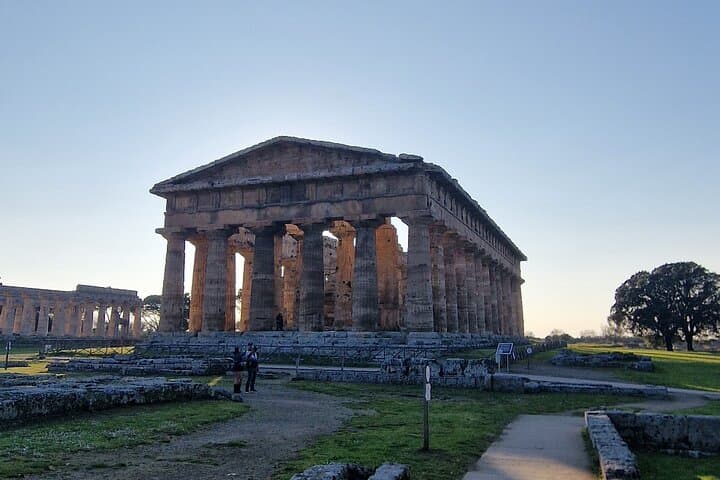
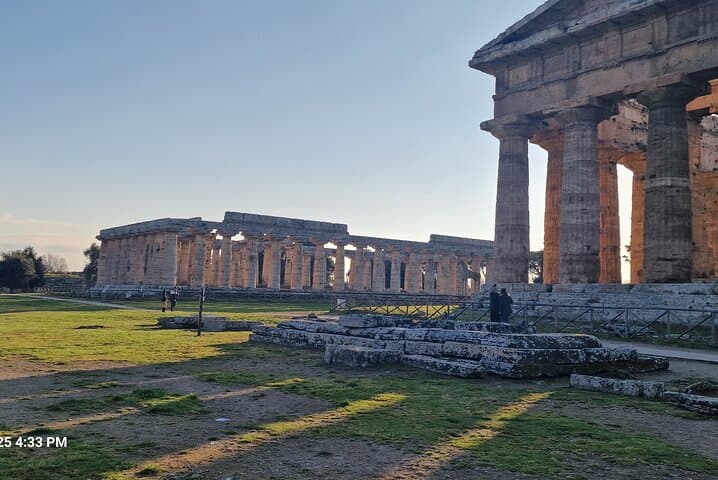
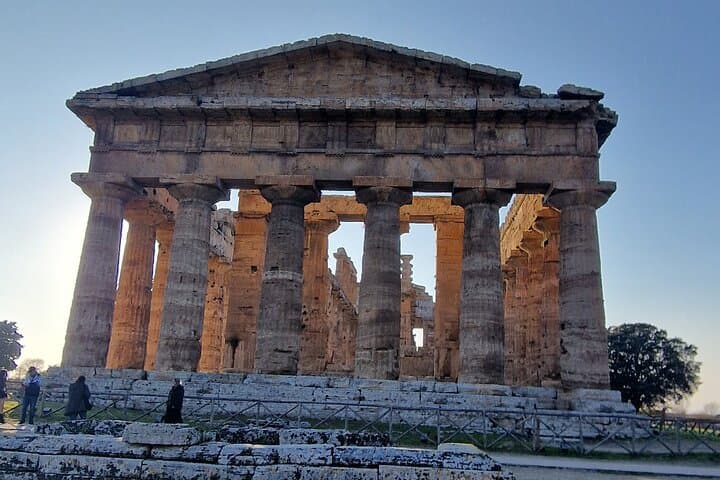
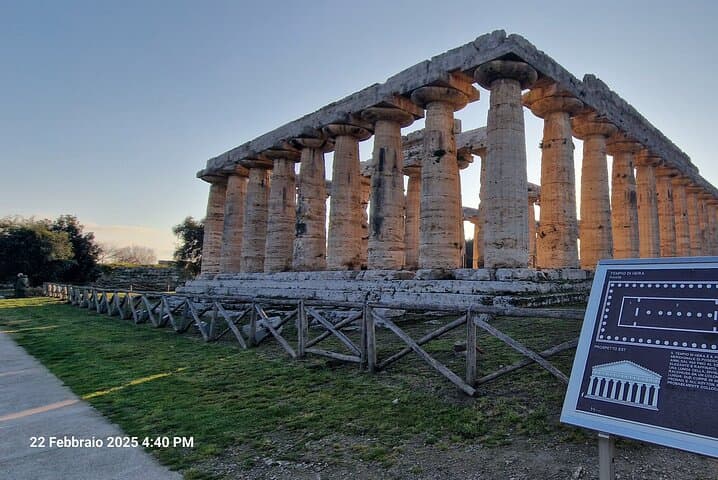
The morning sun edges over low Campanian plains and the three Doric temples throw long, simple shadows across knee-high grass. You follow stone paths beneath broad skies; the columns stand like patient hosts while the sea, a few kilometers away, dares the breeze to cross the plain.
Verified experiences and guided adventures in the surrounding area.
Operated by Enzo Masullo · Paestum (Capaccio), Campania
The morning sun edges over low Campanian plains and the three Doric temples throw long, simple shadows across knee-high grass. You follow stone paths beneath broad skies; the columns stand like patient hosts while the sea, a few kilometers away, dares the breeze to cross the plain.
This guided walk moves from open ruins to the museum where the famed Tomb of the Diver greets visitors — a rare, intact Greek-era fresco. Paestum began as the Greek colony Poseidonia in the 6th century BCE; over centuries Roman layers and coastal sediment reshaped the landscape, leaving a flat, limestone plain that preserved monumental architecture. Local culture remains agricultural: buffalo herds graze nearby, and buffalo mozzarella is a culinary tradition born of this land.
Expect uneven, dusty trails and broad exposed sun. The museum houses painted tombs, pottery, and inscriptions that put the temples in context; a bilingual local guide connects architecture to daily life and the region’s geology. After the archaeology, the tour’s short stop at a nearby mozzarella producer offers a hands-on local taste.
Practical notes: the walk lasts about 2–3 hours, suitable for most fitness levels but wear closed-toe shoes and sun protection. Bring water and move at your guide’s pace to protect fragile walls and frescoes. Wheelchair access at the park is limited. Book early for cooler light and quieter ruins; combine the visit with local food for a fuller picture of ancient and modern Paestum.
easy.
2–3 hours.
Suitable for most visitors who can walk on uneven ground for up to three hours with short standing periods
Entrance ticket is included with this tour; the guide handles entry so you can focus on the visit.
The park has uneven ground and limited wheelchair access; the tour note states wheelchair not accessible.
Expect roughly 2–3 hours with moderate walking distance across flat but uneven terrain—comfortable shoes recommended.
Yes — the tour includes a stop at a local buffalo mozzarella producer for a tasting and a brief factory visit.
Paestum began as the Greek city Poseidonia around the 6th century BCE; its well-preserved Doric temples and funerary paintings reveal Greek and later Roman occupation patterns.
Stay on marked paths to protect fragile ruins and frescoes; support local producers and guides who follow site regulations to reduce wear and preserve context.
Enzo Masullo operates guided outdoor trips and adventures with an emphasis on safety, stewardship, and memorable experiences.
The morning sun edges over low Campanian plains and the three Doric temples throw long, simple shadows across knee-high grass. You follow stone paths beneath broad skies; the columns stand like patient hosts while the sea, a few kilometers away, dares the breeze to cross the plain.
The morning sun edges over low Campanian plains and the three Doric temples throw long, simple shadows across knee-high grass. You follow stone paths beneath broad skies; the columns stand like patient hosts while the sea, a few kilometers away, dares the breeze to cross the plain.
This guided walk moves from open ruins to the museum where the famed Tomb of the Diver greets visitors — a rare, intact Greek-era fresco. Paestum began as the Greek colony Poseidonia in the 6th century BCE; over centuries Roman layers and coastal sediment reshaped the landscape, leaving a flat, limestone plain that preserved monumental architecture. Local culture remains agricultural: buffalo herds graze nearby, and buffalo mozzarella is a culinary tradition born of this land.
Expect uneven, dusty trails and broad exposed sun. The museum houses painted tombs, pottery, and inscriptions that put the temples in context; a bilingual local guide connects architecture to daily life and the region’s geology. After the archaeology, the tour’s short stop at a nearby mozzarella producer offers a hands-on local taste.
Practical notes: the walk lasts about 2–3 hours, suitable for most fitness levels but wear closed-toe shoes and sun protection. Bring water and move at your guide’s pace to protect fragile walls and frescoes. Wheelchair access at the park is limited. Book early for cooler light and quieter ruins; combine the visit with local food for a fuller picture of ancient and modern Paestum.