THE ADVENTURE COLLECTIVE® · Independent discovery and booking for outdoor travel

Walk among monumental Doric temples and explore the seaside ruins of Velia on a full-day private tour from the Amalfi Coast. This itinerary pairs expert-led history with coastal views and local Campanian cuisine.
Walk among monumental Doric temples and explore the seaside ruins of Velia on a full-day private tour from the Amalfi Coast. This itinerary pairs expert-led history with coastal views and local Campanian cuisine.
A morning light filters across the broad Doric columns as the coach curves onto the plateau above Paestum. You step down onto ancient stone worn smooth by centuries; the sea smells faint and salt-lean air pushes through the ruins like a living memory. Guides trace myth and municipal life across the pedestals of Neptune and Ceres while the site’s scale makes present-day crowds feel small.
Verified experiences and guided adventures in the surrounding area.
Operated by Amalfi Tour Leader · Capaccio Paestum, Campania
A morning light filters across the broad Doric columns as the coach curves onto the plateau above Paestum. You step down onto ancient stone worn smooth by centuries; the sea smells faint and salt-lean air pushes through the ruins like a living memory. Guides trace myth and municipal life across the pedestals of Neptune and Ceres while the site’s scale makes present-day crowds feel small.
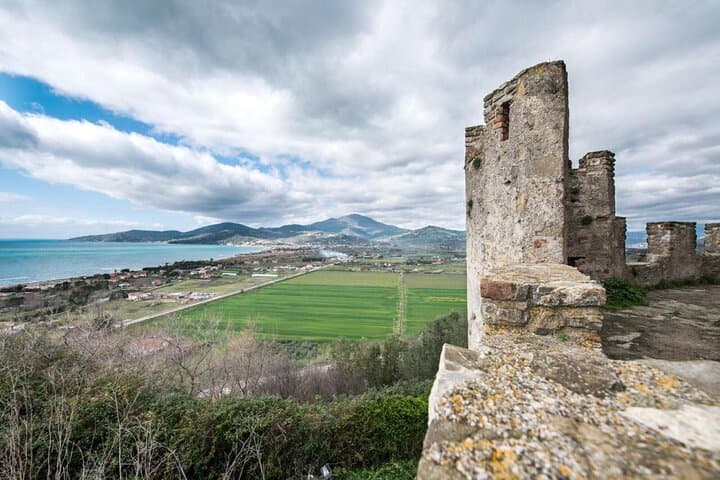
Paestum began as the Greek colony Poseidonia in the 6th century BC; its temples are unusually well preserved because the city remained remote for long stretches of history. In the afternoon the route turns south to Velia (ancient Elea), founded by exiles from Phocaea and famous for the Eleatic philosophers—Parmenides and Zeno—whose ideas shaped Western thought. Geologically, both sites sit on Plio-Pleistocene coastal terraces where limestone benches and clastic soils meet scrub and beach, which explains the commanding views over the Tyrrhenian.
The day balances archaeology and local culture: a museum visit at Paestum, a leisurely lunch of Campanian specialties, then a walk along Velia’s city wall and harbor. Expect uneven paths, open sun, short climbs and coastal breezes that demand layered clothing.
Practical guidance: wear sturdy walking shoes, carry at least 1 liter of water, and bring sun protection. Photography is permitted but avoid stepping off marked routes—these sites are protected. The tour operates as a private transfer with multiple pickup options along the Amalfi Coast and returns toward sunset, making timing and comfortable footwear the keys to an enjoyable, full-day exploration.
easy.
8–9 hours.
Suitable for travelers in light to moderate fitness who can walk 1–3 miles on uneven terrain and handle a full day of standing and short hikes.
Admissions are not included in the base tour price; entrances to Paestum museum and archaeological areas may require separate tickets payable on site.
Pickup is available from towns along the Amalfi Coast per booking selection; the tour returns toward sunset along the coast—confirm exact pickup and drop-off when booking.
Infants and small children can be accommodated, but strollers are only practical on paved sections; expect to carry or use baby carriers for uneven stretches.
Photography policies vary—non-flash photography is often allowed in open-air sites; check signage in the museum and follow staff instructions.
Paestum was originally the Greek colony Poseidonia (6th century BC); Velia (Elea) hosted the Eleatic school of philosophy, including Parmenides and Zeno.
Both archaeological parks are managed to limit erosion and visitor impact—stay on marked paths, avoid touching carved surfaces, and support local conservation by following guide instructions.
Amalfi Tour Leader operates guided outdoor trips and adventures with an emphasis on safety, stewardship, and memorable experiences.
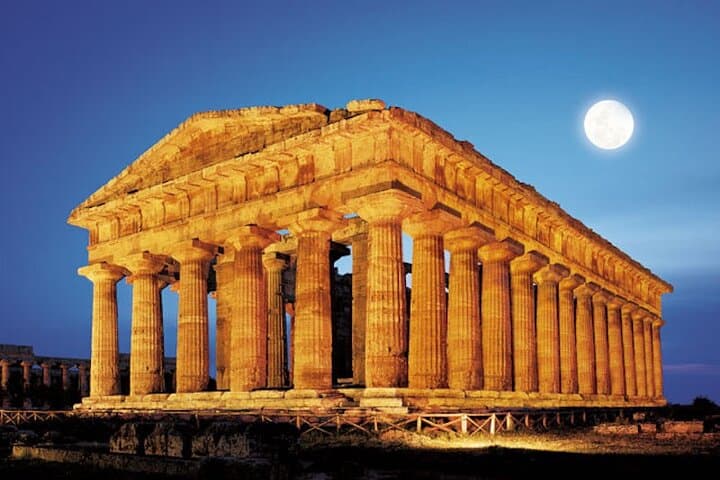
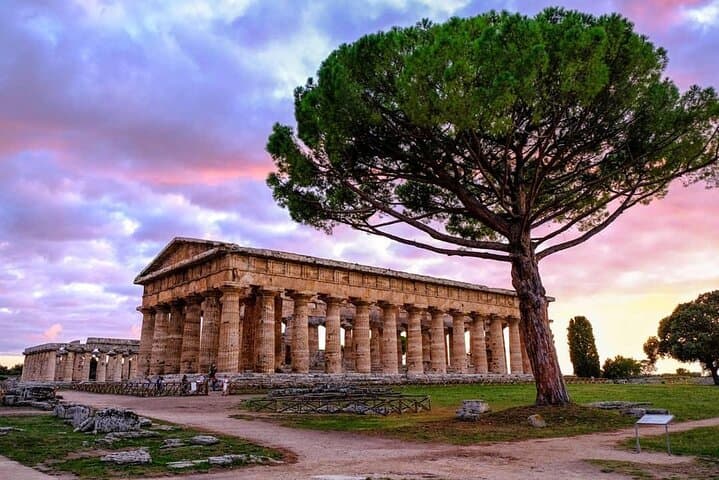

A morning light filters across the broad Doric columns as the coach curves onto the plateau above Paestum. You step down onto ancient stone worn smooth by centuries; the sea smells faint and salt-lean air pushes through the ruins like a living memory. Guides trace myth and municipal life across the pedestals of Neptune and Ceres while the site’s scale makes present-day crowds feel small.
A morning light filters across the broad Doric columns as the coach curves onto the plateau above Paestum. You step down onto ancient stone worn smooth by centuries; the sea smells faint and salt-lean air pushes through the ruins like a living memory. Guides trace myth and municipal life across the pedestals of Neptune and Ceres while the site’s scale makes present-day crowds feel small.
Paestum began as the Greek colony Poseidonia in the 6th century BC; its temples are unusually well preserved because the city remained remote for long stretches of history. In the afternoon the route turns south to Velia (ancient Elea), founded by exiles from Phocaea and famous for the Eleatic philosophers—Parmenides and Zeno—whose ideas shaped Western thought. Geologically, both sites sit on Plio-Pleistocene coastal terraces where limestone benches and clastic soils meet scrub and beach, which explains the commanding views over the Tyrrhenian.
The day balances archaeology and local culture: a museum visit at Paestum, a leisurely lunch of Campanian specialties, then a walk along Velia’s city wall and harbor. Expect uneven paths, open sun, short climbs and coastal breezes that demand layered clothing.
Practical guidance: wear sturdy walking shoes, carry at least 1 liter of water, and bring sun protection. Photography is permitted but avoid stepping off marked routes—these sites are protected. The tour operates as a private transfer with multiple pickup options along the Amalfi Coast and returns toward sunset, making timing and comfortable footwear the keys to an enjoyable, full-day exploration.