THE ADVENTURE COLLECTIVE® · Independent discovery and booking for outdoor travel

Explore Padua’s essentials in two hours with a local guide — from the atmospheric Prato della Valle to Giotto’s Scrovegni Chapel and the historic university quarter. Practical tips on timing, terrain and what to bring help you plan a confident city walk.
Explore Padua’s essentials in two hours with a local guide — from the atmospheric Prato della Valle to Giotto’s Scrovegni Chapel and the historic university quarter. Practical tips on timing, terrain and what to bring help you plan a confident city walk.
Morning light spills across the elliptical lawn of Prato della Valle, where 72 statues watch over a fountain and the city’s slow morning commerce. A local guide gathers the small group here and, over two hours, threads visitors through arcaded streets, lively markets and the hush of basilica interiors.
Verified experiences and guided adventures in the surrounding area.
Operated by Private Tours of Venice · Padua, Veneto
Morning light spills across the elliptical lawn of Prato della Valle, where 72 statues watch over a fountain and the city’s slow morning commerce. A local guide gathers the small group here and, over two hours, threads visitors through arcaded streets, lively markets and the hush of basilica interiors.
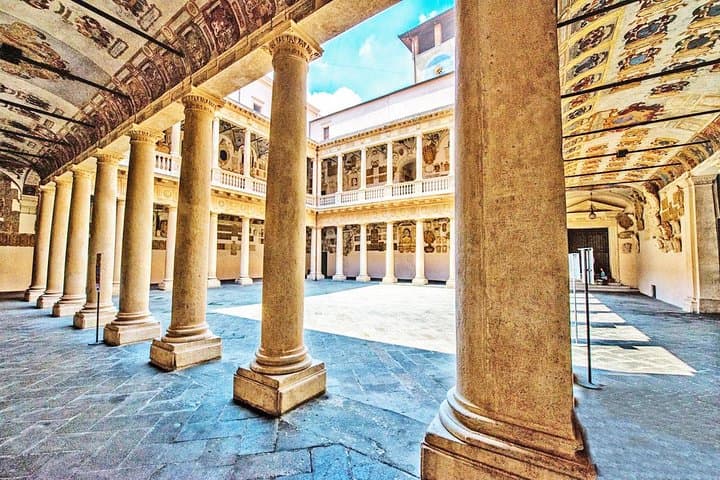
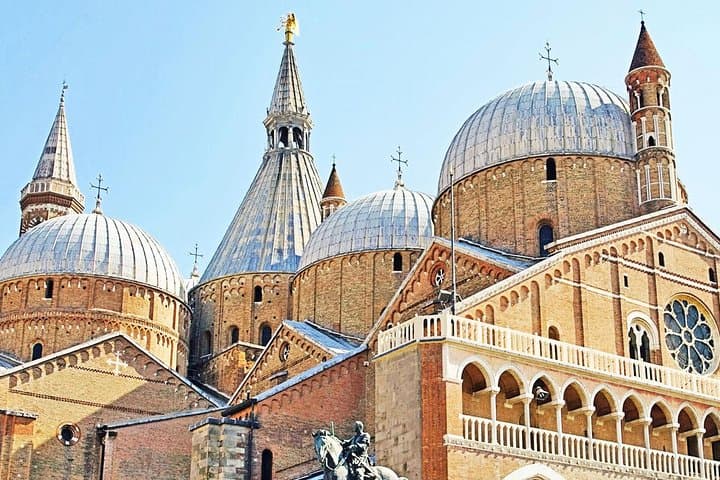
Padua is a city shaped by faith and learning: the Basilica of Sant’Antonio draws pilgrims year-round, the Scrovegni Chapel houses Giotto’s fresco cycle, and the University—founded in 1222—still hums with students. Geologically the town sits on the flat Veneto plain with the Bacchiglione river winding nearby; the terrain is flat but paved in uneven cobbles and narrow alleys that speak to medieval urban patterns rather than modern grids.
Culturally the tour balances religious heritage with everyday life — markets in Piazza delle Erbe and della Frutta, the literary aura of Caffè Pedrocchi, and botanical curiosity at the Orto Botanico, one of the world’s oldest gardens and a UNESCO site.
Practical guidance: expect roughly 2–3 km of walking on cobblestones with minimal elevation gain, frequent photo stops and a pace suited to mixed fitness levels. Wear sturdy shoes, bring a small water bottle and a light layer for church interiors. Aim for early morning or late afternoon to avoid peak crowds; if visiting around June 13th, expect larger devotional gatherings. The guide will add local anecdotes and shortcuts to markets, but travelers should carry modest dress for religious sites and keep an eye on personal belongings in busy squares.
easy.
2 hours.
Suitable for most fitness levels; requires standing and walking on uneven pavement for two hours.
The meeting point is Prato della Valle (Prato della Valle, 32); the route finishes near the historic center — exact end point provided by the guide.
Children are welcome and small strollers can be used, though narrow streets and steps may require occasional lifting.
The tour highlights the exterior context and history of Scrovegni; interior entry may require separate tickets and timed reservations.
This walking tour is not wheelchair accessible due to cobblestones, steps and narrow lanes.
Padua grew as a religious and academic center: Sant’Antonio’s basilica attracts pilgrims while the University of Padua, founded in 1222, shaped European learning.
Historic sites and the botanical garden are sensitive to foot traffic; stay on paths, avoid touching frescoes and use local waste bins to support preservation.
Private Tours of Venice operates guided outdoor trips and adventures with an emphasis on safety, stewardship, and memorable experiences.


Morning light spills across the elliptical lawn of Prato della Valle, where 72 statues watch over a fountain and the city’s slow morning commerce. A local guide gathers the small group here and, over two hours, threads visitors through arcaded streets, lively markets and the hush of basilica interiors.
Morning light spills across the elliptical lawn of Prato della Valle, where 72 statues watch over a fountain and the city’s slow morning commerce. A local guide gathers the small group here and, over two hours, threads visitors through arcaded streets, lively markets and the hush of basilica interiors.
Padua is a city shaped by faith and learning: the Basilica of Sant’Antonio draws pilgrims year-round, the Scrovegni Chapel houses Giotto’s fresco cycle, and the University—founded in 1222—still hums with students. Geologically the town sits on the flat Veneto plain with the Bacchiglione river winding nearby; the terrain is flat but paved in uneven cobbles and narrow alleys that speak to medieval urban patterns rather than modern grids.
Culturally the tour balances religious heritage with everyday life — markets in Piazza delle Erbe and della Frutta, the literary aura of Caffè Pedrocchi, and botanical curiosity at the Orto Botanico, one of the world’s oldest gardens and a UNESCO site.
Practical guidance: expect roughly 2–3 km of walking on cobblestones with minimal elevation gain, frequent photo stops and a pace suited to mixed fitness levels. Wear sturdy shoes, bring a small water bottle and a light layer for church interiors. Aim for early morning or late afternoon to avoid peak crowds; if visiting around June 13th, expect larger devotional gatherings. The guide will add local anecdotes and shortcuts to markets, but travelers should carry modest dress for religious sites and keep an eye on personal belongings in busy squares.