THE ADVENTURE COLLECTIVE® · Independent discovery and booking for outdoor travel

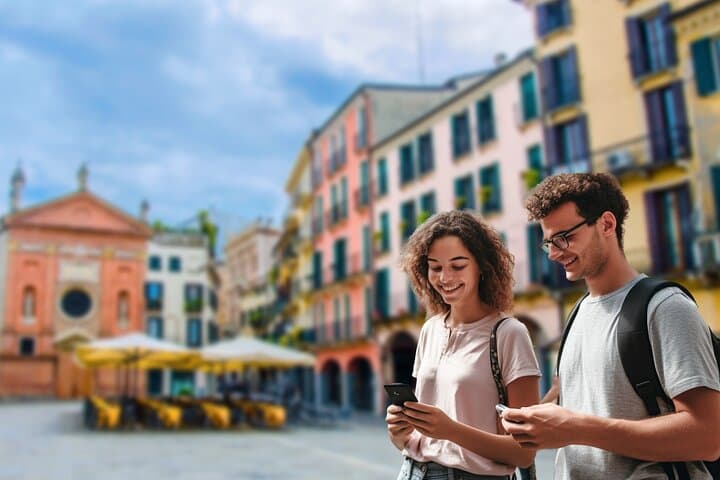
Explore Padua at your own pace with a two-hour interactive walking tour that links ten historic sites with audio clues and riddles. Ideal for independent travelers, it combines scholarly history with lively market streets.
Explore Padua at your own pace with a two-hour interactive walking tour that links ten historic sites with audio clues and riddles. Ideal for independent travelers, it combines scholarly history with lively market streets.
You step out onto flagstones warmed by the midday sun and let the city unfold: a clock tower keeps steady vigil, market calls thread through alleys, and ancient stones seem to lean in to tell their stories.
Verified experiences and guided adventures in the surrounding area.
Operated by Ciceru · Padua, Veneto
You step out onto flagstones warmed by the midday sun and let the city unfold: a clock tower keeps steady vigil, market calls thread through alleys, and ancient stones seem to lean in to tell their stories.
This two-hour self-guided walking tour threads ten compact stops through Padua’s core — from Piazza Antenore and the Jewish Ghetto to the University’s Palazzo Bo, Piazza delle Erbe, the Duomo and the Roman amphitheatre. The route moves at street level; its geology is human-made layers of Roman foundations and medieval masonry resting on the flat Veneto plain, with canals and the nearby Bacchiglione river shaping commerce and route choices for centuries.
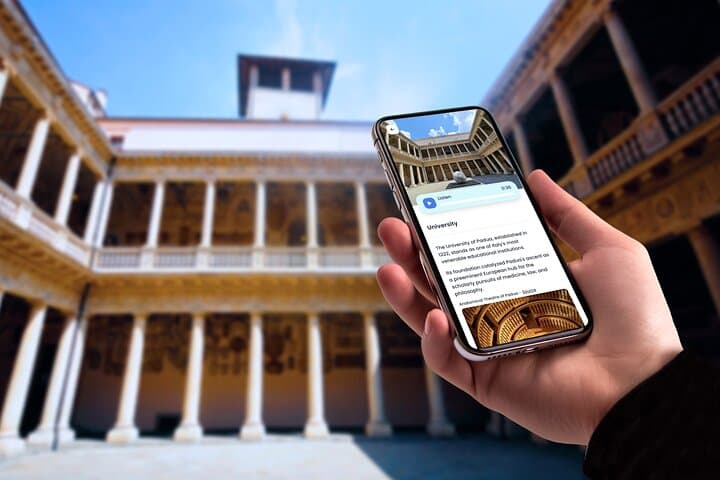
Padua’s University, founded in 1222, and the nearby Orto Botanico (one of the world’s oldest botanical gardens) anchor the city’s scientific and cultural legacy; Galileo lectured here. Local life still orbits markets, cafés, and lunchtime passeggiata — learn the social codes as much as the facts.
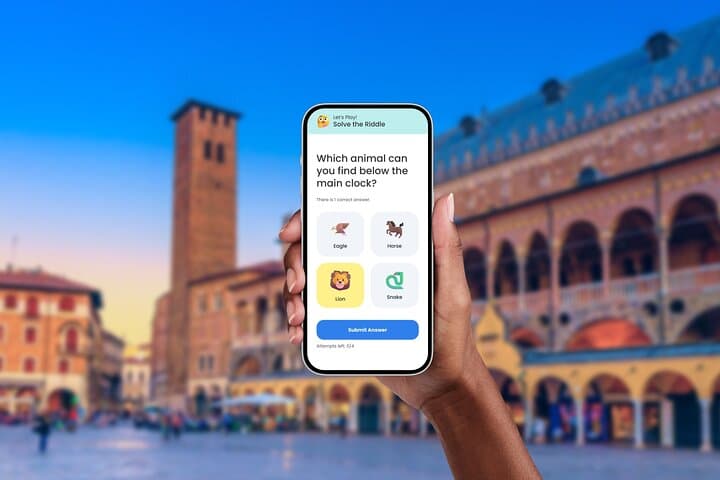
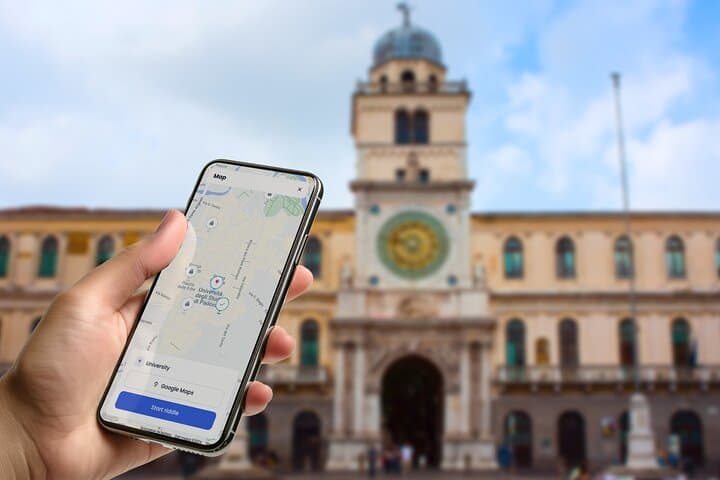
Practical navigation is simple: the experience runs on your phone, in seven languages, and includes audio clues and riddles at each stop. Expect mostly paved surfaces, short blocks between sights, and intermittent pedestrian zones.
Plan for charged batteries, comfortable shoes, and modest clothing for sacred sites. Visit early morning to beat crowds, or late afternoon for softer light on the palaces. Respect museum hours for optional detours (Scrovegni Chapel requires separate booking). With a little planning, this interactive walk is an efficient, low-impact way to read Padua’s compact, storied core.
easy.
2 hours.
Suitable for most fitness levels; short, steady walking with frequent stops.
No app is required; the self-guided tour runs via mobile-accessible content and works in your phone’s browser with audio and text in seven languages.
Yes — the pace is gentle with short walking segments and interactive riddles that can engage families; note some cobbles and occasional stairs.
Many stops are external viewpoints; sites such as the Scrovegni Chapel and some museums require separate tickets and timed entry, so plan bookings in advance.
Audio and text are available in English, German, Italian, French, Spanish, Portuguese, and Chinese.
Padua hosts one of Europe’s oldest universities (1222); it was a hub for Renaissance science and learning—Galileo taught here in the early 17th century.
The historic center is managed to protect ancient fabric and pedestrian life; minimize noise, avoid touching frescoes, and stick to marked paths to reduce wear on fragile sites.
Ciceru operates guided outdoor trips and adventures with an emphasis on safety, stewardship, and memorable experiences.
You step out onto flagstones warmed by the midday sun and let the city unfold: a clock tower keeps steady vigil, market calls thread through alleys, and ancient stones seem to lean in to tell their stories.
You step out onto flagstones warmed by the midday sun and let the city unfold: a clock tower keeps steady vigil, market calls thread through alleys, and ancient stones seem to lean in to tell their stories.
This two-hour self-guided walking tour threads ten compact stops through Padua’s core — from Piazza Antenore and the Jewish Ghetto to the University’s Palazzo Bo, Piazza delle Erbe, the Duomo and the Roman amphitheatre. The route moves at street level; its geology is human-made layers of Roman foundations and medieval masonry resting on the flat Veneto plain, with canals and the nearby Bacchiglione river shaping commerce and route choices for centuries.
Padua’s University, founded in 1222, and the nearby Orto Botanico (one of the world’s oldest botanical gardens) anchor the city’s scientific and cultural legacy; Galileo lectured here. Local life still orbits markets, cafés, and lunchtime passeggiata — learn the social codes as much as the facts.
Practical navigation is simple: the experience runs on your phone, in seven languages, and includes audio clues and riddles at each stop. Expect mostly paved surfaces, short blocks between sights, and intermittent pedestrian zones.
Plan for charged batteries, comfortable shoes, and modest clothing for sacred sites. Visit early morning to beat crowds, or late afternoon for softer light on the palaces. Respect museum hours for optional detours (Scrovegni Chapel requires separate booking). With a little planning, this interactive walk is an efficient, low-impact way to read Padua’s compact, storied core.