THE ADVENTURE COLLECTIVE® · Independent discovery and booking for outdoor travel

Learn to breathe underwater off Sri Lanka’s coast with the PADI Scuba Diver course — a 2–3 day beginner certification featuring classroom theory, confined-water skills, and open-water dives to 12 m. This concise program is ideal for travelers who want guided, professional introduction to reef diving in warm tropical seas.
Learn to breathe underwater off Sri Lanka’s coast with the PADI Scuba Diver course — a 2–3 day beginner certification featuring classroom theory, confined-water skills, and open-water dives to 12 m. This concise program is ideal for travelers who want guided, professional introduction to reef diving in warm tropical seas.
The sun lifts off the Indian Ocean in a ribbon of gold as you stand on a warm concrete dock, regulator in hand and the reef’s edges whispering below. In Sri Lanka the water feels immediate — warm, clear enough to read the shapes of bommies and swaying sea fans, and loud with the occasional tail-slap of a fish that refuses to be catalogued.
Verified experiences and guided adventures in the surrounding area.
Operated by Divinguru Sri Lanka · Colombo, Western Province
The sun lifts off the Indian Ocean in a ribbon of gold as you stand on a warm concrete dock, regulator in hand and the reef’s edges whispering below. In Sri Lanka the water feels immediate — warm, clear enough to read the shapes of bommies and swaying sea fans, and loud with the occasional tail-slap of a fish that refuses to be catalogued.
Coastal diving here sits on geology born of ancient plate collisions and coral growth: low volcanic outcrops rimmed by fringing reefs and pockets of sand where juvenile fish find cover. Culturally, fishing and boatbuilding are woven into island life; many dive sites lie near villages where tea and spice trade histories meet seafaring craft. The PADI Scuba Diver course offers a short, structured route into this marine world — theory and confined-water training followed by open-water dives to a maximum 12 m under a pro’s supervision.
Expect roughly 2–3 days of training: half a day classroom theory, half a day in a pool or sheltered bay, and one full morning of two open-water dives. The course requires moderate fitness; people with spinal, heart, or pregnancy restrictions should not participate. Note the PADI fee (manual and certification) — about 70 EUR — is usually extra.
Practical tips: pick a morning slot for calmer seas, bring reef-safe sunscreen and a logbook, and allow 24 hours after your last dive before flying. Your instructor will run buoyancy drills, buddy checks, and simple emergency procedures so you leave confident, certified to 12 m and with an accurate sense of local marine stewardship.
moderate.
2–3 days.
Moderate fitness: able to swim, tread water, and carry basic gear; not suitable for serious cardiovascular or spinal conditions.
No—this is an entry-level PADI Scuba Diver course designed for beginners; you do need basic swimming ability and to complete a medical disclosure.
No, the PADI fee for the manual and certification (approximately €70) is typically paid separately to PADI or the instructor.
The PADI Scuba Diver cert allows supervised diving to a maximum depth of 12 meters with a PADI professional.
Not recommended for people with significant heart conditions, serious back problems, or pregnancy; a medical questionnaire will confirm eligibility.
Coastal Sri Lanka has a long maritime history; many reefs sit near old fishing grounds and trade routes that linked the island to India and the Arabian Sea.
Local operators emphasize reef-safe practices: no-touch policies, use of moorings where available, and encouraging guests to use biodegradable sunscreen to reduce coral stress.
Divinguru Sri Lanka operates guided outdoor trips and adventures with an emphasis on safety, stewardship, and memorable experiences.


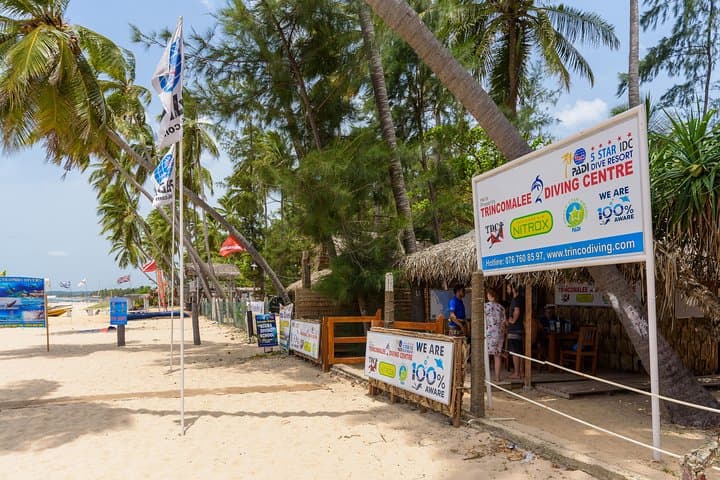
The sun lifts off the Indian Ocean in a ribbon of gold as you stand on a warm concrete dock, regulator in hand and the reef’s edges whispering below. In Sri Lanka the water feels immediate — warm, clear enough to read the shapes of bommies and swaying sea fans, and loud with the occasional tail-slap of a fish that refuses to be catalogued.
The sun lifts off the Indian Ocean in a ribbon of gold as you stand on a warm concrete dock, regulator in hand and the reef’s edges whispering below. In Sri Lanka the water feels immediate — warm, clear enough to read the shapes of bommies and swaying sea fans, and loud with the occasional tail-slap of a fish that refuses to be catalogued.
Coastal diving here sits on geology born of ancient plate collisions and coral growth: low volcanic outcrops rimmed by fringing reefs and pockets of sand where juvenile fish find cover. Culturally, fishing and boatbuilding are woven into island life; many dive sites lie near villages where tea and spice trade histories meet seafaring craft. The PADI Scuba Diver course offers a short, structured route into this marine world — theory and confined-water training followed by open-water dives to a maximum 12 m under a pro’s supervision.
Expect roughly 2–3 days of training: half a day classroom theory, half a day in a pool or sheltered bay, and one full morning of two open-water dives. The course requires moderate fitness; people with spinal, heart, or pregnancy restrictions should not participate. Note the PADI fee (manual and certification) — about 70 EUR — is usually extra.
Practical tips: pick a morning slot for calmer seas, bring reef-safe sunscreen and a logbook, and allow 24 hours after your last dive before flying. Your instructor will run buoyancy drills, buddy checks, and simple emergency procedures so you leave confident, certified to 12 m and with an accurate sense of local marine stewardship.