THE ADVENTURE COLLECTIVE® · Independent discovery and booking for outdoor travel

Gain your PADI Scuba Diver certificate in two focused days off Boracay’s White Beach. Learn confined-water skills, complete two open-water dives, and leave with entry-level certification under instructor supervision.
Gain your PADI Scuba Diver certificate in two focused days off Boracay’s White Beach. Learn confined-water skills, complete two open-water dives, and leave with entry-level certification under instructor supervision.
The morning light over White Beach flattens into a band of silver; a small skiff bumps at the shore and instructors organize tanks like clockwork. You step onto warm sand, slip on a mask and feel that first breath underwater — a steady, mechanical connection to a world that moves on its own timetable. Boracay’s reefs unfurl just beyond the break, coral ridges and sandy lawns punctuated by reef fish that cut through blue like living punctuation.
Verified experiences and guided adventures in the surrounding area.
Operated by WaterColors (HK) Limited · Malay, Aklan
The morning light over White Beach flattens into a band of silver; a small skiff bumps at the shore and instructors organize tanks like clockwork. You step onto warm sand, slip on a mask and feel that first breath underwater — a steady, mechanical connection to a world that moves on its own timetable. Boracay’s reefs unfurl just beyond the break, coral ridges and sandy lawns punctuated by reef fish that cut through blue like living punctuation.
Boracay sits off the northwest coast of Panay in the Visayan Islands, a young volcanic landscape worn by waves and currents. Local fishing villages have long read the sea for weather and season; in recent decades tourism reshaped the shoreline, but community dive operators still center knowledge of tides and reef health in their work. Geology here produces shallow slopes and patch reefs, which make for predictable training sites and easy entry confined-water sessions.
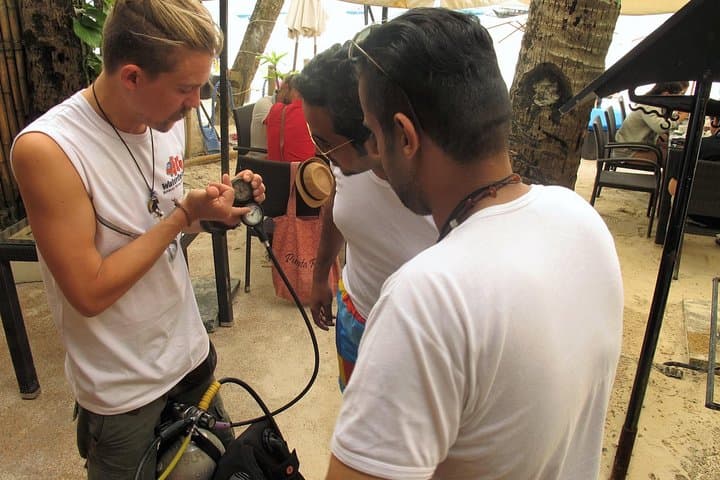
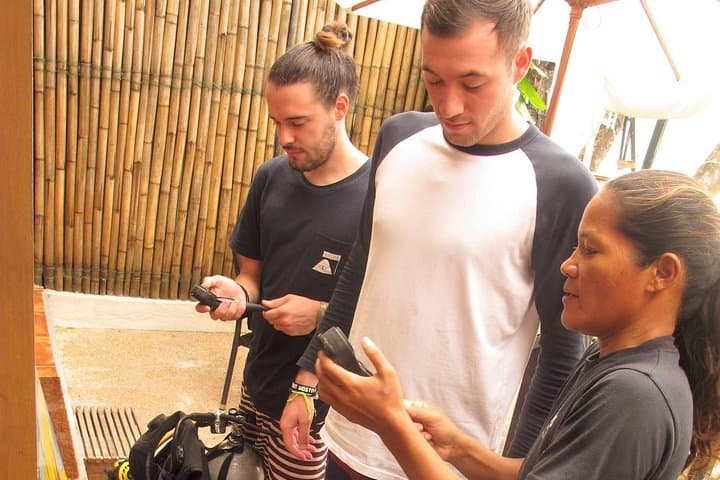
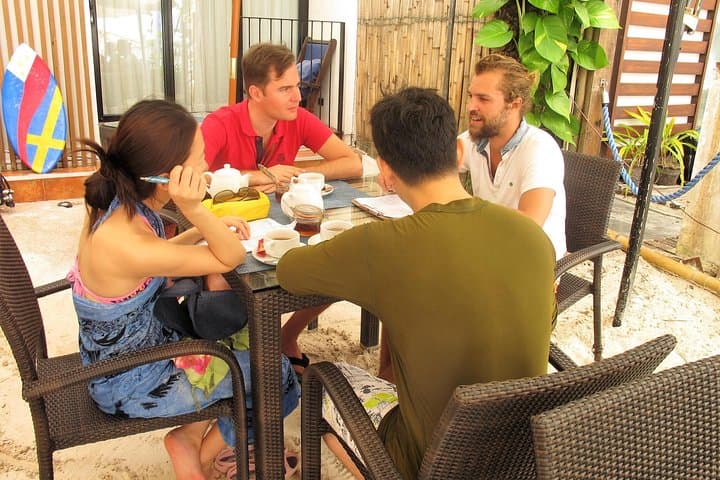
This PADI Scuba Diver course runs two days: classroom theory, three confined-water modules and two open-water dives to PADI standards. Expect surface swims, mask clearing, regulator recovery and dives typically to 12–18 meters under instructor supervision. Bring printed medical forms and disclose recent flights — diving within 48 hours of flying is not advised.
Practical tips: hydrate well, practice breath control in shallow water beforehand, and wear reef-safe sunscreen. Timing matters — early mornings deliver the calmest seas and best visibility. By day’s end you’ll have logged skills, a certification card pending processing, and the kind of quiet competence that only comes from breathing with the ocean.
moderate.
2 days.
Moderately fit: comfortable swimming, able to tread water and perform repeated short swims; some strength for gear handling.
Participants must be at least 10 years old for the PADI Scuba Diver course; younger divers receive junior certification with depth limits.
No prior scuba certification is required; the course includes confined-water training and supervised open-water dives to teach foundational skills.
Yes; you must complete a PADI medical questionnaire and obtain a doctor’s clearance for certain conditions (e.g., asthma, heart issues); disclose medications and recent surgeries.
Open-water training dives are typically to around 12–18 meters, meeting PADI standards for the Scuba Diver certification under instructor supervision.
Boracay was a small fishing community until the 1970s when international tourism expanded; local traditions and boat-building techniques still influence dive operators.
Dive operators emphasize reef-safe practices and often support local reef-monitoring; avoid touching coral and follow briefings to minimize impact.
WaterColors (HK) Limited operates guided outdoor trips and adventures with an emphasis on safety, stewardship, and memorable experiences.
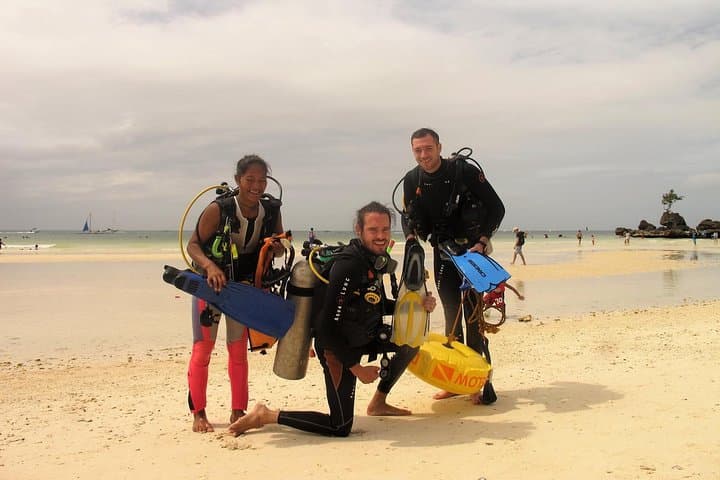
The morning light over White Beach flattens into a band of silver; a small skiff bumps at the shore and instructors organize tanks like clockwork. You step onto warm sand, slip on a mask and feel that first breath underwater — a steady, mechanical connection to a world that moves on its own timetable. Boracay’s reefs unfurl just beyond the break, coral ridges and sandy lawns punctuated by reef fish that cut through blue like living punctuation.
The morning light over White Beach flattens into a band of silver; a small skiff bumps at the shore and instructors organize tanks like clockwork. You step onto warm sand, slip on a mask and feel that first breath underwater — a steady, mechanical connection to a world that moves on its own timetable. Boracay’s reefs unfurl just beyond the break, coral ridges and sandy lawns punctuated by reef fish that cut through blue like living punctuation.
Boracay sits off the northwest coast of Panay in the Visayan Islands, a young volcanic landscape worn by waves and currents. Local fishing villages have long read the sea for weather and season; in recent decades tourism reshaped the shoreline, but community dive operators still center knowledge of tides and reef health in their work. Geology here produces shallow slopes and patch reefs, which make for predictable training sites and easy entry confined-water sessions.
This PADI Scuba Diver course runs two days: classroom theory, three confined-water modules and two open-water dives to PADI standards. Expect surface swims, mask clearing, regulator recovery and dives typically to 12–18 meters under instructor supervision. Bring printed medical forms and disclose recent flights — diving within 48 hours of flying is not advised.
Practical tips: hydrate well, practice breath control in shallow water beforehand, and wear reef-safe sunscreen. Timing matters — early mornings deliver the calmest seas and best visibility. By day’s end you’ll have logged skills, a certification card pending processing, and the kind of quiet competence that only comes from breathing with the ocean.