THE ADVENTURE COLLECTIVE® · Independent discovery and booking for outdoor travel

Learn to breathe underwater on a three-day PADI Open Water course based in Kota Kinabalu, with confined-water training and open dives around Sapi Island. Small groups and PADI-certified instructors make this an accessible certification for confident swimmers.
Learn to breathe underwater on a three-day PADI Open Water course based in Kota Kinabalu, with confined-water training and open dives around Sapi Island. Small groups and PADI-certified instructors make this an accessible certification for confident swimmers.
The morning sun slants off Kota Kinabalu’s harbor as you meet at a compact dive shop minutes from the jetty—an atlas of neoprene, tanks, and instruction folders. The sea here is direct: it dares you to trust the weightlessness that follows the first breath through a regulator. Over three days you move from classroom bench to calm bay to open-island reef, each step a small surrender to the ocean’s rhythm.
Verified experiences and guided adventures in the surrounding area.
Operated by Go Aquatic · Kota Kinabalu, Sabah
The morning sun slants off Kota Kinabalu’s harbor as you meet at a compact dive shop minutes from the jetty—an atlas of neoprene, tanks, and instruction folders. The sea here is direct: it dares you to trust the weightlessness that follows the first breath through a regulator. Over three days you move from classroom bench to calm bay to open-island reef, each step a small surrender to the ocean’s rhythm.
Sabah’s coastline is carved from Miocene limestones and coral platforms; the islands of Tunku Abdul Rahman Park were set aside in the 1970s to protect fisheries and recreation. The local Bajau and Dusun communities have long lived by these waters, and contemporary dive culture in Kota Kinabalu blends Malay hospitality with international training standards—PADI manuals, English-speaking instructors, and small student-to-instructor ratios.
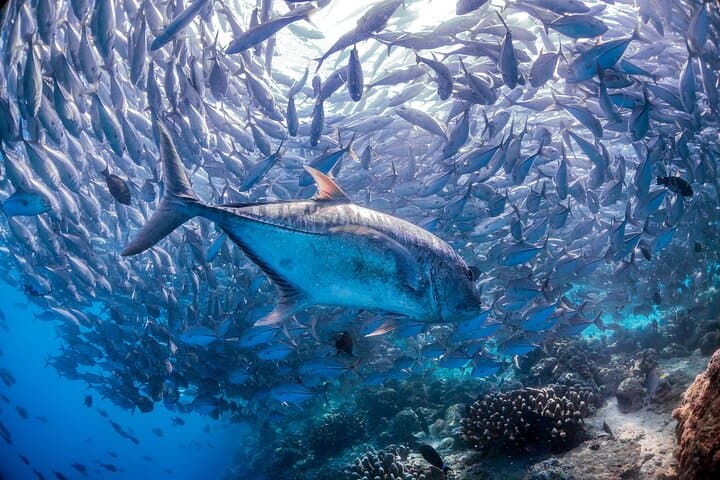
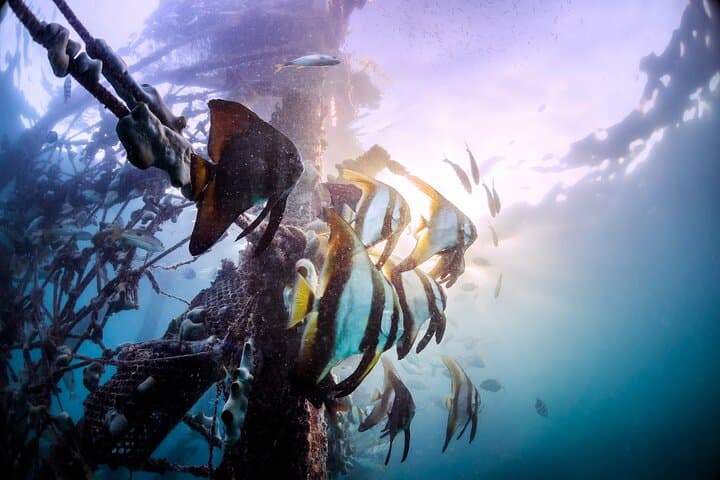
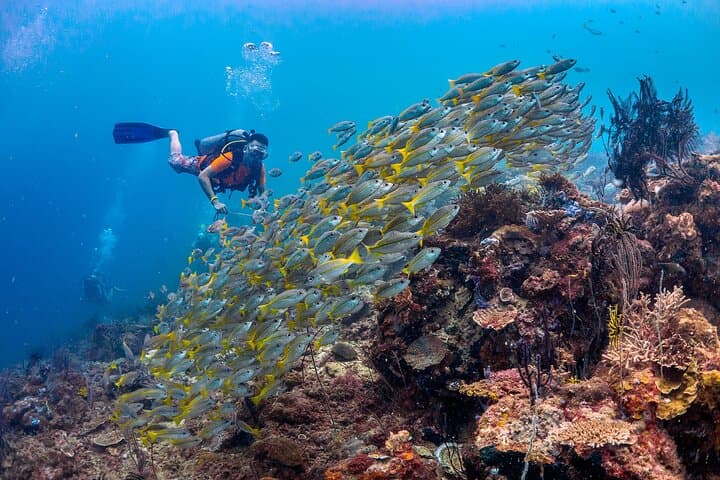
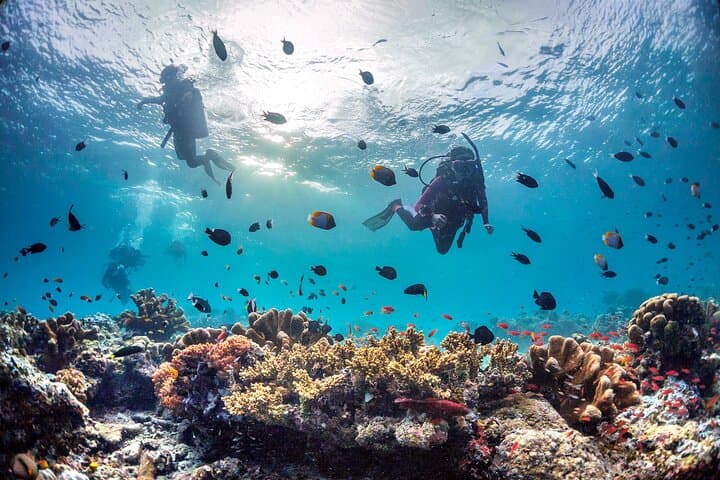
Expect confined-water sessions near Sapi Island, then two supervised open-water dives to complete four qualifying dives. Visibility varies with currents and seasonal rain; reef flats teem with damselfish, garden eels, and the occasional green turtle.
Practical guidance: arrive well-rested, complete pre-course paperwork, and be honest on the medical form—respiratory or cardiac issues can disqualify you. Hydrate between classroom blocks and surface intervals, and use reef-safe sunscreen. Dress in swimwear under light clothes for quick gear changes; a short briefing precedes each pool and boat session. Certification requires passing knowledge reviews, confined-water skills, and four open-water dives—leave space in your itinerary for weather delays.
By day three the sea stops being foreign; it becomes a partner, buoying you through the skill set that opens a corridor of underwater freedom.
moderate.
3 days (approx. 16–20 hours total).
Comfortable swimmer with basic cardiovascular health; able to handle repeated shallow dives and short boat transfers.
Participants must be at least 10 years old for the Junior Open Water certification; adults receive the full Open Water certification.
Your instructor will issue temporary proof of certification on completion; the official PADI card or Diver ID is processed and arrives within days to weeks depending on the registrar.
You should be comfortable in the water and able to swim a short distance; basic snorkeling experience helps but is not required—skills are taught during the course.
Certain respiratory, cardiac, or recent surgeries can disqualify you; disclose conditions on the medical form and obtain physician clearance if indicated.
Tunku Abdul Rahman islands were designated a marine park in the 1970s to protect local fisheries and coastal habitats; diving tourism developed as part of Sabah’s coastal economy.
Operators encourage no-touch practices, use of reef-safe sunscreens, and briefings on buoyancy to minimize coral damage; support local marine park fees that fund conservation.
Go Aquatic operates guided outdoor trips and adventures with an emphasis on safety, stewardship, and memorable experiences.
The morning sun slants off Kota Kinabalu’s harbor as you meet at a compact dive shop minutes from the jetty—an atlas of neoprene, tanks, and instruction folders. The sea here is direct: it dares you to trust the weightlessness that follows the first breath through a regulator. Over three days you move from classroom bench to calm bay to open-island reef, each step a small surrender to the ocean’s rhythm.
The morning sun slants off Kota Kinabalu’s harbor as you meet at a compact dive shop minutes from the jetty—an atlas of neoprene, tanks, and instruction folders. The sea here is direct: it dares you to trust the weightlessness that follows the first breath through a regulator. Over three days you move from classroom bench to calm bay to open-island reef, each step a small surrender to the ocean’s rhythm.
Sabah’s coastline is carved from Miocene limestones and coral platforms; the islands of Tunku Abdul Rahman Park were set aside in the 1970s to protect fisheries and recreation. The local Bajau and Dusun communities have long lived by these waters, and contemporary dive culture in Kota Kinabalu blends Malay hospitality with international training standards—PADI manuals, English-speaking instructors, and small student-to-instructor ratios.
Expect confined-water sessions near Sapi Island, then two supervised open-water dives to complete four qualifying dives. Visibility varies with currents and seasonal rain; reef flats teem with damselfish, garden eels, and the occasional green turtle.
Practical guidance: arrive well-rested, complete pre-course paperwork, and be honest on the medical form—respiratory or cardiac issues can disqualify you. Hydrate between classroom blocks and surface intervals, and use reef-safe sunscreen. Dress in swimwear under light clothes for quick gear changes; a short briefing precedes each pool and boat session. Certification requires passing knowledge reviews, confined-water skills, and four open-water dives—leave space in your itinerary for weather delays.
By day three the sea stops being foreign; it becomes a partner, buoying you through the skill set that opens a corridor of underwater freedom.