THE ADVENTURE COLLECTIVE® · Independent discovery and booking for outdoor travel

Learn to dive in the warm, clear waters off Hurghada with a PADI Open Water course that combines classroom theory, confined-water skills and four supervised open-water dives. Expect practical training, local reef dives and included equipment and transfers.
Learn to dive in the warm, clear waters off Hurghada with a PADI Open Water course that combines classroom theory, confined-water skills and four supervised open-water dives. Expect practical training, local reef dives and included equipment and transfers.
On a salt-laced morning off Hurghada the Red Sea waits like a bright, breathing world beneath the surface—warm, clear, and insistently alive.
Verified experiences and guided adventures in the surrounding area.
Operated by Sea Secret Diving · Hurghada, Red Sea Governorate
On a salt-laced morning off Hurghada the Red Sea waits like a bright, breathing world beneath the surface—warm, clear, and insistently alive.
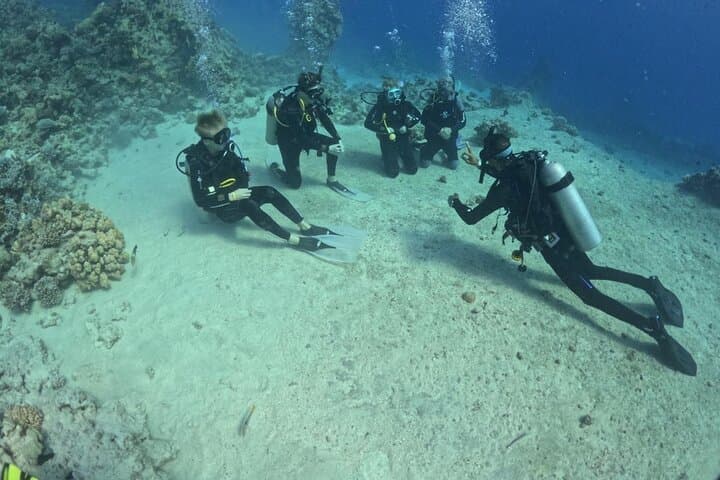
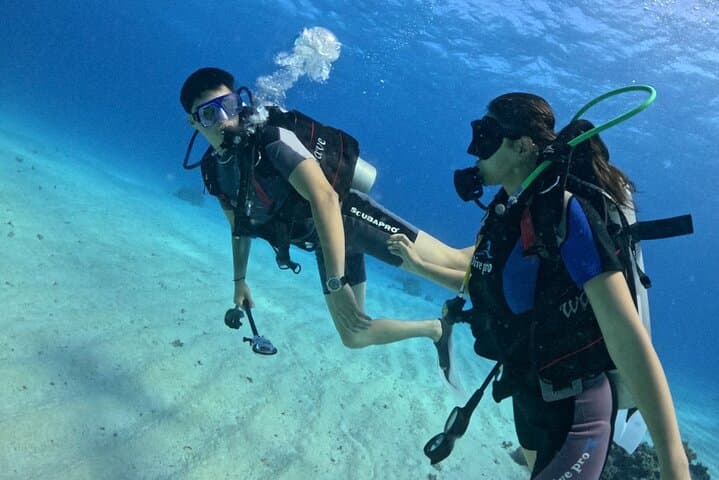
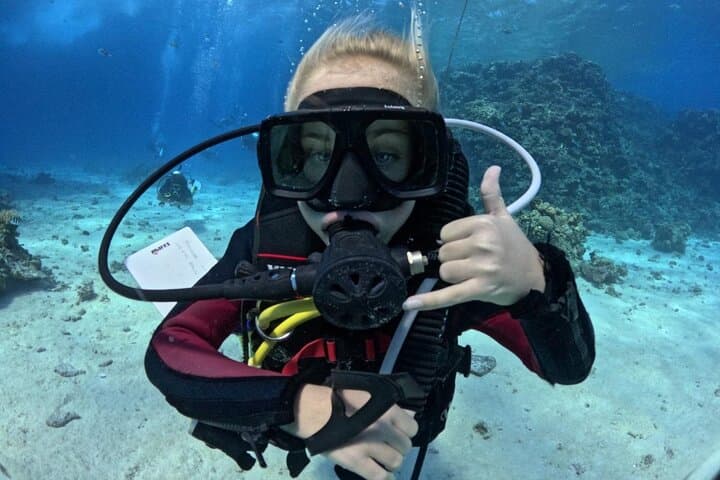
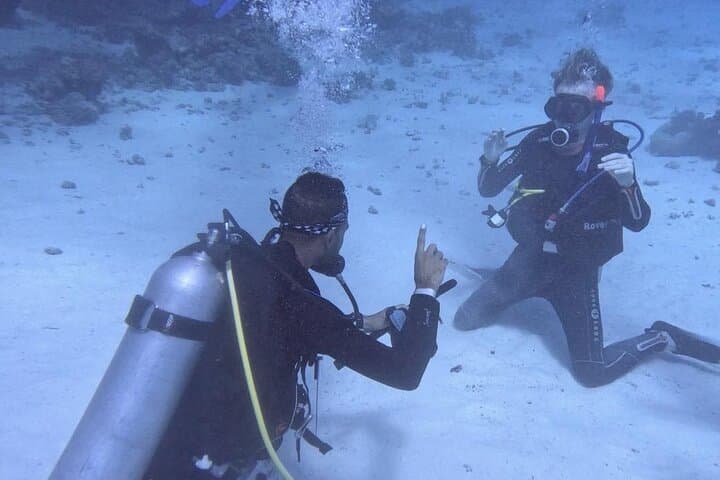
Students gather for classroom sessions that lay out pressure physics, dive planning and safety, then move to confined-water training where mask clearing, regulator recovery and buoyancy drills are practiced until they feel automatic. The course culminates in open-water dives on shallow reefs and gentle slopes where coral gardens and reef fish form the curriculum. Typical PADI Open Water training includes confined-water practice and four open-water dives to 18 m under instructor supervision.
Geology here is straightforward: a shelf of coral that rode sea-level changes for millennia, creating steep dropoffs, bommies and nooks that attract colorful reef life. Sinai and the wider Red Sea have a long maritime history—trade routes, shipwrecks and modern eco-tourism that has shaped local towns like Hurghada into dive hubs.
Practical guidance: expect eight hours of instruction (often split over two days), included use of scuba equipment, lunch and air-conditioned transfers. Bring a basic swimsuit, reef-safe sunscreen, and a towel; staff usually provide wetsuits and regulators. Be medically cleared for diving—pregnancy and serious heart conditions are contraindications.
On the boat, water will beckon and currents will test your attention to plan and buddy checks; a steady breathing rhythm and practiced buoyancy will keep the experience efficient and joyful. Respect the reef, keep fins off coral, and carry neutral buoyancy as your new habit.
moderate.
8 hours (often split over 2–3 days).
Comfortable swimmer with basic stamina; able to swim ~200 m and tread water for 10 minutes.
The course is listed as 8 hours of instruction but is commonly split over 2–3 days to cover theory, confined-water skills and four open-water dives.
No prior scuba experience is required—this is an entry-level Open Water course; basic swim competency is required.
Open water training dives generally go to 18 meters (60 feet) under instructor supervision as part of PADI standards.
Yes — use of scuba equipment, lunch and air-conditioned transfers are included in the course package.
The Red Sea has been a trade corridor for millennia; modern dive tourism around Hurghada grew from the 1980s as resorts and liveaboards developed along productive coral reefs.
The Red Sea faces warming and localized reef stress; responsible diving practices, reef-safe sunscreen and no-touch rules help protect coral and preserve dive sites.
Sea Secret Diving operates guided outdoor trips and adventures with an emphasis on safety, stewardship, and memorable experiences.
On a salt-laced morning off Hurghada the Red Sea waits like a bright, breathing world beneath the surface—warm, clear, and insistently alive.
On a salt-laced morning off Hurghada the Red Sea waits like a bright, breathing world beneath the surface—warm, clear, and insistently alive.
Students gather for classroom sessions that lay out pressure physics, dive planning and safety, then move to confined-water training where mask clearing, regulator recovery and buoyancy drills are practiced until they feel automatic. The course culminates in open-water dives on shallow reefs and gentle slopes where coral gardens and reef fish form the curriculum. Typical PADI Open Water training includes confined-water practice and four open-water dives to 18 m under instructor supervision.
Geology here is straightforward: a shelf of coral that rode sea-level changes for millennia, creating steep dropoffs, bommies and nooks that attract colorful reef life. Sinai and the wider Red Sea have a long maritime history—trade routes, shipwrecks and modern eco-tourism that has shaped local towns like Hurghada into dive hubs.
Practical guidance: expect eight hours of instruction (often split over two days), included use of scuba equipment, lunch and air-conditioned transfers. Bring a basic swimsuit, reef-safe sunscreen, and a towel; staff usually provide wetsuits and regulators. Be medically cleared for diving—pregnancy and serious heart conditions are contraindications.
On the boat, water will beckon and currents will test your attention to plan and buddy checks; a steady breathing rhythm and practiced buoyancy will keep the experience efficient and joyful. Respect the reef, keep fins off coral, and carry neutral buoyancy as your new habit.