THE ADVENTURE COLLECTIVE® · Independent discovery and booking for outdoor travel

Float beneath Ponte Vecchio and see Florence from the water on a two‑hour rafting descent of the Arno. This easy, guided paddle takes you past the Vasari Corridor, Uffizi, and Ponte Santa Trìnita with strong photo opportunities and local storytelling.
Float beneath Ponte Vecchio and see Florence from the water on a two‑hour rafting descent of the Arno. This easy, guided paddle takes you past the Vasari Corridor, Uffizi, and Ponte Santa Trìnita with strong photo opportunities and local storytelling.
Morning light slants across the Arno, and the city leans close—stone bridges framing a ribbon of glassy water. You push off from San Niccolò in an inflatable dinghy, paddles tapping in unison, and the river dares you to read Florence from its lowest angle: shopfronts on Ponte Vecchio, the Vasari Corridor's shuttered windows, and the rusted tramlines on Ponte Santa Trìnita slide past like chapters.
Verified experiences and guided adventures in the surrounding area.
Operated by Firenze Rafting · Florence, Tuscany
Morning light slants across the Arno, and the city leans close—stone bridges framing a ribbon of glassy water. You push off from San Niccolò in an inflatable dinghy, paddles tapping in unison, and the river dares you to read Florence from its lowest angle: shopfronts on Ponte Vecchio, the Vasari Corridor's shuttered windows, and the rusted tramlines on Ponte Santa Trìnita slide past like chapters.
The Arno has shaped Florentine life for millennia—Roman trade routes, medieval mills and the mercantile bustle that built Renaissance wealth. Geologically it's a low-gradient, alluvial river that widens through the basin, which is why the 1966 flood left such a clear mark on the city's memory and built environment. Culture here rewards close listening: guides narrate anecdotes about guilds, river commerce and the Vasari Corridor's 16th-century corridor connecting power centers above your head.
Practical guidance follows the charm. The commercial stretch from San Niccolò to Santa Rosa is a calm, class-I flatwater run suitable for all levels; inflatable rafts hold 6–12 people and trips run about two hours. Guides supply paddles, lifejackets and safety briefings; waterproof phone cases are a must for photography. Mornings offer the softest light and fewer tour boats; pick early departures to avoid heavier traffic and to catch reflections on the façades. Public transport serves nearby pick-up points, and operators typically require 24‑hour cancellation notice and will cancel in dangerous weather. Expect urban sightseeing with the pulse of a light paddle—historic insights, tight architectural frames and a river that moves you through Florence in a way no street can.
easy.
2 hours.
Suitable for all fitness levels; participants should be able to sit and paddle for up to two hours and follow basic safety commands.
Yes—operators describe the activity as physically easy; guides provide instruction and the rafts are stable, but confirm age or minimum weight restrictions with the operator when booking.
Rafts typically seat 6–12 people depending on the inflatable dinghy used and group configuration.
Absolutely—photography is encouraged, but secure devices in waterproof cases and follow guide directions when leaning or standing near the raft edges.
Operators often cancel for severe weather or unsafe river conditions and usually require 24‑hour cancellation for full refunds; check the booking policy for specifics.
The Arno has been central to Florence's economy since Roman times; Ponte Vecchio's medieval shops and the Vasari Corridor (16th century) reflect the city's mercantile and political history.
Keep litter off the river and avoid throwing anything from the raft—Florence has active river-cleaning initiatives and relies on visitors to minimize pollution.
Firenze Rafting operates guided outdoor trips and adventures with an emphasis on safety, stewardship, and memorable experiences.
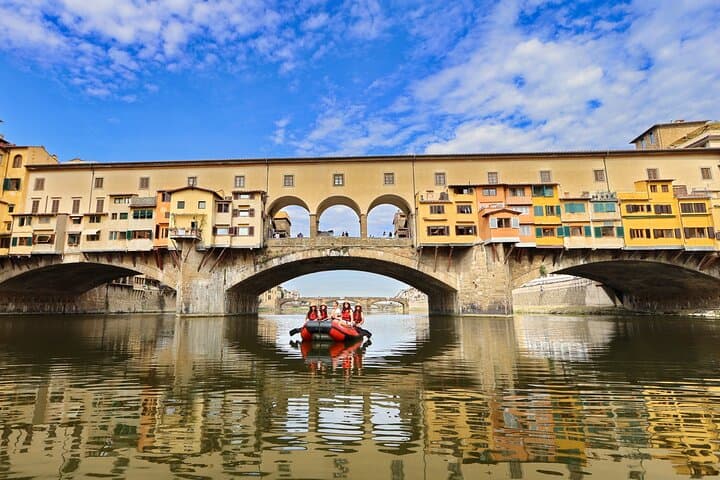
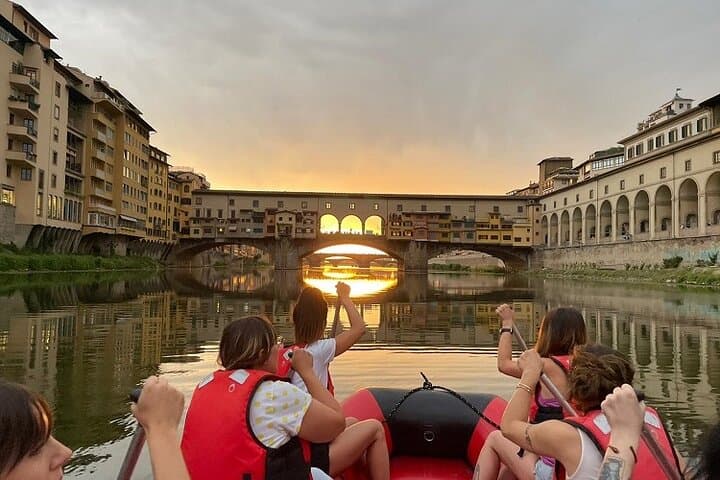
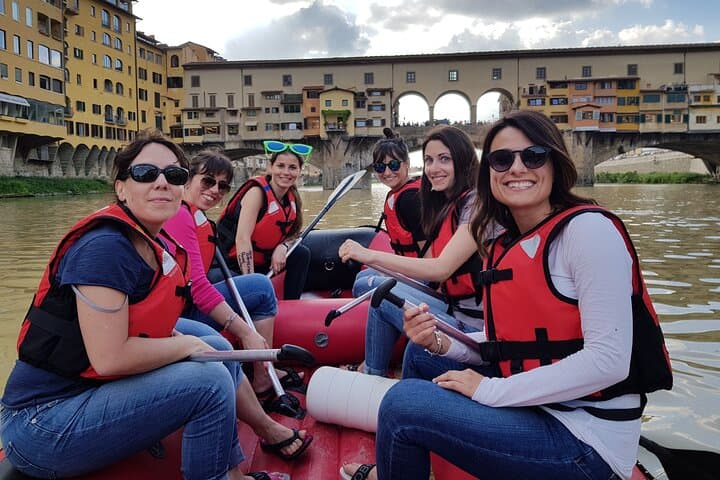
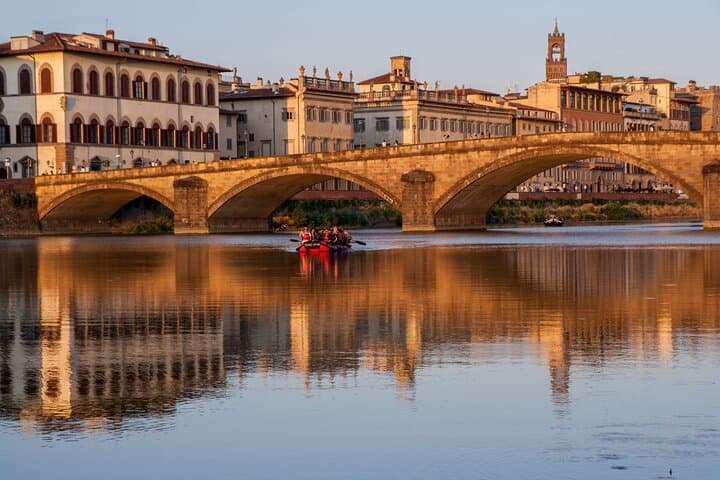
Morning light slants across the Arno, and the city leans close—stone bridges framing a ribbon of glassy water. You push off from San Niccolò in an inflatable dinghy, paddles tapping in unison, and the river dares you to read Florence from its lowest angle: shopfronts on Ponte Vecchio, the Vasari Corridor's shuttered windows, and the rusted tramlines on Ponte Santa Trìnita slide past like chapters.
Morning light slants across the Arno, and the city leans close—stone bridges framing a ribbon of glassy water. You push off from San Niccolò in an inflatable dinghy, paddles tapping in unison, and the river dares you to read Florence from its lowest angle: shopfronts on Ponte Vecchio, the Vasari Corridor's shuttered windows, and the rusted tramlines on Ponte Santa Trìnita slide past like chapters.
The Arno has shaped Florentine life for millennia—Roman trade routes, medieval mills and the mercantile bustle that built Renaissance wealth. Geologically it's a low-gradient, alluvial river that widens through the basin, which is why the 1966 flood left such a clear mark on the city's memory and built environment. Culture here rewards close listening: guides narrate anecdotes about guilds, river commerce and the Vasari Corridor's 16th-century corridor connecting power centers above your head.
Practical guidance follows the charm. The commercial stretch from San Niccolò to Santa Rosa is a calm, class-I flatwater run suitable for all levels; inflatable rafts hold 6–12 people and trips run about two hours. Guides supply paddles, lifejackets and safety briefings; waterproof phone cases are a must for photography. Mornings offer the softest light and fewer tour boats; pick early departures to avoid heavier traffic and to catch reflections on the façades. Public transport serves nearby pick-up points, and operators typically require 24‑hour cancellation notice and will cancel in dangerous weather. Expect urban sightseeing with the pulse of a light paddle—historic insights, tight architectural frames and a river that moves you through Florence in a way no street can.