THE ADVENTURE COLLECTIVE® · Independent discovery and booking for outdoor travel

Float through Europe’s deepest sandstone canyon on a relaxed, beginner‑friendly 15 km canoe from Děčín to Schmilka. This unguided river route offers cliff views, riverside wildlife and a ferry‑linked return in the picture‑perfect Elbe valley.
Float through Europe’s deepest sandstone canyon on a relaxed, beginner‑friendly 15 km canoe from Děčín to Schmilka. This unguided river route offers cliff views, riverside wildlife and a ferry‑linked return in the picture‑perfect Elbe valley.
You push off from Camp Děčín with a paddle in hand and the Elbe slipping smooth beneath the canoe. The river widens and narrows, rock faces rising on both banks until sandstone towers crowd the channel — Bohemian Switzerland’s canyon closing in around you. Herons watch from shallows; the current nudges the bow downstream as the German village of Schmilka comes into view.
Verified experiences and guided adventures in the surrounding area.
Operated by Active Point Decin · Děčín, Ústí nad Labem Region
You push off from Camp Děčín with a paddle in hand and the Elbe slipping smooth beneath the canoe. The river widens and narrows, rock faces rising on both banks until sandstone towers crowd the channel — Bohemian Switzerland’s canyon closing in around you. Herons watch from shallows; the current nudges the bow downstream as the German village of Schmilka comes into view.
The Elbe here carves through Cretaceous sandstone, forming some of Europe’s deepest fluvial gorges. For centuries this borderland has seen traders, smugglers and early tourists drawn to its cliffs and river route; today a small ferry and a brewery anchor Schmilka’s riverside culture. Geology and human history meet on the water: eroded pillars and old ferry landings that hint at the valley’s long use as a corridor.
Practical details are simple: the route is about 15 km (roughly 3 hours at a steady, relaxed pace), unguided but equipped — canoes, paddles, life jackets and a dry bag are provided. There are no weirs on this stretch, making it beginner-friendly, but you should be comfortable steering and bracing in moving water. The handover is at Schmilka ferry on the right bank; boats and gear are collected there. A short ferry (cash €1.50) or a local train connects you onward.
Bring a waterproof layer, sun protection, a filled water bottle and a basic river map. Expect variable light in the gorge, occasional wind gusts and wildlife along quiet banks. Respect park rules, pack out trash, and plan your return timing to match ferry and train schedules.
easy.
3 hours.
Moderate — suitable for beginners with basic stamina; expect continuous paddling for up to three hours.
This stretch is considered beginner‑friendly with no weirs; participants receive a briefing and should be able to steer and perform basic strokes for up to three hours.
The operator collects boats at the Schmilka ferry landing; to continue, take the small ferry across the Elbe (cash €1.50) and catch the Schmilka‑Hirschmühle train back toward Děčín.
Yes — canoe, paddles, life jacket and a dry bag are supplied, along with a short on‑site instruction session before launch.
Trips may be canceled in poor weather; strong winds or high flows can make paddling more difficult, and cancellation/refund policies apply if conditions are unsafe.
The Elbe corridor has long served as a trade and travel route; sandstone formations were quarried and paths developed by local communities over centuries.
Bohemian Switzerland is a protected national park—follow marked access rules, pack out all waste and avoid disturbing nesting birds and shoreline vegetation.
Active Point Decin operates guided outdoor trips and adventures with an emphasis on safety, stewardship, and memorable experiences.
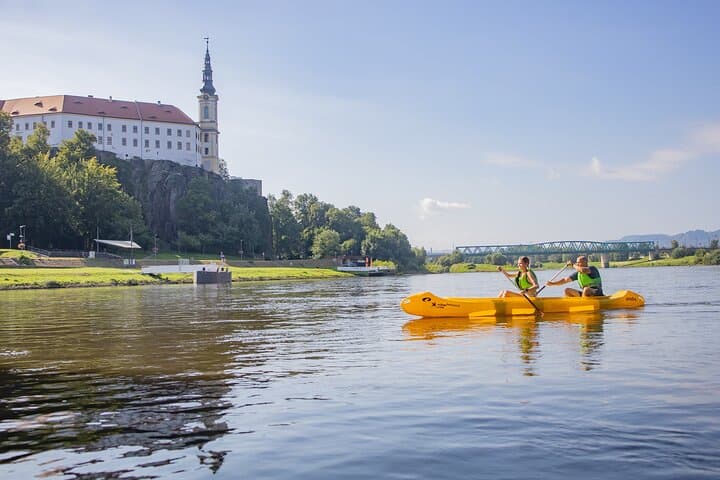
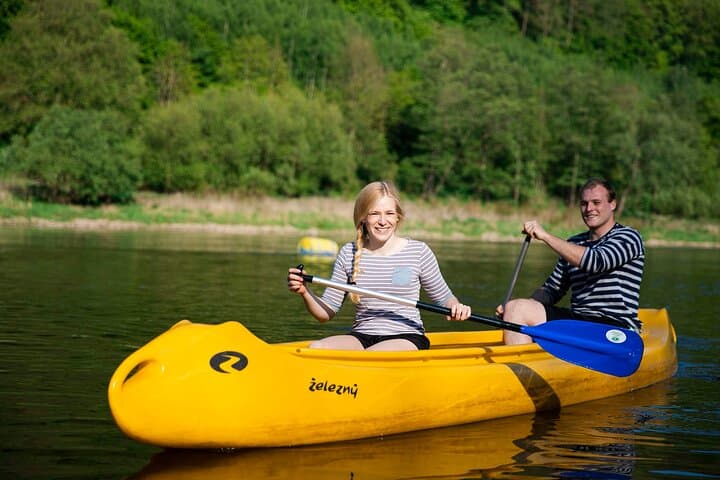
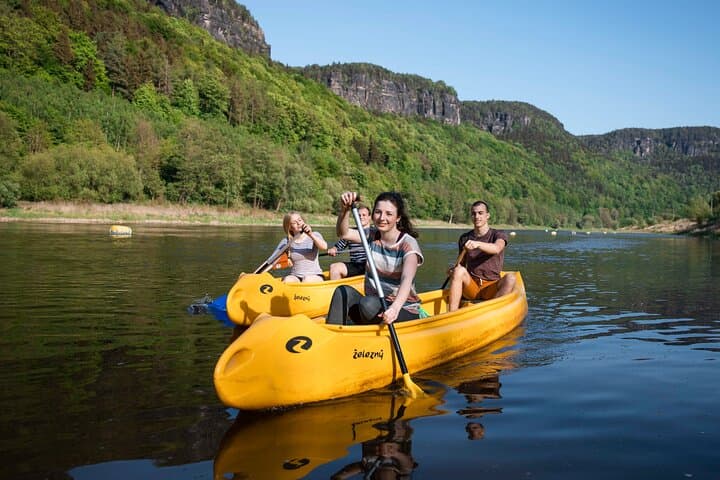
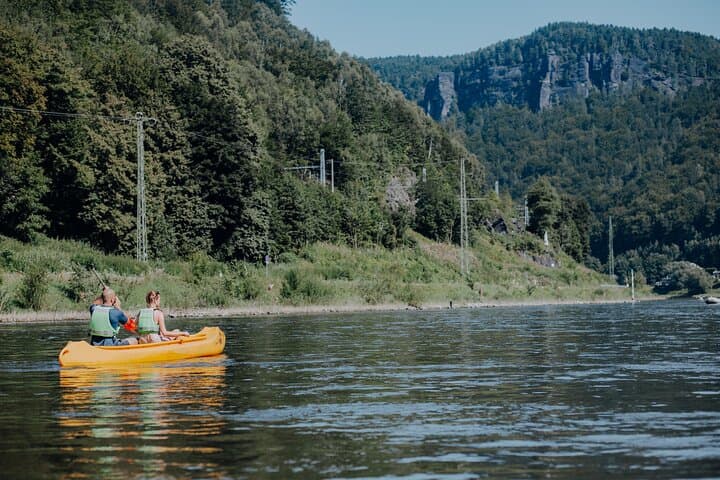
You push off from Camp Děčín with a paddle in hand and the Elbe slipping smooth beneath the canoe. The river widens and narrows, rock faces rising on both banks until sandstone towers crowd the channel — Bohemian Switzerland’s canyon closing in around you. Herons watch from shallows; the current nudges the bow downstream as the German village of Schmilka comes into view.
You push off from Camp Děčín with a paddle in hand and the Elbe slipping smooth beneath the canoe. The river widens and narrows, rock faces rising on both banks until sandstone towers crowd the channel — Bohemian Switzerland’s canyon closing in around you. Herons watch from shallows; the current nudges the bow downstream as the German village of Schmilka comes into view.
The Elbe here carves through Cretaceous sandstone, forming some of Europe’s deepest fluvial gorges. For centuries this borderland has seen traders, smugglers and early tourists drawn to its cliffs and river route; today a small ferry and a brewery anchor Schmilka’s riverside culture. Geology and human history meet on the water: eroded pillars and old ferry landings that hint at the valley’s long use as a corridor.
Practical details are simple: the route is about 15 km (roughly 3 hours at a steady, relaxed pace), unguided but equipped — canoes, paddles, life jackets and a dry bag are provided. There are no weirs on this stretch, making it beginner-friendly, but you should be comfortable steering and bracing in moving water. The handover is at Schmilka ferry on the right bank; boats and gear are collected there. A short ferry (cash €1.50) or a local train connects you onward.
Bring a waterproof layer, sun protection, a filled water bottle and a basic river map. Expect variable light in the gorge, occasional wind gusts and wildlife along quiet banks. Respect park rules, pack out trash, and plan your return timing to match ferry and train schedules.