THE ADVENTURE COLLECTIVE® · Independent discovery and booking for outdoor travel

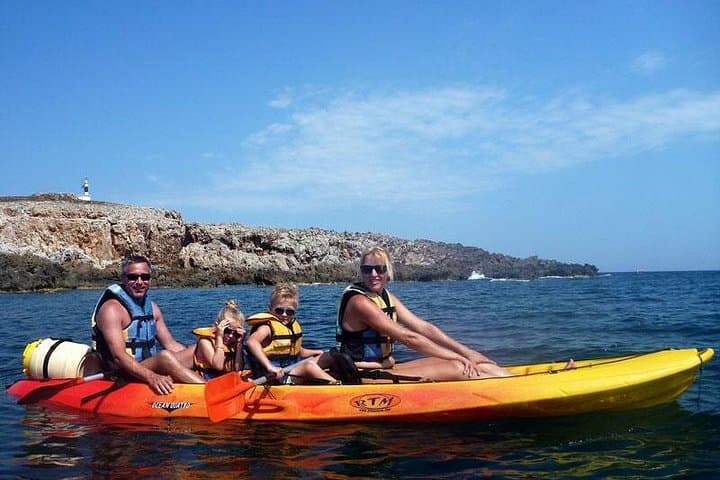
Paddle from the sheltered quay at Fornells into narrow caves, clear-water coves, and seagrass meadows that define Menorca’s protected north shore. This three-hour guided kayak tour blends hands-on paddling with snorkeling stops and local maritime history.
Paddle from the sheltered quay at Fornells into narrow caves, clear-water coves, and seagrass meadows that define Menorca’s protected north shore. This three-hour guided kayak tour blends hands-on paddling with snorkeling stops and local maritime history.
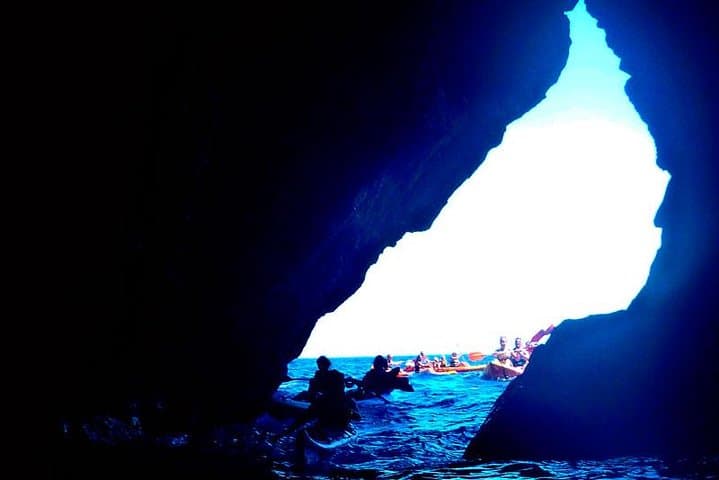
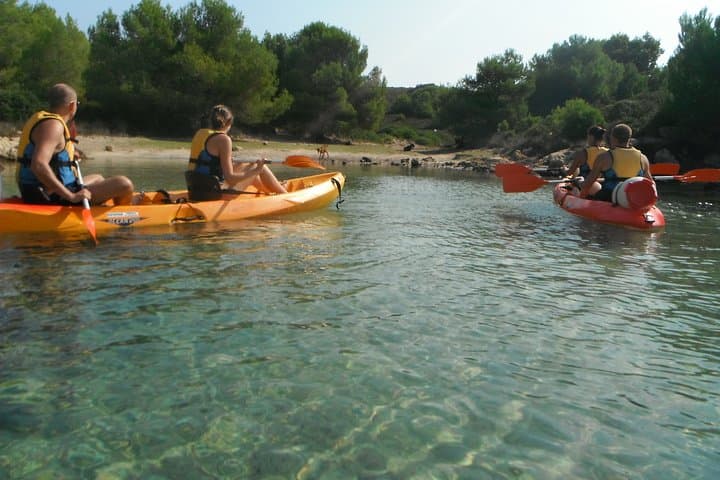
You push off from a low stone quay in Fornells and the bay holds you—clear water breaking gently against your hull, wind only where the headland lets it through. The sea dares you to edge into caves that threaten to swallow the light; tufts of posidonia ribbon away beneath your paddle, and shoals of wrasse scatter like thinking things.
Verified experiences and guided adventures in the surrounding area.
Operated by KATAYAK MENORCA · Fornells, Balearic Islands
You push off from a low stone quay in Fornells and the bay holds you—clear water breaking gently against your hull, wind only where the headland lets it through. The sea dares you to edge into caves that threaten to swallow the light; tufts of posidonia ribbon away beneath your paddle, and shoals of wrasse scatter like thinking things.
Menorca wears history on its coast: Talayotic ruins sit inland a short ride from the shore, British-era watchtowers punctuate the skyline, and Fornells itself keeps a fishing rhythm that predates modern tourism. Geologically the north coast is limestone sculpted by waves—coves, steep cliffs, and small grottos that kayaks can enter where larger boats cannot. Ecologically, this stretch is part of Menorca’s protected marine mosaic and lies within areas influenced by Posidonia meadows that sustain Mediterranean life.
On a three-hour guided outing you’ll alternate paddling and short swims, pause to snorkel over rocky reefs, and hear the guide point out geology and local fishing lore. Expect moderate effort: short bursts of paddling to catch tides, gentle edging to skim cave mouths.
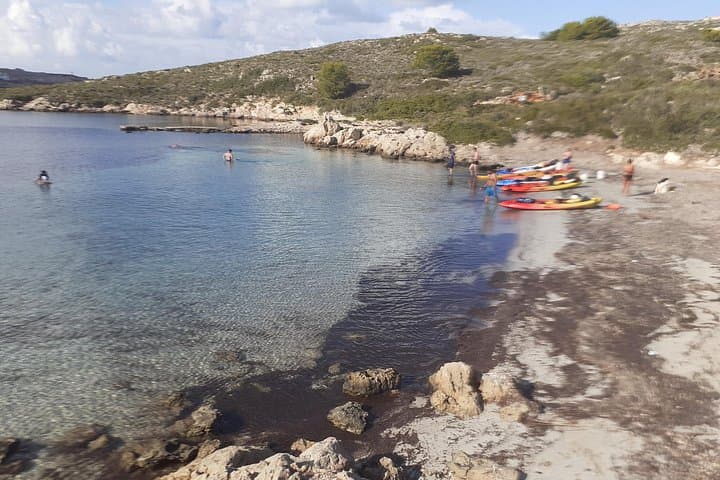
Practical guide: tours usually supply kayaks, PFDs and snorkel kit—bring reef shoes, a dry bag, sun protection and at least 1–2L of water. Launch and landing can be on pebbly beaches; timing with the morning breeze keeps crossings calm. Respect the marine reserve—no anchoring on seagrass, keep distance from wildlife, and pack out everything you bring in.
moderate.
3 hours.
Should be in moderate physical condition: able to paddle continuously for 20–30 minutes and swim comfortably in open water.
No—most tours accept beginners but expect a basic level of fitness and the ability to follow instruction; guides will teach essential paddling and safety techniques.
Yes—standard trips typically include life jackets and snorkel equipment, though you may prefer your own mask for fit and comfort.
Children can participate if accompanied by an adult; operators often require children to sit on laps for infants and assess age/ability for older kids—check the specific booking policy.
Tours are usually canceled or rescheduled if conditions are unsafe; operators refund full bookings if they cancel at least 24 hours ahead due to wind, sea state, or low participant numbers.
Menorca is a UNESCO Biosphere Reserve with continuous maritime traditions; Fornells is historically a fishing village with British-era coastal defenses nearby.
The area’s Posidonia meadows are essential to marine life—avoid anchoring on seagrass, dispose of waste properly, and follow guides’ rules to minimize impact.
KATAYAK MENORCA operates guided outdoor trips and adventures with an emphasis on safety, stewardship, and memorable experiences.
You push off from a low stone quay in Fornells and the bay holds you—clear water breaking gently against your hull, wind only where the headland lets it through. The sea dares you to edge into caves that threaten to swallow the light; tufts of posidonia ribbon away beneath your paddle, and shoals of wrasse scatter like thinking things.
You push off from a low stone quay in Fornells and the bay holds you—clear water breaking gently against your hull, wind only where the headland lets it through. The sea dares you to edge into caves that threaten to swallow the light; tufts of posidonia ribbon away beneath your paddle, and shoals of wrasse scatter like thinking things.
Menorca wears history on its coast: Talayotic ruins sit inland a short ride from the shore, British-era watchtowers punctuate the skyline, and Fornells itself keeps a fishing rhythm that predates modern tourism. Geologically the north coast is limestone sculpted by waves—coves, steep cliffs, and small grottos that kayaks can enter where larger boats cannot. Ecologically, this stretch is part of Menorca’s protected marine mosaic and lies within areas influenced by Posidonia meadows that sustain Mediterranean life.
On a three-hour guided outing you’ll alternate paddling and short swims, pause to snorkel over rocky reefs, and hear the guide point out geology and local fishing lore. Expect moderate effort: short bursts of paddling to catch tides, gentle edging to skim cave mouths.
Practical guide: tours usually supply kayaks, PFDs and snorkel kit—bring reef shoes, a dry bag, sun protection and at least 1–2L of water. Launch and landing can be on pebbly beaches; timing with the morning breeze keeps crossings calm. Respect the marine reserve—no anchoring on seagrass, keep distance from wildlife, and pack out everything you bring in.