THE ADVENTURE COLLECTIVE® · Independent discovery and booking for outdoor travel

Glide through the Damas Island mangroves in an open-seat kayak with a bilingual naturalist, spotting birds, monkeys, and crabs while learning about a vital estuary system. This four-hour tour balances easy paddling with concentrated wildlife viewing and local conservation insights.
Glide through the Damas Island mangroves in an open-seat kayak with a bilingual naturalist, spotting birds, monkeys, and crabs while learning about a vital estuary system. This four-hour tour balances easy paddling with concentrated wildlife viewing and local conservation insights.
A low tide turns the estuary into a braided ribbon of dark water, and the guide's paddle parts the mangrove roots with a soft, patient rhythm. You sit in an open-seat tandem kayak, sun on your forearms, while white-faced capuchins chatter above and a kingfisher watches you like a bright pin. The current does most of the work; the experience is equal parts quiet exploration and concentrated wildlife watching.
Verified experiences and guided adventures in the surrounding area.
Operated by Iguana Tours · Quepos, Puntarenas
A low tide turns the estuary into a braided ribbon of dark water, and the guide's paddle parts the mangrove roots with a soft, patient rhythm. You sit in an open-seat tandem kayak, sun on your forearms, while white-faced capuchins chatter above and a kingfisher watches you like a bright pin. The current does most of the work; the experience is equal parts quiet exploration and concentrated wildlife watching.
The Damas Island estuary is one of the most accessible mangrove systems on Costa Rica's central Pacific coast. Geologically recent alluvial deposits have created a maze of prop roots and mudflats that protect juvenile fish and birds. The local economy around Quepos and Manuel Antonio has long relied on both fishing and eco-tourism, and bilingual naturalist guides typically weave basic conservation lessons and cultural context into the trip.
Expect a roughly four-hour outing that moves at a calm pace: paddling through narrow channels, pausing at lookout points, and learning to read tidal flows that dictate where birds and crabs concentrate. Practicalities matter—open-seat kayaks get wet, so wear quick-dry clothing and secure valuables in a dry bag. Apply reef-safe sunscreen, drink water, and listen to your guide on paddle technique and wildlife etiquette. Families with children over seven can participate (kids sit in tandems). This is a moderately physical, low-impact way to access a living classroom of mangrove ecology and coastal Costa Rican life.
moderate.
4 hours.
Moderate fitness recommended; participants should be able to paddle intermittently and handle getting in and out of an open-seat kayak.
Children aged seven and older can join; younger kids may be allowed by operator discretion but will need to ride tandem with an adult.
No—guides teach basic paddling and steering; a reasonable level of fitness for intermittent paddling is recommended.
Guides target areas with regular sightings, but wildlife is never guaranteed; weather and tides affect activity levels.
Yes—this tour typically includes hotel pickup and drop-off in the Manuel Antonio area; confirm your pickup point when booking.
Local fishing communities have long used these estuaries for nursery grounds; recent decades have seen a shift toward guided eco-tourism that highlights mangrove value.
Mangroves are protected in parts of the estuary; responsible operators emphasize no-touch policies, reef-safe sunscreens, and limiting noise to reduce disturbance.
Iguana Tours operates guided outdoor trips and adventures with an emphasis on safety, stewardship, and memorable experiences.
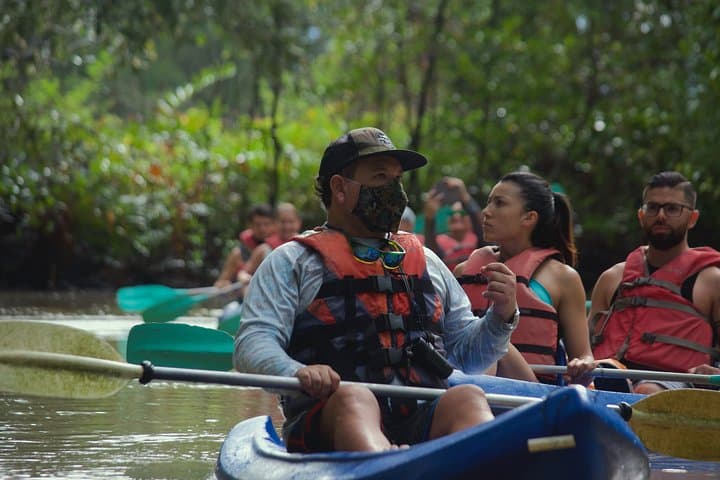
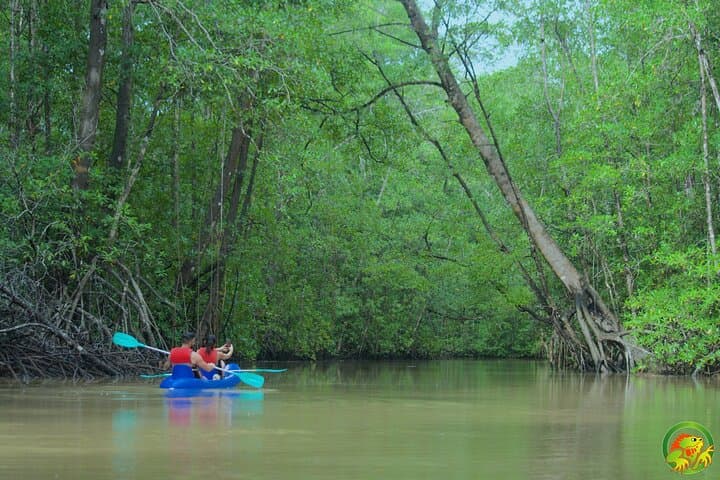
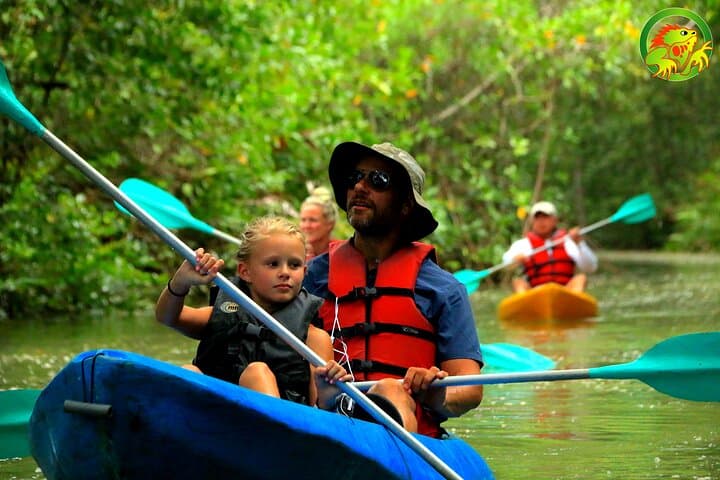
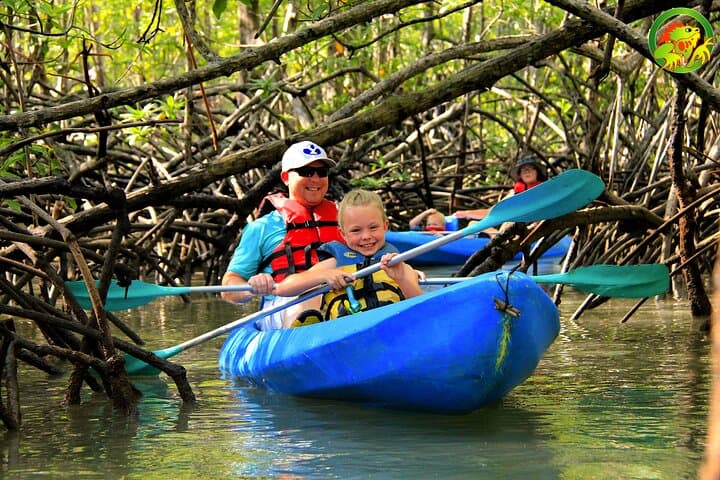
A low tide turns the estuary into a braided ribbon of dark water, and the guide's paddle parts the mangrove roots with a soft, patient rhythm. You sit in an open-seat tandem kayak, sun on your forearms, while white-faced capuchins chatter above and a kingfisher watches you like a bright pin. The current does most of the work; the experience is equal parts quiet exploration and concentrated wildlife watching.
A low tide turns the estuary into a braided ribbon of dark water, and the guide's paddle parts the mangrove roots with a soft, patient rhythm. You sit in an open-seat tandem kayak, sun on your forearms, while white-faced capuchins chatter above and a kingfisher watches you like a bright pin. The current does most of the work; the experience is equal parts quiet exploration and concentrated wildlife watching.
The Damas Island estuary is one of the most accessible mangrove systems on Costa Rica's central Pacific coast. Geologically recent alluvial deposits have created a maze of prop roots and mudflats that protect juvenile fish and birds. The local economy around Quepos and Manuel Antonio has long relied on both fishing and eco-tourism, and bilingual naturalist guides typically weave basic conservation lessons and cultural context into the trip.
Expect a roughly four-hour outing that moves at a calm pace: paddling through narrow channels, pausing at lookout points, and learning to read tidal flows that dictate where birds and crabs concentrate. Practicalities matter—open-seat kayaks get wet, so wear quick-dry clothing and secure valuables in a dry bag. Apply reef-safe sunscreen, drink water, and listen to your guide on paddle technique and wildlife etiquette. Families with children over seven can participate (kids sit in tandems). This is a moderately physical, low-impact way to access a living classroom of mangrove ecology and coastal Costa Rican life.