THE ADVENTURE COLLECTIVE® · Independent discovery and booking for outdoor travel

Explore Blackwall Reach’s dramatic limestone cliffs by tandem kayak on a guided 2‑hour tour of the Swan River. Expect calm paddling, cave skirting, local history from Noongar to early colonists, and plenty of wildlife encounters.
Explore Blackwall Reach’s dramatic limestone cliffs by tandem kayak on a guided 2‑hour tour of the Swan River. Expect calm paddling, cave skirting, local history from Noongar to early colonists, and plenty of wildlife encounters.
The river breathes as you push off the shore—Swan River’s current nudging tandem kayaks toward a 500‑metre sweep of towering limestone at Blackwall Reach. Cliffs rise vertical from the water, their faces streaked by tidal stains and gull-roost marks, while narrow cave mouths darken the base where the river dares you to look closer.
Verified experiences and guided adventures in the surrounding area.
The river breathes as you push off the shore—Swan River’s current nudging tandem kayaks toward a 500‑metre sweep of towering limestone at Blackwall Reach. Cliffs rise vertical from the water, their faces streaked by tidal stains and gull-roost marks, while narrow cave mouths darken the base where the river dares you to look closer.
These limestone and aeolianite formations are the product of millennia of wind, wave and tidal action; local Noongar people have long known these shores, and early Swan River colonists mapped them as navigational landmarks. Contemporary guides weave those stories with botanical notes—salt-tolerant banksia and mangrove pockets—and a plainspoken natural history of how the cliff faces erode and calve during strong southerlies.
On the water you’ll feel the environment’s temperament: gentle eddies that allow easy exploration, and occasional cross-currents that reward attentive paddling. Guides operate small groups in stable tandem kayaks, offering technique cues and cultural context as you skirt caves, inspect overhangs and scan for bottlenose dolphins and black swans.
Practical takeaways: this is a 2‑hour, beginner-friendly outing that still asks for basic, steady movement and sun protection. Wear quick‑dry layers, bring a 1‑2 litre water bottle, and listen to guide briefings on cliff‑side safety—rocks can be slippery and tides change. Best times are cooler mornings or late afternoons when light slants across the cliffs and wildlife is most active; expect a satisfying mix of immersion and education, ending with the clear sense of having read a chapter of the river’s story.
moderate.
2 hours.
Suitable for people in light to moderate physical condition who can sit and paddle for up to two hours; basic upper‑body stamina helps.
No — tours use stable tandem kayaks and guides provide basic instruction; a willingness to paddle and follow safety guidance is sufficient.
Bring sun protection, a filled water bottle, a lightweight towel and any personal medications; guides typically provide PFDs (life jackets) and paddles.
Tours are often rescheduled or cancelled in strong winds or unsafe tidal conditions; operators will notify you and offer alternatives or refunds depending on policy.
Yes — bottlenose dolphins and black swans are commonly sighted, but wildlife sightings are never guaranteed and depend on season and river conditions.
Blackwall Reach has long been part of Noongar Country and later served as a landmark for Swan River colonists; guided tours often incorporate both Indigenous and colonial narratives.
Stay on guided routes, avoid disturbing wildlife, use reef‑safe sunscreen and pack out all waste—riverbank erosion and litter harm local habitats.
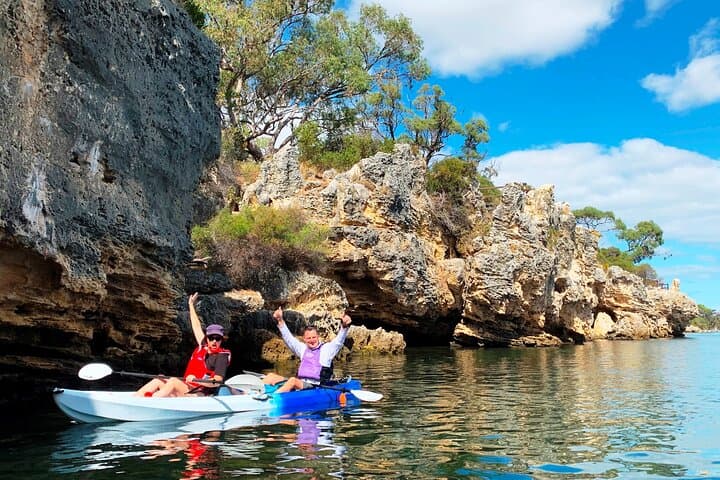
The river breathes as you push off the shore—Swan River’s current nudging tandem kayaks toward a 500‑metre sweep of towering limestone at Blackwall Reach. Cliffs rise vertical from the water, their faces streaked by tidal stains and gull-roost marks, while narrow cave mouths darken the base where the river dares you to look closer.
The river breathes as you push off the shore—Swan River’s current nudging tandem kayaks toward a 500‑metre sweep of towering limestone at Blackwall Reach. Cliffs rise vertical from the water, their faces streaked by tidal stains and gull-roost marks, while narrow cave mouths darken the base where the river dares you to look closer.
These limestone and aeolianite formations are the product of millennia of wind, wave and tidal action; local Noongar people have long known these shores, and early Swan River colonists mapped them as navigational landmarks. Contemporary guides weave those stories with botanical notes—salt-tolerant banksia and mangrove pockets—and a plainspoken natural history of how the cliff faces erode and calve during strong southerlies.
On the water you’ll feel the environment’s temperament: gentle eddies that allow easy exploration, and occasional cross-currents that reward attentive paddling. Guides operate small groups in stable tandem kayaks, offering technique cues and cultural context as you skirt caves, inspect overhangs and scan for bottlenose dolphins and black swans.
Practical takeaways: this is a 2‑hour, beginner-friendly outing that still asks for basic, steady movement and sun protection. Wear quick‑dry layers, bring a 1‑2 litre water bottle, and listen to guide briefings on cliff‑side safety—rocks can be slippery and tides change. Best times are cooler mornings or late afternoons when light slants across the cliffs and wildlife is most active; expect a satisfying mix of immersion and education, ending with the clear sense of having read a chapter of the river’s story.