THE ADVENTURE COLLECTIVE® · Independent discovery and booking for outdoor travel

Glide from a karst spring to a family-run snack stop on a 2.5-hour SUP tour of the Ombla River. Calm water, short paddles, and local stories make this a relaxed way to see a lesser-known side of Dubrovnik.
Glide from a karst spring to a family-run snack stop on a 2.5-hour SUP tour of the Ombla River. Calm water, short paddles, and local stories make this a relaxed way to see a lesser-known side of Dubrovnik.
Morning light slips across quiet water as you push off from a small riverside dock opposite Dubrovnik’s Old Town. The Ombla doesn’t roar — it appears, cool and focused, a karst spring-fed ribbon that pushes clear water toward the Adriatic. Stand-up paddleboarding here feels intimate: low cliffs, reed beds, and sudden glimpses of stone walls and an old pasta factory where industry once met the spring.
Verified experiences and guided adventures in the surrounding area.
Operated by DU Outdoors · Dubrovnik, Dubrovnik-Neretva County
Morning light slips across quiet water as you push off from a small riverside dock opposite Dubrovnik’s Old Town. The Ombla doesn’t roar — it appears, cool and focused, a karst spring-fed ribbon that pushes clear water toward the Adriatic. Stand-up paddleboarding here feels intimate: low cliffs, reed beds, and sudden glimpses of stone walls and an old pasta factory where industry once met the spring.
Geology gives the Ombla its character. Water emerges from limestone aquifers characteristic of the Dalmatian karst, bubbling from a circular pool that feeds a short river channel to the sea. Historically the spring sustained Dubrovnik’s mills and gardens; parts of the riverbank were once owned by the Church and by local industries. Today small family plots and workshops line the shore, offering a living window into rural life just beyond the city walls.
On this guided 2.5-hour trip expect basic paddle instruction, calm flatwater paddling, an optional swim at the spring, and a return ashore for snacks and homemade refreshments from a local family. Groups are small (up to eight); guides provide SUPs, vests, and waterproof dry bags. There’s no elevation gain and minimal current, making the outing accessible for most travelers with basic balance.
Practical notes: arrive with swimwear under clothes, wear reef- or water shoes, and bring sun protection and a light towel. The best windows are morning or late afternoon when winds are low and light is flattering for photos.
easy.
2–2.5 hours.
Suitable for most fitness levels — requires basic balance and ability to stand for short periods.
No — the guide provides a brief on-land lesson and basic coaching; the river is calm and beginner-friendly.
Optional — there’s a swim stop at the spring for those who want to cool off; a towel and change of clothes are recommended.
SUP, life vest, adjustable paddle, dry bag, bottled water, snacks, and transport are included; gratuities are not.
Tours accept a wide range of ages and fitness levels; booking asks for weights to ensure appropriate equipment and safety.
The Ombla spring historically powered local mills and supplied Dubrovnik; nearby properties reflect ownership patterns from municipal to ecclesiastical hands.
The area is sensitive karst terrain; guides emphasize leave-no-trace practices and the importance of fresh-water protection for local communities and ecosystems.
DU Outdoors operates guided outdoor trips and adventures with an emphasis on safety, stewardship, and memorable experiences.
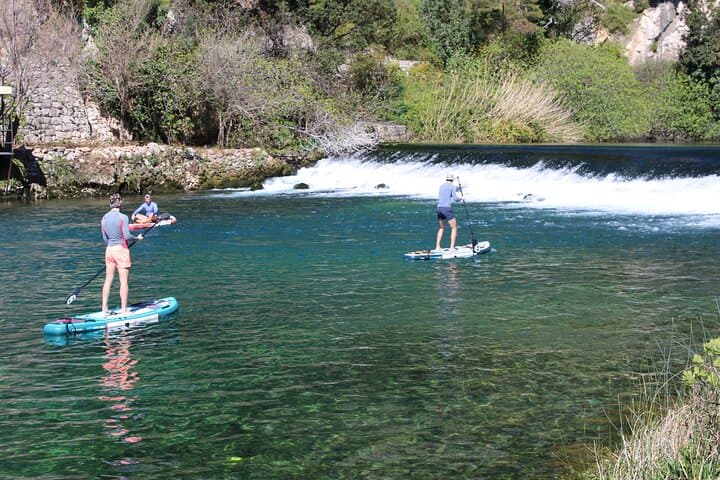
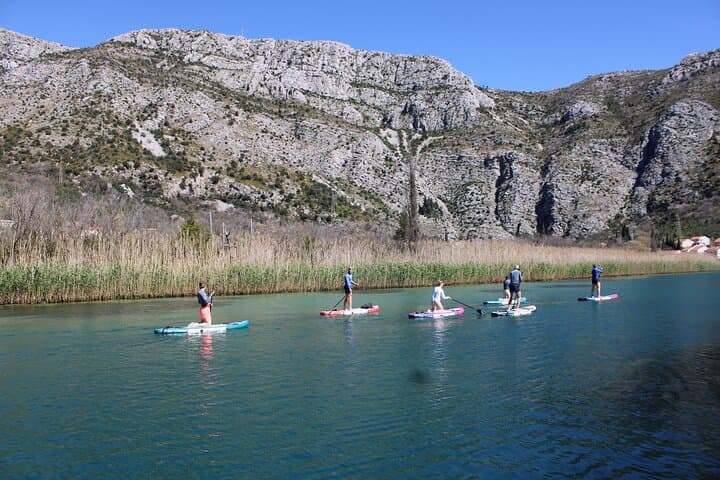
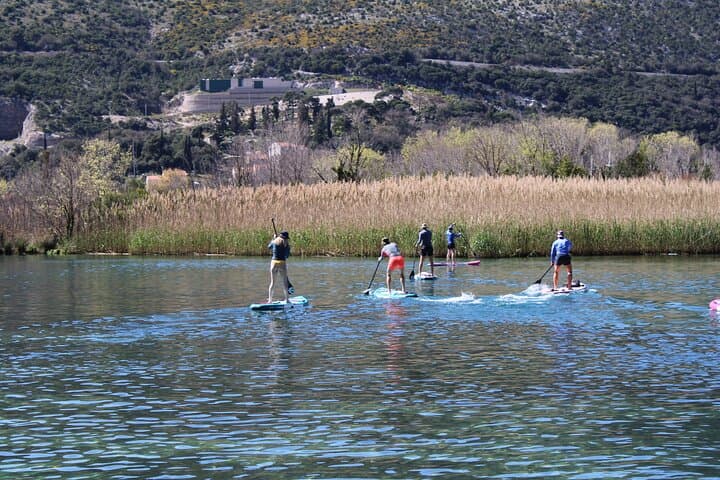
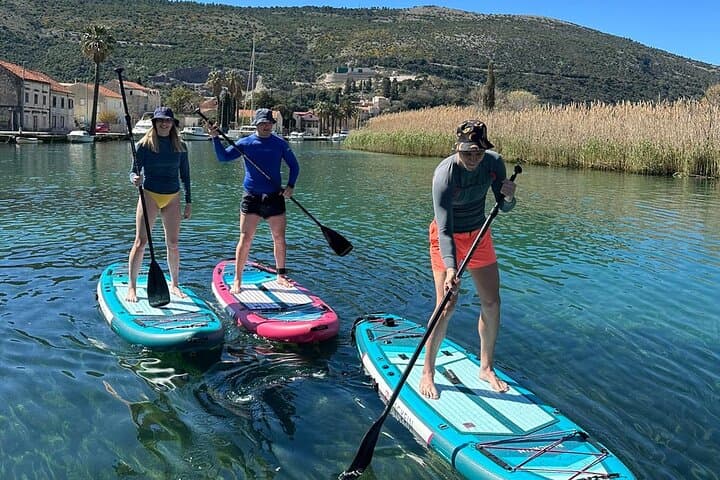
Morning light slips across quiet water as you push off from a small riverside dock opposite Dubrovnik’s Old Town. The Ombla doesn’t roar — it appears, cool and focused, a karst spring-fed ribbon that pushes clear water toward the Adriatic. Stand-up paddleboarding here feels intimate: low cliffs, reed beds, and sudden glimpses of stone walls and an old pasta factory where industry once met the spring.
Morning light slips across quiet water as you push off from a small riverside dock opposite Dubrovnik’s Old Town. The Ombla doesn’t roar — it appears, cool and focused, a karst spring-fed ribbon that pushes clear water toward the Adriatic. Stand-up paddleboarding here feels intimate: low cliffs, reed beds, and sudden glimpses of stone walls and an old pasta factory where industry once met the spring.
Geology gives the Ombla its character. Water emerges from limestone aquifers characteristic of the Dalmatian karst, bubbling from a circular pool that feeds a short river channel to the sea. Historically the spring sustained Dubrovnik’s mills and gardens; parts of the riverbank were once owned by the Church and by local industries. Today small family plots and workshops line the shore, offering a living window into rural life just beyond the city walls.
On this guided 2.5-hour trip expect basic paddle instruction, calm flatwater paddling, an optional swim at the spring, and a return ashore for snacks and homemade refreshments from a local family. Groups are small (up to eight); guides provide SUPs, vests, and waterproof dry bags. There’s no elevation gain and minimal current, making the outing accessible for most travelers with basic balance.
Practical notes: arrive with swimwear under clothes, wear reef- or water shoes, and bring sun protection and a light towel. The best windows are morning or late afternoon when winds are low and light is flattering for photos.