THE ADVENTURE COLLECTIVE® · Independent discovery and booking for outdoor travel

Paddle 5.5 km of the Kwai Yai beneath the iconic WWII-era bridge on a guided SUP or kayak trip. Expect calm morning water, patient instruction, and evocative views framed by history.
Paddle 5.5 km of the Kwai Yai beneath the iconic WWII-era bridge on a guided SUP or kayak trip. Expect calm morning water, patient instruction, and evocative views framed by history.
Morning mist lifts off the Kwai Yai as paddles strike glassy water; the iron ribs of the Bridge on the River Kwai cut the skyline, a reminder of hard history and stubborn present-day beauty.
You glide downstream on a stand-up paddleboard or in a sit-on-top kayak, guided by instructors who set the pace and teach basic strokes. The river pulls you into mangled banyan roots, karst-splashed banks, and occasional fishermen casting nets; currents nudge your craft and make the river feel alive.
Verified experiences and guided adventures in the surrounding area.
Operated by Paddle and More Travel · Kanchanaburi, Kanchanaburi Province
Morning mist lifts off the Kwai Yai as paddles strike glassy water; the iron ribs of the Bridge on the River Kwai cut the skyline, a reminder of hard history and stubborn present-day beauty.
You glide downstream on a stand-up paddleboard or in a sit-on-top kayak, guided by instructors who set the pace and teach basic strokes. The river pulls you into mangled banyan roots, karst-splashed banks, and occasional fishermen casting nets; currents nudge your craft and make the river feel alive.
The bridge itself dates to the World War II-era Death Railway, constructed under brutal conditions by Allied prisoners and forced labor—its silhouette frames the river with somber context. Geologically the valley is an alluvial plain where seasonal rains swell the Kwai, carving sandy bars and exposing sun-warmed turtle ledges. Local culture centers on riverside markets and simple river cuisine you can sample after a paddle.
Practical guidance: the guided route covers roughly 5.5 km and lasts about three hours including instruction; morning (07:30) and afternoon (15:30) departures are typical. Expect mainly flat water with occasional currents and boat traffic; afternoon winds can make SUPs tippy. Guides supply life vests, paddles, and waterproof instruction, plus complimentary photos. Bring a dry bag, hydrate, wear quick-dry layers and water shoes, and time your trip for calm mornings if you want smooth water and softer light for photos. Beginners receive patient coaching; intermediate paddlers can explore side channels and upstream bends. Respect memorial sites along the banks—the river carries history even as it keeps moving.
moderate.
3 hours.
Light to moderate fitness; able to stand for short periods on an SUP or paddle continuously for 30–60 minutes.
No—basic instruction is provided and the route is suitable for beginners, though balance on an SUP requires brief practice.
Life vests, paddleboard or kayak, paddles, basic instruction, staff accompaniment, complimentary photos, and some hotel transfers within a short radius are typically included.
Children can join but policies vary—ensure you disclose ages when booking; infants are generally required to sit on laps and staff can advise on suitability.
Trips may still operate in light rain but organizers will advise on safety; cancel at least 24 hours for a full refund per booking policy.
The Bridge on the River Kwai is part of the WWII ‘Death Railway’ built by Allied prisoners and forced labor; the structure and nearby cemeteries are living reminders of that history.
The Kwai is sensitive to litter and fuel pollution from boats; use reusable containers, avoid single-use plastics, and follow guide instructions to minimize impact.
Paddle and More Travel operates guided outdoor trips and adventures with an emphasis on safety, stewardship, and memorable experiences.
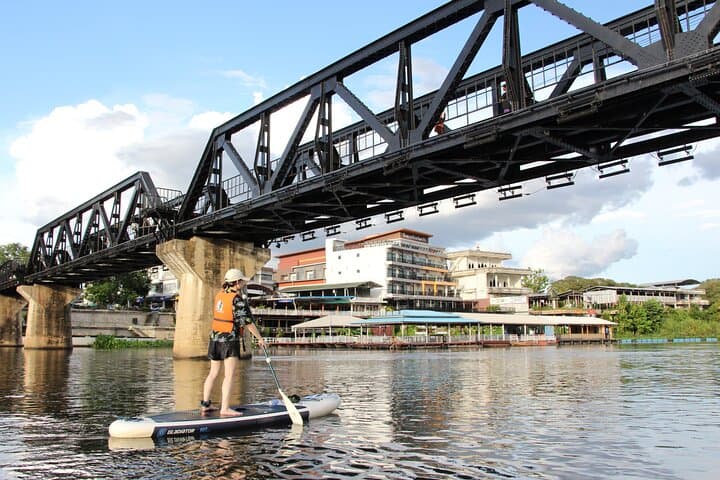
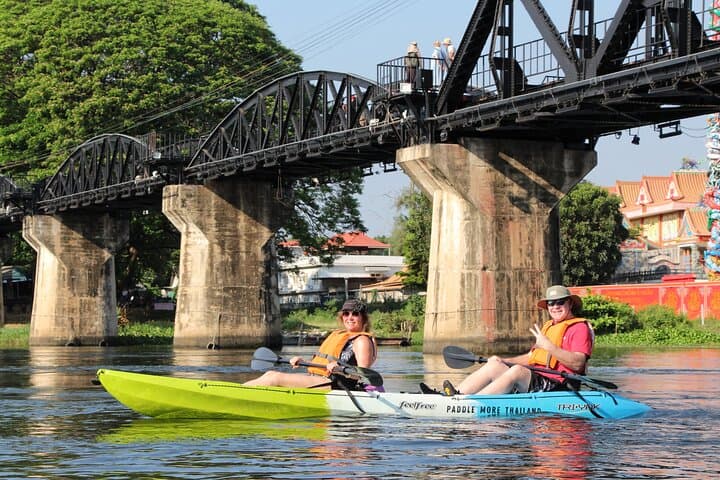
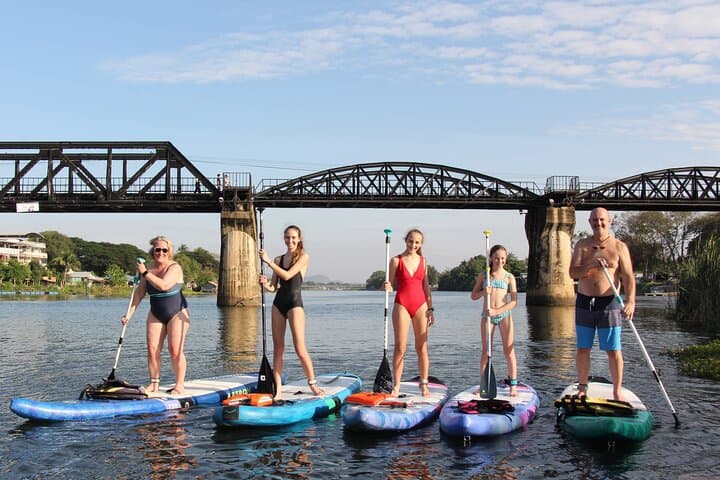
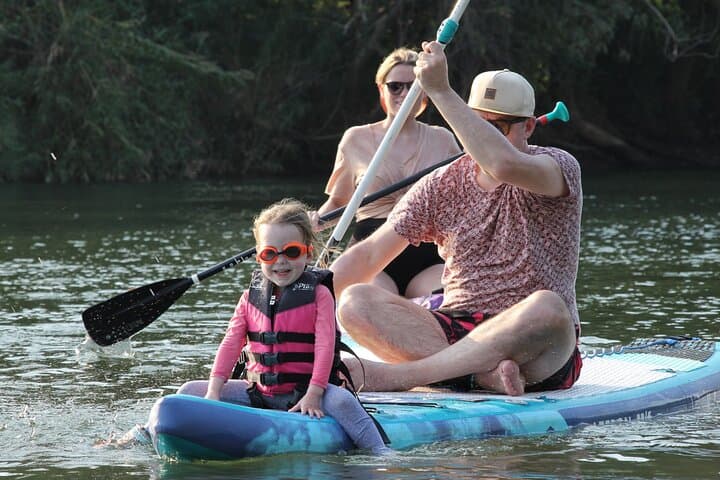
Morning mist lifts off the Kwai Yai as paddles strike glassy water; the iron ribs of the Bridge on the River Kwai cut the skyline, a reminder of hard history and stubborn present-day beauty.
You glide downstream on a stand-up paddleboard or in a sit-on-top kayak, guided by instructors who set the pace and teach basic strokes. The river pulls you into mangled banyan roots, karst-splashed banks, and occasional fishermen casting nets; currents nudge your craft and make the river feel alive.
Morning mist lifts off the Kwai Yai as paddles strike glassy water; the iron ribs of the Bridge on the River Kwai cut the skyline, a reminder of hard history and stubborn present-day beauty.
You glide downstream on a stand-up paddleboard or in a sit-on-top kayak, guided by instructors who set the pace and teach basic strokes. The river pulls you into mangled banyan roots, karst-splashed banks, and occasional fishermen casting nets; currents nudge your craft and make the river feel alive.
The bridge itself dates to the World War II-era Death Railway, constructed under brutal conditions by Allied prisoners and forced labor—its silhouette frames the river with somber context. Geologically the valley is an alluvial plain where seasonal rains swell the Kwai, carving sandy bars and exposing sun-warmed turtle ledges. Local culture centers on riverside markets and simple river cuisine you can sample after a paddle.
Practical guidance: the guided route covers roughly 5.5 km and lasts about three hours including instruction; morning (07:30) and afternoon (15:30) departures are typical. Expect mainly flat water with occasional currents and boat traffic; afternoon winds can make SUPs tippy. Guides supply life vests, paddles, and waterproof instruction, plus complimentary photos. Bring a dry bag, hydrate, wear quick-dry layers and water shoes, and time your trip for calm mornings if you want smooth water and softer light for photos. Beginners receive patient coaching; intermediate paddlers can explore side channels and upstream bends. Respect memorial sites along the banks—the river carries history even as it keeps moving.