THE ADVENTURE COLLECTIVE® · Independent discovery and booking for outdoor travel

Glide through mangrove channels on a morning canoe trip from Galle and discover birds, crabs, and quiet inlets larger boats can’t access. This guided 2‑hour paddle mixes wildlife watching with local coastal culture and practical paddling instruction.
Glide through mangrove channels on a morning canoe trip from Galle and discover birds, crabs, and quiet inlets larger boats can’t access. This guided 2‑hour paddle mixes wildlife watching with local coastal culture and practical paddling instruction.
A low-slung tuk‑tuk winds off the coastal road and drops you at a narrow floating dock where the lagoon breathes slow and wide. The canoe skims flat water threaded by mangrove roots; birds quarter the surface, and the occasional crab clicks beneath exposed mudbanks. Over two hours of paddling the guide reads currents and channels, steering toward quiet inlets that larger boats can’t reach.
Verified experiences and guided adventures in the surrounding area.
Operated by Overa Tours · Galle, Southern Province
A low-slung tuk‑tuk winds off the coastal road and drops you at a narrow floating dock where the lagoon breathes slow and wide. The canoe skims flat water threaded by mangrove roots; birds quarter the surface, and the occasional crab clicks beneath exposed mudbanks. Over two hours of paddling the guide reads currents and channels, steering toward quiet inlets that larger boats can’t reach.
This stretch of Sri Lanka’s southern coast sits in the shadow of Galle Fort’s colonial history—Dutch and Portuguese traders shaped the shoreline trade routes while local fishing communities kept reef and lagoon skills alive. Geologically the lagoon is a shallow estuary: fine sediments, mangrove prop roots, and tidal exchange create dense, nutrient-rich habitat that supports shorebirds and juvenile fish.
Culturally the trip is as much about people as place; small stilted houses and salt-drying racks tell the story of livelihoods shaped by tide and monsoon. Guides often point out native mangrove species and traditional fishing traps as part of the narrative.
Practical notes: expect about 2 hours of paddling (roughly 6–8 km depending on current), flat water with minimal elevation change, and a pace suited to moderate fitness. Life jackets and a brief safety talk are standard; bring reef‑safe sunscreen, a brimmed hat, and a dry bag for electronics. Morning departures avoid the heat and afternoon wind; tides influence access to inner creeks so local timing matters. The canoe amplifies small details—roots, birdsong, and the lagoon’s slow, deliberate pull.
moderate.
2–3 hours.
Moderate fitness—comfortable sitting, basic core and arm strength for 2 hours of paddling, and the ability to step in/out of a low canoe
Yes—operators supply life jackets and give a safety briefing before launch.
Yes—this guided trip is designed for paddlers with little experience; guides teach basic strokes and manage navigation.
Paddling is approximately two hours within a three‑hour schedule that includes transfer and a short briefing.
Yes—pick up and drop off are typically provided by tuk‑tuk or car for hotels in Galle and nearby Unawatuna.
The southern lagoon communities developed alongside colonial trade routes linked to Galle Fort; traditional fishing and salt works reflect generations of coastal living.
Mangroves here stabilize sediment and support nursery habitat—avoid trampling roots, use reef‑safe products, and follow your guide’s instructions to minimize disturbance.
Overa Tours operates guided outdoor trips and adventures with an emphasis on safety, stewardship, and memorable experiences.
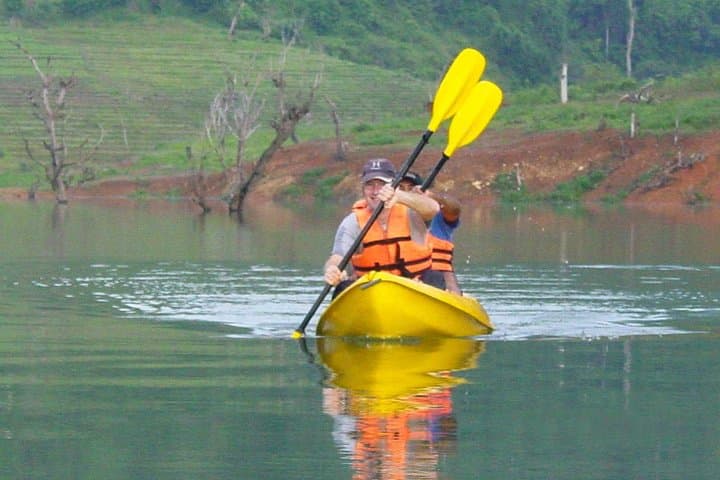
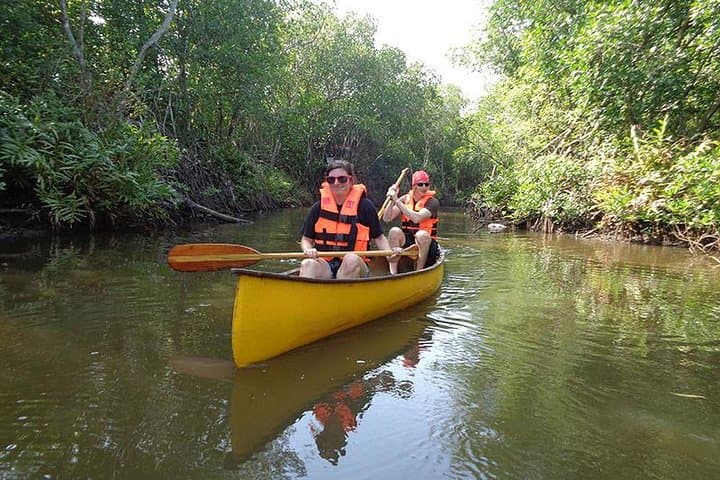
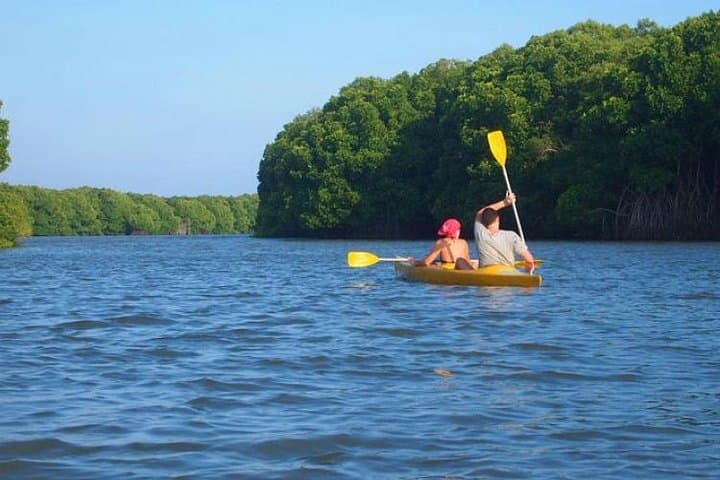
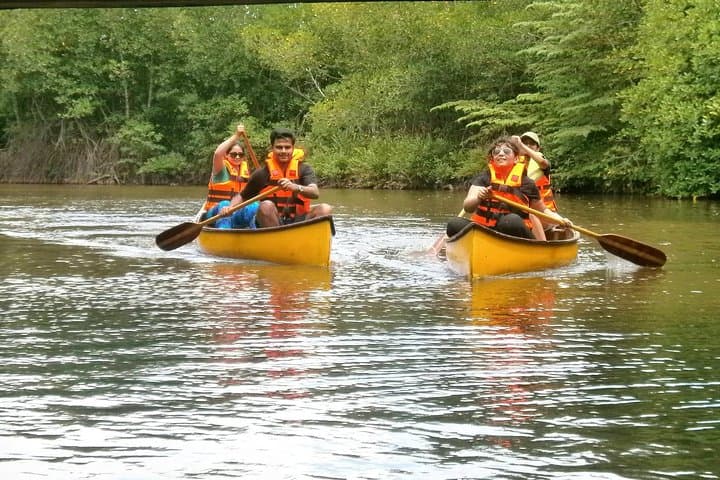
A low-slung tuk‑tuk winds off the coastal road and drops you at a narrow floating dock where the lagoon breathes slow and wide. The canoe skims flat water threaded by mangrove roots; birds quarter the surface, and the occasional crab clicks beneath exposed mudbanks. Over two hours of paddling the guide reads currents and channels, steering toward quiet inlets that larger boats can’t reach.
A low-slung tuk‑tuk winds off the coastal road and drops you at a narrow floating dock where the lagoon breathes slow and wide. The canoe skims flat water threaded by mangrove roots; birds quarter the surface, and the occasional crab clicks beneath exposed mudbanks. Over two hours of paddling the guide reads currents and channels, steering toward quiet inlets that larger boats can’t reach.
This stretch of Sri Lanka’s southern coast sits in the shadow of Galle Fort’s colonial history—Dutch and Portuguese traders shaped the shoreline trade routes while local fishing communities kept reef and lagoon skills alive. Geologically the lagoon is a shallow estuary: fine sediments, mangrove prop roots, and tidal exchange create dense, nutrient-rich habitat that supports shorebirds and juvenile fish.
Culturally the trip is as much about people as place; small stilted houses and salt-drying racks tell the story of livelihoods shaped by tide and monsoon. Guides often point out native mangrove species and traditional fishing traps as part of the narrative.
Practical notes: expect about 2 hours of paddling (roughly 6–8 km depending on current), flat water with minimal elevation change, and a pace suited to moderate fitness. Life jackets and a brief safety talk are standard; bring reef‑safe sunscreen, a brimmed hat, and a dry bag for electronics. Morning departures avoid the heat and afternoon wind; tides influence access to inner creeks so local timing matters. The canoe amplifies small details—roots, birdsong, and the lagoon’s slow, deliberate pull.