THE ADVENTURE COLLECTIVE® · Independent discovery and booking for outdoor travel

Float through Europe’s deepest sandstone canyon on a calm stretch of the Elbe, then pedal back along flat, well-marked cycle paths. This combined raft-and-bike day trip links Děčín’s riverfront to the spa town of Bad Schandau for an easy, scenic international outing.
Float through Europe’s deepest sandstone canyon on a calm stretch of the Elbe, then pedal back along flat, well-marked cycle paths. This combined raft-and-bike day trip links Děčín’s riverfront to the spa town of Bad Schandau for an easy, scenic international outing.
A low, cool voice of the Elbe guides the raft out of Camp Děčín, pushing paddles through glassy water as sandstone cliffs begin to rise. The river widens and narrows in turns that reveal rock towers and steep walls; herons drift from bank to bank while the outline of Děčín chateau watches from above. By mid-route the raft slips into the deep sandstone canyon shared by Bohemian and Saxon Switzerland, the kind of river corridor that makes even a gentle current feel purposeful.
Verified experiences and guided adventures in the surrounding area.
Operated by Active Point Decin · Děčín, Ústí nad Labem Region
A low, cool voice of the Elbe guides the raft out of Camp Děčín, pushing paddles through glassy water as sandstone cliffs begin to rise. The river widens and narrows in turns that reveal rock towers and steep walls; herons drift from bank to bank while the outline of Děčín chateau watches from above. By mid-route the raft slips into the deep sandstone canyon shared by Bohemian and Saxon Switzerland, the kind of river corridor that makes even a gentle current feel purposeful.
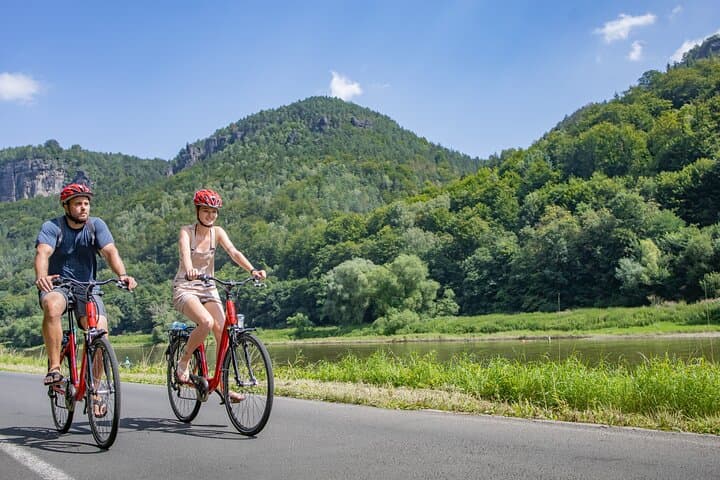
The corridor here is carved from Cretaceous sandstone; human history is layered too — centuries of trade, border guardposts and spa culture in Bad Schandau on the German side. The Elbe Cycle Route follows the floodplain, flat and engineered for easy riding, a contrast to the wild verticality of the canyon.
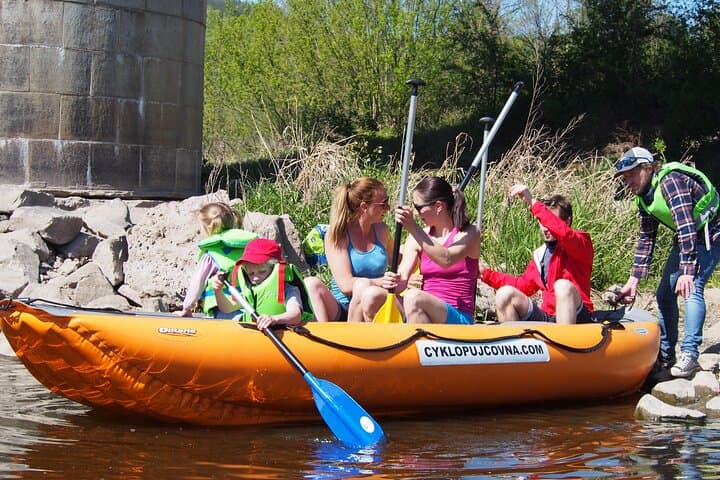
Practical guidance is straightforward: expect about 22 km of rafting (roughly 4–4.5 hours at a relaxed pace) followed by a flat 22 km bike return on signed cycle paths. Elevation change is negligible. Life jackets, paddles and helmets are provided, and staff will retrieve boats and hand over bikes in Bad Schandau. Bring a waterproof layer, secure footwear, ID for the short international crossing and a small lock for the bike. The trip suits families and beginners with moderate fitness; listen closely to the safety briefing and keep electronics in the provided dry bag.
Timing matters — spring runoff can raise water levels, summer brings warm café stops in Bad Schandau, and shoulder seasons offer quieter riverscapes. Return bikes by 6 p.m. to avoid late fees and plan to linger in the spa town if you want a longer break before cycling back.
moderate.
5–6 hours.
Moderate fitness — able to paddle for several hours and cycle 20–25 km on flat terrain
The Elbe on this route is calm and free of weirs; guides provide a briefing and life jackets, so it’s suitable for beginners and families with moderate fitness.
Yes — the route crosses the Czech–German border into Bad Schandau, so carry a passport or valid national ID.
The operator picks up the boats and transports bikes and rafts; participants simply hand in equipment in Bad Schandau and receive bikes to cycle back.
Yes — the flat cycle route and calm river make it family-friendly, but check age and size requirements with the operator and supervise children closely.
The Elbe corridor here slices through Cretaceous sandstone and has long linked Bohemian trade routes with Saxon spa towns; Bad Schandau developed as a German spa and transport hub in the 19th century.
Both Bohemian and Saxon Switzerland are protected areas — stick to landing spots, don’t disturb nesting birds, and use the provided dry bags to avoid leaving litter in the river.
Active Point Decin operates guided outdoor trips and adventures with an emphasis on safety, stewardship, and memorable experiences.
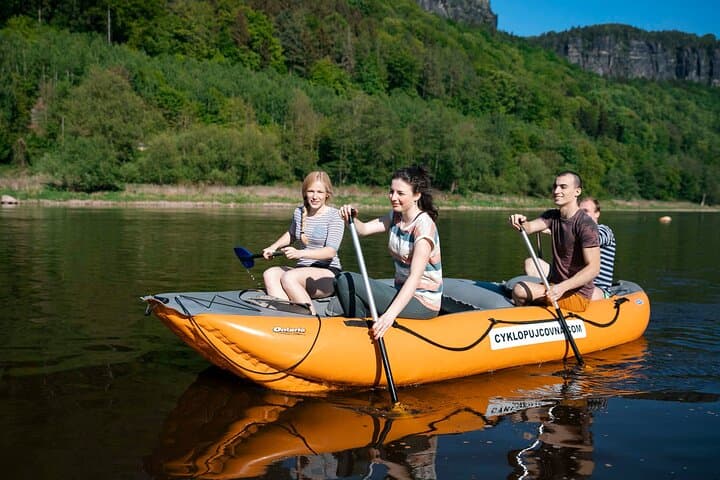
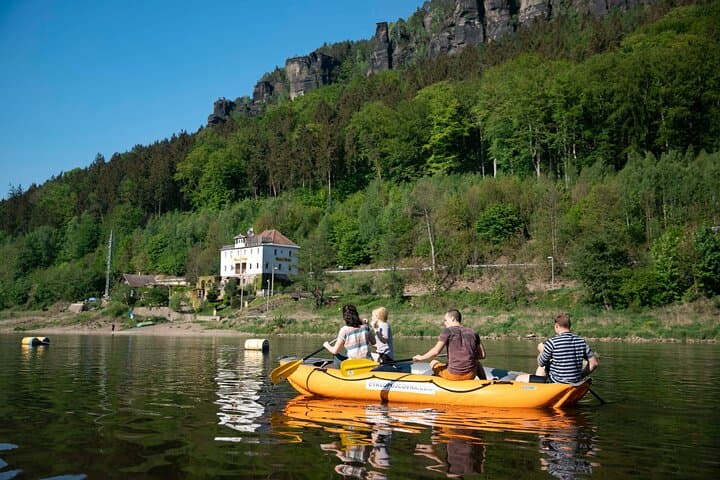
A low, cool voice of the Elbe guides the raft out of Camp Děčín, pushing paddles through glassy water as sandstone cliffs begin to rise. The river widens and narrows in turns that reveal rock towers and steep walls; herons drift from bank to bank while the outline of Děčín chateau watches from above. By mid-route the raft slips into the deep sandstone canyon shared by Bohemian and Saxon Switzerland, the kind of river corridor that makes even a gentle current feel purposeful.
A low, cool voice of the Elbe guides the raft out of Camp Děčín, pushing paddles through glassy water as sandstone cliffs begin to rise. The river widens and narrows in turns that reveal rock towers and steep walls; herons drift from bank to bank while the outline of Děčín chateau watches from above. By mid-route the raft slips into the deep sandstone canyon shared by Bohemian and Saxon Switzerland, the kind of river corridor that makes even a gentle current feel purposeful.
The corridor here is carved from Cretaceous sandstone; human history is layered too — centuries of trade, border guardposts and spa culture in Bad Schandau on the German side. The Elbe Cycle Route follows the floodplain, flat and engineered for easy riding, a contrast to the wild verticality of the canyon.
Practical guidance is straightforward: expect about 22 km of rafting (roughly 4–4.5 hours at a relaxed pace) followed by a flat 22 km bike return on signed cycle paths. Elevation change is negligible. Life jackets, paddles and helmets are provided, and staff will retrieve boats and hand over bikes in Bad Schandau. Bring a waterproof layer, secure footwear, ID for the short international crossing and a small lock for the bike. The trip suits families and beginners with moderate fitness; listen closely to the safety briefing and keep electronics in the provided dry bag.
Timing matters — spring runoff can raise water levels, summer brings warm café stops in Bad Schandau, and shoulder seasons offer quieter riverscapes. Return bikes by 6 p.m. to avoid late fees and plan to linger in the spa town if you want a longer break before cycling back.