THE ADVENTURE COLLECTIVE® · Independent discovery and booking for outdoor travel

Glide narrow mangrove canals in Tortuguero with a licensed guide and watch for caimans, sloths and toucans on this 2.5-hour canoe tour. Small, language-specific groups keep the experience focused, peaceful and rich with wildlife viewing.
Glide narrow mangrove canals in Tortuguero with a licensed guide and watch for caimans, sloths and toucans on this 2.5-hour canoe tour. Small, language-specific groups keep the experience focused, peaceful and rich with wildlife viewing.
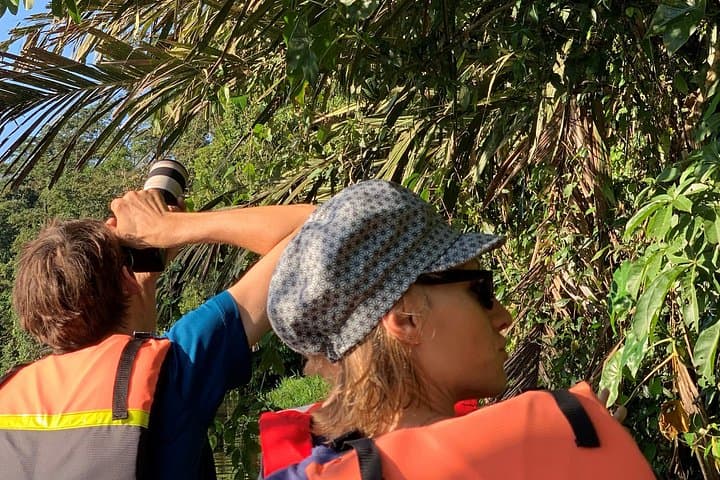
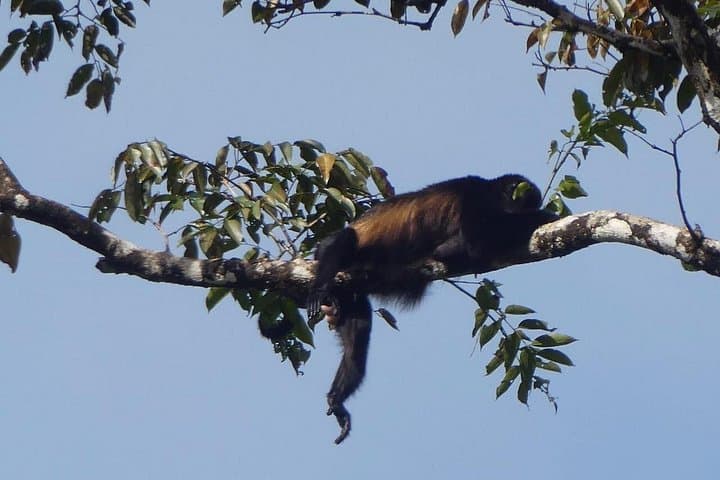
The canoe slips forward with a soft splash; a guide’s paddle parts glassy black water while the jungle leans in from both banks. Early light threads through mangrove tunnels; toucans call from high branches and a sloth unmoves itself into a green silhouette. This is Tortuguero’s canals — narrow waterways that feel like natural secret passages through Costa Rica’s Caribbean lowlands.
Verified experiences and guided adventures in the surrounding area.
Operated by Hugo Tortuguero tours en français · Tortuguero, Limón
The canoe slips forward with a soft splash; a guide’s paddle parts glassy black water while the jungle leans in from both banks. Early light threads through mangrove tunnels; toucans call from high branches and a sloth unmoves itself into a green silhouette. This is Tortuguero’s canals — narrow waterways that feel like natural secret passages through Costa Rica’s Caribbean lowlands.
The park was created in the 1970s to protect vital sea turtle nesting beaches and the mosaic of freshwater canals that feed the Tortuguero complex. Geologically, the area is recent coastal plain born from river sediment and ocean processes, which created braided channels, oxbow lagoons and thick alluvial soils that host diverse wildlife. The local culture reflects Afro-Caribbean and fishing traditions—Tortuguero village grew around boat access to the lagoon and conservation work.
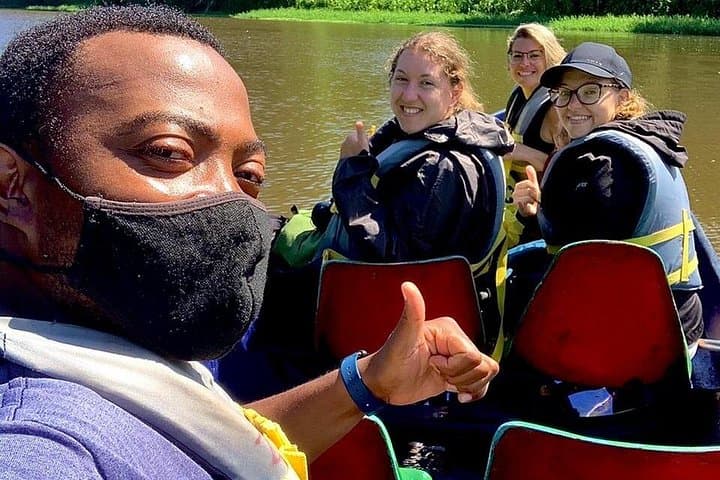
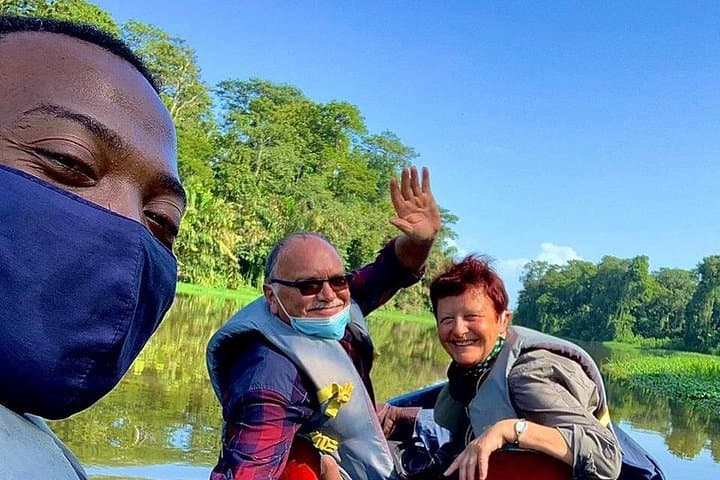
On a guided canoe tour you’ll glide at low speed for about 2–3 hours in small groups (max 8), scanning banks for caimans, monkeys, sloths and a flood of birds. Guides operate in single languages per boat, keeping narration clear and focused. Tours are easy physically, wheelchair-accessible at boarding points in some operations, and run year-round, though water levels change between wet and dry seasons.
Practical notes: wear quick-drying layers, bring insect repellent and binoculars, and plan for early-morning light when wildlife is most active. Keep a respectful distance from animals, follow your guide’s instructions, and expect brief stops for photo opportunities. Boarding is from a small dock; balance and brief step-ups are required. For a compact, wildlife-rich paddle, Tortuguero’s canals deliver a calm, concentrated dose of Caribbean rainforest life.
easy.
2–3 hours.
Suitable for most fitness levels; requires short step-up to board and ability to remain seated for the duration.
The shared canoe tour runs about 150 minutes (roughly 2.5 hours), including boarding and short stops for wildlife viewing.
Some operations advertise wheelchair-accessible transport and surfaces; boarding may still require a short, assisted step, so check with the operator if you need full wheelchair transfer assistance.
Canal tours focus on freshwater wildlife (caimans, monkeys, sloths, birds); sea turtle nesting occurs on nearby beaches and is typically observed on separate night beach programs.
Yes—infants can ride in laps and the trip is rated physically easy, but confirm age policies and bring appropriate flotation/restraint if needed.
Tortuguero grew as a conservation and fishing community; the national park was established to protect critical sea turtle nesting beaches and the unique canal system.
Visitors should avoid feeding or approaching wildlife and follow guide instructions; tourism supports local conservation programs and research on turtles and wetlands.
Hugo Tortuguero tours en français operates guided outdoor trips and adventures with an emphasis on safety, stewardship, and memorable experiences.
The canoe slips forward with a soft splash; a guide’s paddle parts glassy black water while the jungle leans in from both banks. Early light threads through mangrove tunnels; toucans call from high branches and a sloth unmoves itself into a green silhouette. This is Tortuguero’s canals — narrow waterways that feel like natural secret passages through Costa Rica’s Caribbean lowlands.
The canoe slips forward with a soft splash; a guide’s paddle parts glassy black water while the jungle leans in from both banks. Early light threads through mangrove tunnels; toucans call from high branches and a sloth unmoves itself into a green silhouette. This is Tortuguero’s canals — narrow waterways that feel like natural secret passages through Costa Rica’s Caribbean lowlands.
The park was created in the 1970s to protect vital sea turtle nesting beaches and the mosaic of freshwater canals that feed the Tortuguero complex. Geologically, the area is recent coastal plain born from river sediment and ocean processes, which created braided channels, oxbow lagoons and thick alluvial soils that host diverse wildlife. The local culture reflects Afro-Caribbean and fishing traditions—Tortuguero village grew around boat access to the lagoon and conservation work.
On a guided canoe tour you’ll glide at low speed for about 2–3 hours in small groups (max 8), scanning banks for caimans, monkeys, sloths and a flood of birds. Guides operate in single languages per boat, keeping narration clear and focused. Tours are easy physically, wheelchair-accessible at boarding points in some operations, and run year-round, though water levels change between wet and dry seasons.
Practical notes: wear quick-drying layers, bring insect repellent and binoculars, and plan for early-morning light when wildlife is most active. Keep a respectful distance from animals, follow your guide’s instructions, and expect brief stops for photo opportunities. Boarding is from a small dock; balance and brief step-ups are required. For a compact, wildlife-rich paddle, Tortuguero’s canals deliver a calm, concentrated dose of Caribbean rainforest life.