THE ADVENTURE COLLECTIVE® · Independent discovery and booking for outdoor travel

Paddleboard the Guadalquivir on a guided SUP route through Seville, passing Triana Bridge and the Torre del Oro. Basic training, photo stops, and river-level views make this a beginner-friendly way to see the city.
Paddleboard the Guadalquivir on a guided SUP route through Seville, passing Triana Bridge and the Torre del Oro. Basic training, photo stops, and river-level views make this a beginner-friendly way to see the city.
You push off from a small concrete slip, the city easing behind in warm stone and tile while the Guadalquivir pulls you forward. Paddles dip with a steady rhythm; the Isabel II (Triana) Bridge arches to one side and the Torre del Oro flashes its golden face in the river. The guide sets the pace—brief instruction, a few practiced strokes, then the city unfolds from water level.
Verified experiences and guided adventures in the surrounding area.
Operated by CLUB DEPORTIVO TRIANA TURISMO · Seville, Andalusia
You push off from a small concrete slip, the city easing behind in warm stone and tile while the Guadalquivir pulls you forward. Paddles dip with a steady rhythm; the Isabel II (Triana) Bridge arches to one side and the Torre del Oro flashes its golden face in the river. The guide sets the pace—brief instruction, a few practiced strokes, then the city unfolds from water level.
The Guadalquivir has shaped Seville for centuries: Roman docks, Islamic-era forts, and later Age of Discovery traffic all relied on this slow, navigable artery. Geologically it is a lowland river, wide and slow through the city with sandbars and tidal influence that affect surface flow. Culturally the route threads Triana’s pottery quarter and Seville’s historic center, offering a perspective locals once reserved for boats.
Expect calm water, short stops at Bétis Street, and photo pulls beneath Triana Bridge where the guide will frame the Torre del Oro against ripples. Training is basic—how to stand, steer, and re-enter the board—and suitable for first-timers. Practical notes: dress for sun and splash, secure belongings in a dry bag, and allow 90–120 minutes including photos and rests.
Timing matters—early morning or late afternoon light reduces boat traffic and offers cooler temperatures. Respect local boat lanes, keep a moderate distance from riverside restaurants, and bring water. This is an accessible, urban paddle that delivers Seville in short, focused strokes—city history, riverside culture, and a clear view of the river that made the town.
easy.
2 hours.
Suitable for beginners and regular walkers; basic balance and the ability to paddle for short bursts is helpful.
No—basic training is included and the route is designed for beginners with calm river conditions and supervised guidance.
The meeting point is on the Guadalquivir riverside near Triana; public transport options and local buses serve the area—confirm exact coordinates with the operator.
Yes—the price includes board, paddle, life jacket, and basic instruction; photos are typically sent by email after the tour.
The tour may be canceled for strong winds, heavy rain, or unsafe river conditions with full refund if canceled at least 24 hours before departure.
The Guadalquivir has been Seville's working river since Roman and Islamic eras; landmarks like the Torre del Oro date to medieval defenses that controlled river traffic.
The river benefits from urban water-quality initiatives; visitors should avoid litter, use eco-friendly sunscreen, and respect wildlife by keeping distance.
CLUB DEPORTIVO TRIANA TURISMO operates guided outdoor trips and adventures with an emphasis on safety, stewardship, and memorable experiences.


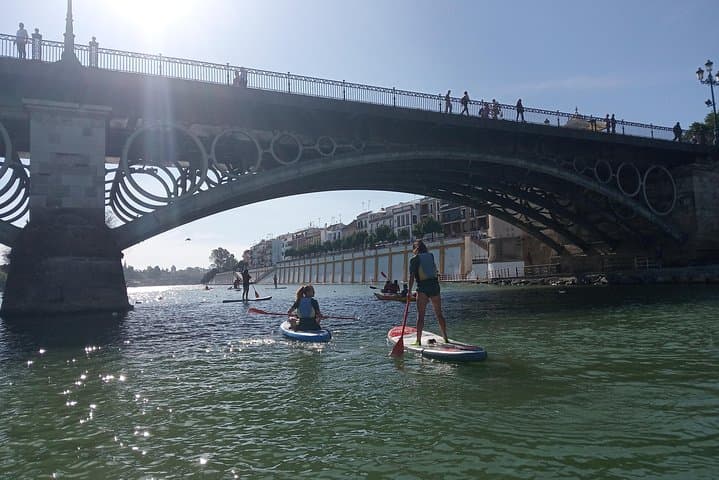

You push off from a small concrete slip, the city easing behind in warm stone and tile while the Guadalquivir pulls you forward. Paddles dip with a steady rhythm; the Isabel II (Triana) Bridge arches to one side and the Torre del Oro flashes its golden face in the river. The guide sets the pace—brief instruction, a few practiced strokes, then the city unfolds from water level.
You push off from a small concrete slip, the city easing behind in warm stone and tile while the Guadalquivir pulls you forward. Paddles dip with a steady rhythm; the Isabel II (Triana) Bridge arches to one side and the Torre del Oro flashes its golden face in the river. The guide sets the pace—brief instruction, a few practiced strokes, then the city unfolds from water level.
The Guadalquivir has shaped Seville for centuries: Roman docks, Islamic-era forts, and later Age of Discovery traffic all relied on this slow, navigable artery. Geologically it is a lowland river, wide and slow through the city with sandbars and tidal influence that affect surface flow. Culturally the route threads Triana’s pottery quarter and Seville’s historic center, offering a perspective locals once reserved for boats.
Expect calm water, short stops at Bétis Street, and photo pulls beneath Triana Bridge where the guide will frame the Torre del Oro against ripples. Training is basic—how to stand, steer, and re-enter the board—and suitable for first-timers. Practical notes: dress for sun and splash, secure belongings in a dry bag, and allow 90–120 minutes including photos and rests.
Timing matters—early morning or late afternoon light reduces boat traffic and offers cooler temperatures. Respect local boat lanes, keep a moderate distance from riverside restaurants, and bring water. This is an accessible, urban paddle that delivers Seville in short, focused strokes—city history, riverside culture, and a clear view of the river that made the town.