THE ADVENTURE COLLECTIVE® · Independent discovery and booking for outdoor travel

Float the shallow waters of Rehoboth Bay on a 2-hour tandem kayak rental—pet-friendly, low on motor traffic, and ideal for beginners and experienced paddlers alike. This guide covers what to expect, local context, and practical tips to make the most of your time on the water.
Float the shallow waters of Rehoboth Bay on a 2-hour tandem kayak rental—pet-friendly, low on motor traffic, and ideal for beginners and experienced paddlers alike. This guide covers what to expect, local context, and practical tips to make the most of your time on the water.
The morning glass of Rehoboth Bay parts under your paddle as you ease a two-person kayak from shore. Salt-tinged air carries gull calls and the distant hum of a summer town waking; shallow, brackish water reveals mudflats and marsh grass that border the bay like a living edge. The water here is calm—an invitation rather than a challenge—and the rhythm of strokes sets the day.
Verified experiences and guided adventures in the surrounding area.
Operated by Delmarva Board Sports Watersports Concession · Rehoboth Beach, Delaware
The morning glass of Rehoboth Bay parts under your paddle as you ease a two-person kayak from shore. Salt-tinged air carries gull calls and the distant hum of a summer town waking; shallow, brackish water reveals mudflats and marsh grass that border the bay like a living edge. The water here is calm—an invitation rather than a challenge—and the rhythm of strokes sets the day.
Rehoboth Bay sits on the inland side of Delaware’s Atlantic barrier islands, a shallow lagoon formed where Coastal Plain sediments meet tidal flow. The area has long been used by the Nanticoke and other Indigenous peoples, later becoming a working estuary for oystering and small-scale fishing before tourism expanded in the 20th century.
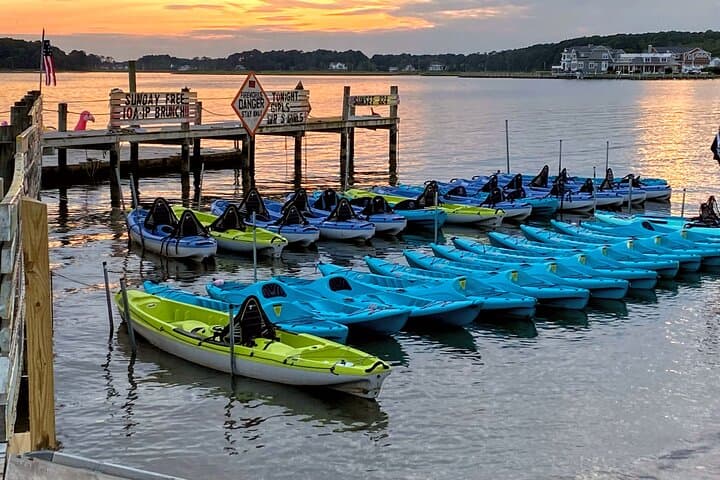
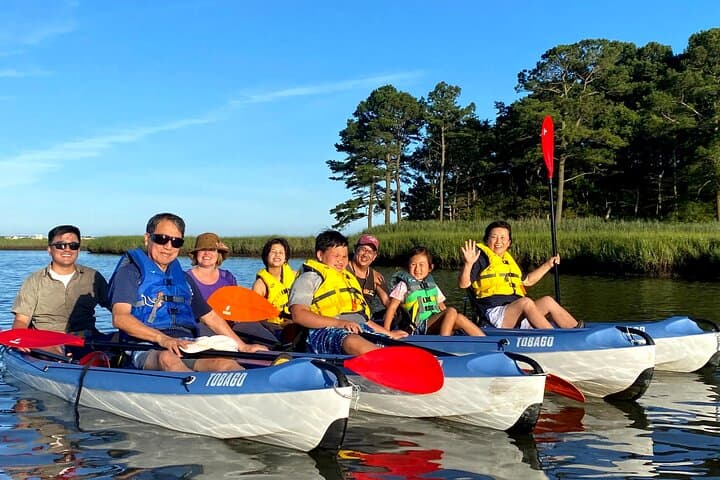
As you paddle, watch for clamshell ridges and salt marsh hummocks; eelgrass beds support birds and juvenile fish, making the bay productive and peaceful. The rental setup near Dagsworthy Street is pet-friendly, low on motor traffic, and geared toward newcomers—kayaks are 10–12 feet long, convertible to single use, with a 450 lb max per tandem.
Practical guidance: choose a morning or late-afternoon slot to avoid sun and wind; wear quick-dry layers and water shoes, and secure sunscreen and a waterproof phone case. Lifejackets and minimal instruction are provided, but swimmers only—bring confidence in the water. Watch tides and channel markers, keep to shallow routes if you’re nervous, and return on time to avoid fees.
Two hours is enough to circle quiet inlets, spy shorebirds, and leave the boardwalk bustle behind—a compact, low-impact way to meet the quieter side of Delaware’s coast.
easy.
2 hours.
Moderate; should be comfortable paddling for 2 hours and swimming if needed
Yes, the operation is pet-friendly but check leash rules and be sure your dog is comfortable boarding and wearing a canine life jacket.
Minimal instruction is provided to get you on and off the water; basic strokes and safety are covered—moderate fitness and ability to swim are required.
Yes, tandem kayaks allow a combined maximum of 450 lbs; staff can convert kayaks to single seating for larger paddlers if available.
Full refund if canceled at least 24 hours prior; operators may cancel for bad weather and provide refunds per their policy.
The bay area was used by Indigenous communities for fishing and shellfishing long before 19th–20th century recreational development; commercial oystering shaped local livelihoods.
Eelgrass and marshes are sensitive—stick to open water channels to avoid uprooting habitat and pack out any trash; many local groups monitor water quality and shellfish beds.
Delmarva Board Sports Watersports Concession operates guided outdoor trips and adventures with an emphasis on safety, stewardship, and memorable experiences.


The morning glass of Rehoboth Bay parts under your paddle as you ease a two-person kayak from shore. Salt-tinged air carries gull calls and the distant hum of a summer town waking; shallow, brackish water reveals mudflats and marsh grass that border the bay like a living edge. The water here is calm—an invitation rather than a challenge—and the rhythm of strokes sets the day.
The morning glass of Rehoboth Bay parts under your paddle as you ease a two-person kayak from shore. Salt-tinged air carries gull calls and the distant hum of a summer town waking; shallow, brackish water reveals mudflats and marsh grass that border the bay like a living edge. The water here is calm—an invitation rather than a challenge—and the rhythm of strokes sets the day.
Rehoboth Bay sits on the inland side of Delaware’s Atlantic barrier islands, a shallow lagoon formed where Coastal Plain sediments meet tidal flow. The area has long been used by the Nanticoke and other Indigenous peoples, later becoming a working estuary for oystering and small-scale fishing before tourism expanded in the 20th century.
As you paddle, watch for clamshell ridges and salt marsh hummocks; eelgrass beds support birds and juvenile fish, making the bay productive and peaceful. The rental setup near Dagsworthy Street is pet-friendly, low on motor traffic, and geared toward newcomers—kayaks are 10–12 feet long, convertible to single use, with a 450 lb max per tandem.
Practical guidance: choose a morning or late-afternoon slot to avoid sun and wind; wear quick-dry layers and water shoes, and secure sunscreen and a waterproof phone case. Lifejackets and minimal instruction are provided, but swimmers only—bring confidence in the water. Watch tides and channel markers, keep to shallow routes if you’re nervous, and return on time to avoid fees.
Two hours is enough to circle quiet inlets, spy shorebirds, and leave the boardwalk bustle behind—a compact, low-impact way to meet the quieter side of Delaware’s coast.