THE ADVENTURE COLLECTIVE® · Independent discovery and booking for outdoor travel

Explore 27 miles of undeveloped Florida coastline on a guided 2‑hour paddle through Mosquito Lagoon and the Intracoastal. Expect close wildlife encounters, tide‑dependent routing, and essential local tips for sun, bugs, and tides.
Explore 27 miles of undeveloped Florida coastline on a guided 2‑hour paddle through Mosquito Lagoon and the Intracoastal. Expect close wildlife encounters, tide‑dependent routing, and essential local tips for sun, bugs, and tides.
You push off from a narrow launch and the lagoon accepts the paddle with a muted sigh; mangrove roots sketch the shoreline and a distant surf line marks the Atlantic’s pull. In two hours a guided paddle threads between open water and sheltered back bays, the land and sea trading places of light as the tide moves.
Verified experiences and guided adventures in the surrounding area.
You push off from a narrow launch and the lagoon accepts the paddle with a muted sigh; mangrove roots sketch the shoreline and a distant surf line marks the Atlantic’s pull. In two hours a guided paddle threads between open water and sheltered back bays, the land and sea trading places of light as the tide moves.
Canaveral National Seashore protects 27 miles of largely undeveloped barrier island and lagoon, created by tidal action over millennia and set aside by Congress in 1975. Geologically it’s a classic barrier system—dunes, tidal flats, and mangrove fringe—where currents carve shallow channels and birds concentrate on tidal flats. The area’s human story ties to native Timucua sites, early ferry routes, and more recent conservation fights that kept the shoreline wild.
On the water you’ll watch osprey and herons quarter the shallows, spot dolphins slicing wakes, and learn how the lagoon’s salinity and tides shape fish and seagrass communities. Guides usually route excursions in Mosquito Lagoon or the Intracoastal side, adjusting for wind and tide so paddlers stay comfortable and safe.
Practical notes: the tour is roughly 2 hours with light to moderate paddling—expect 2–4 miles depending on conditions. Bring reef‑safe sunscreen, at least 1 liter of water, insect repellent, and a comfortable PFD (provided in most tours). Park entry fees to Canaveral National Seashore are not included, and low tides, wind, or launches may alter the route. Timing morning or late afternoon reduces heat and improves wildlife viewing.
moderate.
2 hours.
Light to moderate fitness; comfortable sitting balance and the ability to paddle for sustained short bursts.
No — Canaveral National Seashore charges an entry fee that is paid separately at park entrance or with a national parks pass.
Minimum ages vary by outfitter, but many guided paddles accept children around 8+ who can sit and follow basic instructions; check with the operator for family policies.
Common sightings include bottlenose dolphins, manatees near seagrass, wading birds like herons and egrets, and raptors such as osprey; sightings vary by season and tide.
Guides monitor weather and may change the route, move to more sheltered waters, delay, or cancel trips for safety; contact the operator for real‑time updates.
Canaveral National Seashore was established in 1975 to preserve a long stretch of barrier island and lagoon habitat, protecting both natural processes and cultural sites.
Sea turtle nesting and seagrass beds are sensitive—stay out of marked nesting zones, use reef‑safe products, and follow guide instructions to minimize disturbance.
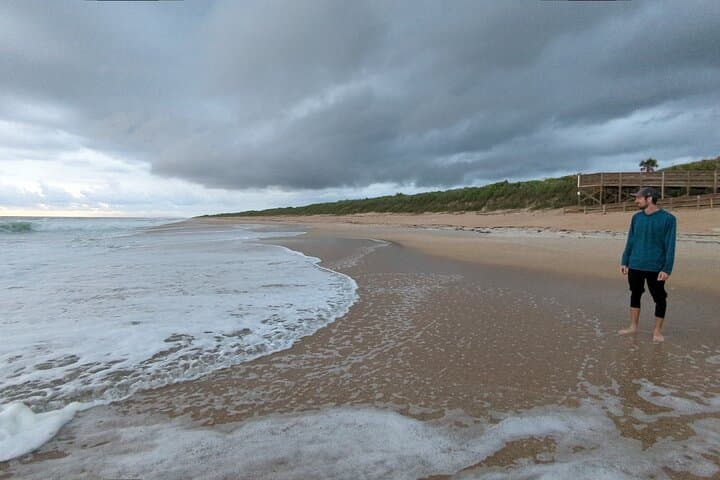
You push off from a narrow launch and the lagoon accepts the paddle with a muted sigh; mangrove roots sketch the shoreline and a distant surf line marks the Atlantic’s pull. In two hours a guided paddle threads between open water and sheltered back bays, the land and sea trading places of light as the tide moves.
You push off from a narrow launch and the lagoon accepts the paddle with a muted sigh; mangrove roots sketch the shoreline and a distant surf line marks the Atlantic’s pull. In two hours a guided paddle threads between open water and sheltered back bays, the land and sea trading places of light as the tide moves.
Canaveral National Seashore protects 27 miles of largely undeveloped barrier island and lagoon, created by tidal action over millennia and set aside by Congress in 1975. Geologically it’s a classic barrier system—dunes, tidal flats, and mangrove fringe—where currents carve shallow channels and birds concentrate on tidal flats. The area’s human story ties to native Timucua sites, early ferry routes, and more recent conservation fights that kept the shoreline wild.
On the water you’ll watch osprey and herons quarter the shallows, spot dolphins slicing wakes, and learn how the lagoon’s salinity and tides shape fish and seagrass communities. Guides usually route excursions in Mosquito Lagoon or the Intracoastal side, adjusting for wind and tide so paddlers stay comfortable and safe.
Practical notes: the tour is roughly 2 hours with light to moderate paddling—expect 2–4 miles depending on conditions. Bring reef‑safe sunscreen, at least 1 liter of water, insect repellent, and a comfortable PFD (provided in most tours). Park entry fees to Canaveral National Seashore are not included, and low tides, wind, or launches may alter the route. Timing morning or late afternoon reduces heat and improves wildlife viewing.