THE ADVENTURE COLLECTIVE® · Independent discovery and booking for outdoor travel

Explore Isla Damas’s mangrove estuary on a guided kayak trip from Jacó, where braided channels, prop roots, and abundant birdlife create close-up wildlife viewing. This eco-friendly paddle blends interpretation with hands-on navigation of tidal currents.
Explore Isla Damas’s mangrove estuary on a guided kayak trip from Jacó, where braided channels, prop roots, and abundant birdlife create close-up wildlife viewing. This eco-friendly paddle blends interpretation with hands-on navigation of tidal currents.
The put-in is quiet before the motor traffic of Jacó rises; low mangrove roots reach out like fingers as guides steer bright kayaks into a braided estuary. Salt-scented air and the chatter of birds set the tempo — the mangrove will test your balance and reward your attention.
Verified experiences and guided adventures in the surrounding area.
Operated by Tucanes Tours · Jacó, Puntarenas
The put-in is quiet before the motor traffic of Jacó rises; low mangrove roots reach out like fingers as guides steer bright kayaks into a braided estuary. Salt-scented air and the chatter of birds set the tempo — the mangrove will test your balance and reward your attention.
Isla Damas sits within one of Central America's largest mangrove systems, a coastal edge formed by sediment from nearby rivers and the shifting Pacific tides. Indigenous peoples and later coastal settlers used these waterways for fish and transport; today small tour operations emphasize interpretation and protection of the fragile habitat.
Geologically the estuary is young: sediment deposits create sheltered channels and dense prop roots that trap nutrients, producing a nursery for fish and a dining room for wading birds. Local culture blends Pacific fishing traditions and conservation-minded ecotourism; guides often point out medicinal plants and explain sustainable shrimp and crab harvests.
Expect close wildlife encounters — howler monkeys may scan from canopy gaps, herons will stalk like patient hunters, and crabs will skitter across exposed roots. The mangrove seems to breathe as tides pull water out and push it back in, compelling paddlers to read currents rather than fight them.
Practical guidance: wear quick-dry clothes, shoes that stay on in a kayak, and reef-safe sunscreen; bring a dry bag for electronics and ample water. Tours run about four hours on the water within a six-hour excursion from Jacó, and a moderate fitness level is required. Mornings are cooler and offer calmer water and better bird activity; afternoons bring thermal winds and stronger sun. Follow guides’ briefings on paddling technique and wildlife etiquette to keep the habitat healthy and the experience safe.
moderate.
4–6 hours.
Moderate — participants should be comfortable paddling for up to four hours with short breaks and able to climb in/out of kayaks
The on-water paddling is typically about four hours within a roughly six-hour total excursion including pickup, briefing, and lunch.
Yes — beginners are welcome; guides provide instruction and tandem kayaks are available for less confident paddlers.
Common sightings include various herons and egrets, howler or capuchin monkeys, and small estuarine fish and crabs; sightings depend on tide and season.
Yes — hotel pickup and drop-off from Jacó plus a meal are typically included; confirm pickup points when booking.
The mangroves have long supported local fishers and served as natural buffers against storms; recent decades brought ecotourism and conservation initiatives centered on sustainable use.
Tours emphasize minimal-impact practices: staying in established channels, not disturbing nests, and using reef-safe products to protect marine life.
Tucanes Tours operates guided outdoor trips and adventures with an emphasis on safety, stewardship, and memorable experiences.
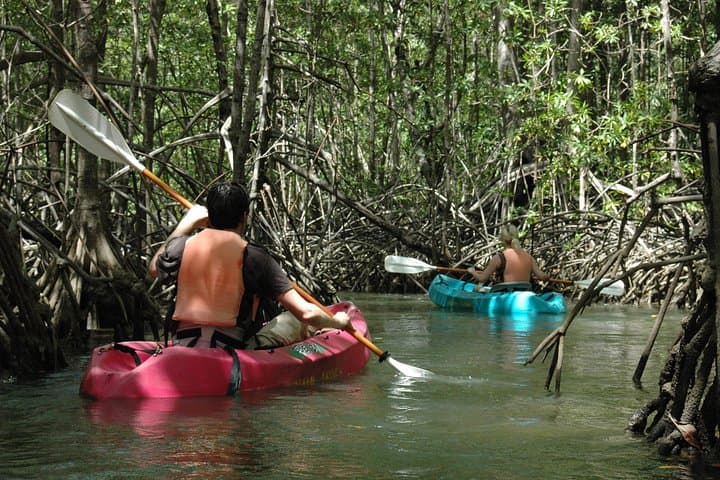
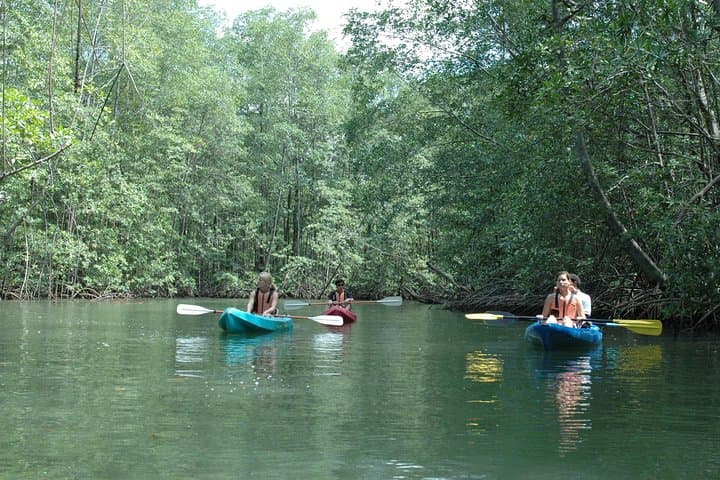
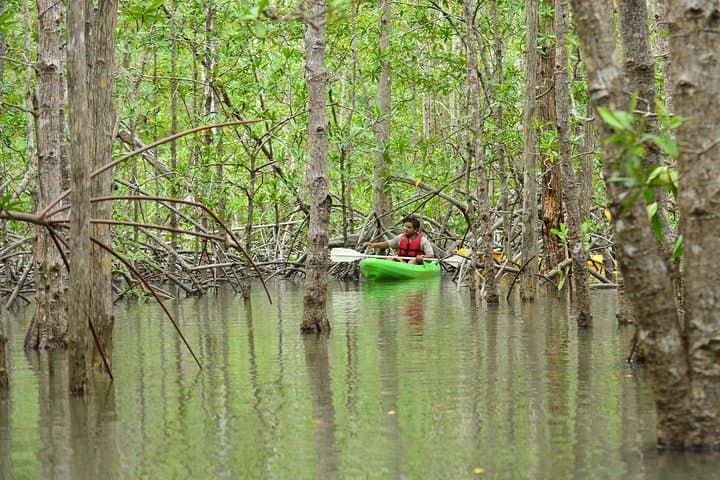
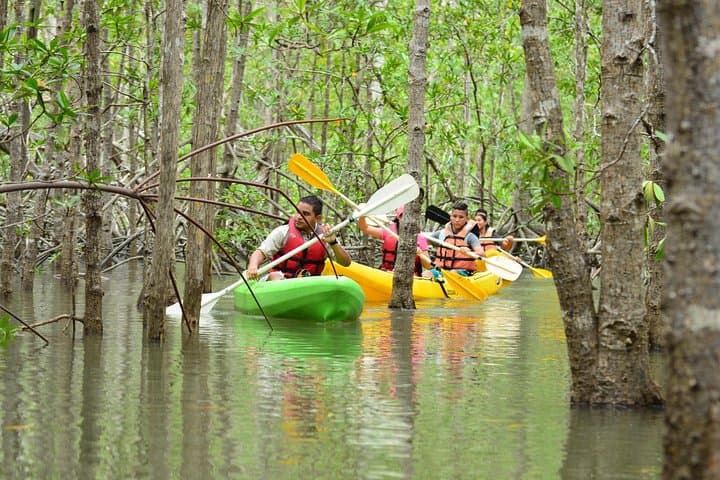
The put-in is quiet before the motor traffic of Jacó rises; low mangrove roots reach out like fingers as guides steer bright kayaks into a braided estuary. Salt-scented air and the chatter of birds set the tempo — the mangrove will test your balance and reward your attention.
The put-in is quiet before the motor traffic of Jacó rises; low mangrove roots reach out like fingers as guides steer bright kayaks into a braided estuary. Salt-scented air and the chatter of birds set the tempo — the mangrove will test your balance and reward your attention.
Isla Damas sits within one of Central America's largest mangrove systems, a coastal edge formed by sediment from nearby rivers and the shifting Pacific tides. Indigenous peoples and later coastal settlers used these waterways for fish and transport; today small tour operations emphasize interpretation and protection of the fragile habitat.
Geologically the estuary is young: sediment deposits create sheltered channels and dense prop roots that trap nutrients, producing a nursery for fish and a dining room for wading birds. Local culture blends Pacific fishing traditions and conservation-minded ecotourism; guides often point out medicinal plants and explain sustainable shrimp and crab harvests.
Expect close wildlife encounters — howler monkeys may scan from canopy gaps, herons will stalk like patient hunters, and crabs will skitter across exposed roots. The mangrove seems to breathe as tides pull water out and push it back in, compelling paddlers to read currents rather than fight them.
Practical guidance: wear quick-dry clothes, shoes that stay on in a kayak, and reef-safe sunscreen; bring a dry bag for electronics and ample water. Tours run about four hours on the water within a six-hour excursion from Jacó, and a moderate fitness level is required. Mornings are cooler and offer calmer water and better bird activity; afternoons bring thermal winds and stronger sun. Follow guides’ briefings on paddling technique and wildlife etiquette to keep the habitat healthy and the experience safe.