THE ADVENTURE COLLECTIVE® · Independent discovery and booking for outdoor travel

Glide through Fort Lauderdale’s living coastline on a 3-hour guided kayak or paddleboard tour. Explore shallow mangrove channels, learn coastal ecology from local guides, and spot herons, juvenile fish and other wildlife.
Glide through Fort Lauderdale’s living coastline on a 3-hour guided kayak or paddleboard tour. Explore shallow mangrove channels, learn coastal ecology from local guides, and spot herons, juvenile fish and other wildlife.
The sun hits the water in long, bright knives as your paddle slices through the calm channel; mangrove roots reach like fingers into the tide, testing the current.
Verified experiences and guided adventures in the surrounding area.
Operated by Rio Santos · Fort Lauderdale, Florida
The sun hits the water in long, bright knives as your paddle slices through the calm channel; mangrove roots reach like fingers into the tide, testing the current.
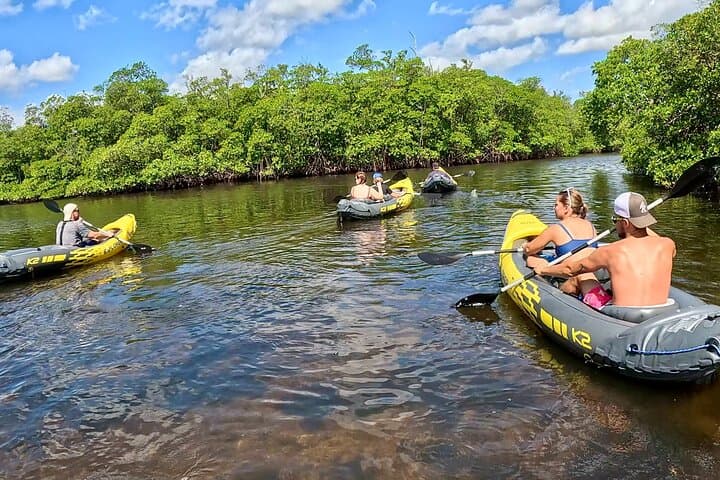
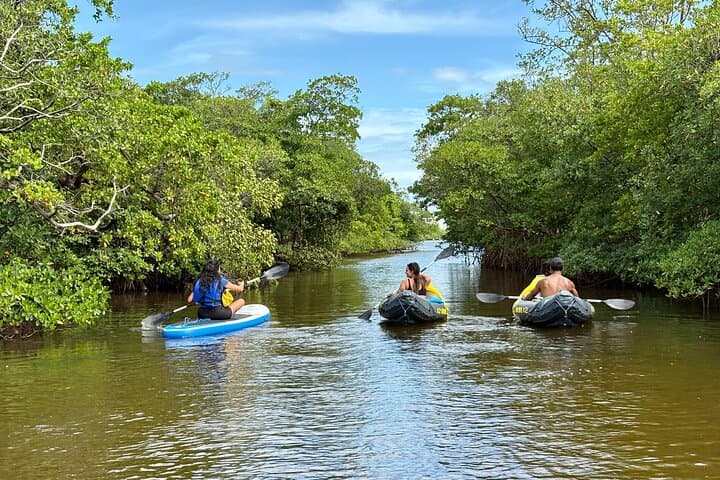
On this three-hour guided paddle from Fort Lauderdale, you move slowly through a patchwork of red, black and white mangroves that buffer the coast. Guides explain how these salt-tolerant trees build islands and trap sediment while birds—herons, egrets and kingfishers—use the roots like perches. The landscape is geological and living: shallow mudflats at low tide, deeper tidal sloughs at high, all carved by coastal processes tied to the Intracoastal Waterway and ancient sea-level shifts.
Fort Lauderdale’s shoreline was shaped by the Second Seminole War forts and later boom-era development; today mangrove corridors remain one of the region’s most intact habitats and a focal point for local conservation efforts.
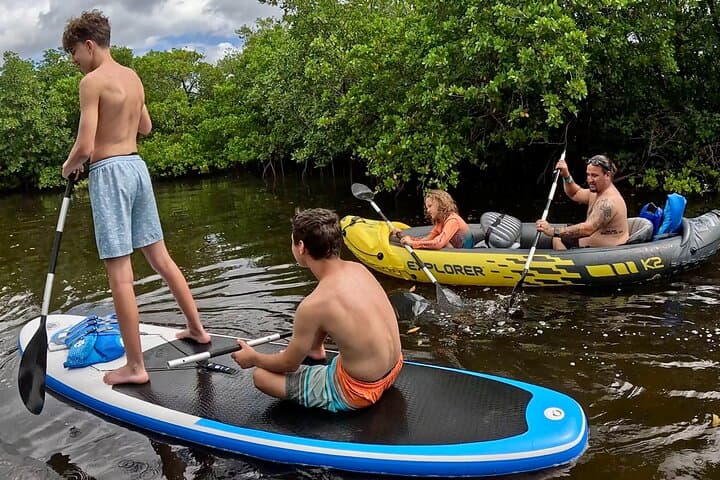
Practical guidance: expect easy, flat-water paddling with no elevation gain but variable currents on tidal swings. Tours run in small groups (max eight) and provide kayaks, SUPs, life vests and a quick skills demo—plan to paddle 2–5 miles depending on route and rest stops. Mornings are cooler and attract more wildlife; mid-afternoon runs offer warmer water and stronger light for photos.
Bring a refillable bottle, reef-safe sunscreen, a hat and water shoes. Wear quick-dry layers and a light wind layer if there’s a breeze. Listen to your guide for tidal timing, keep a respectful distance from wildlife, and pack out any trash; the mangroves recover slowly from disturbance.
easy.
3 hours.
Suitable for most fitness levels; ability to sit and paddle for up to three hours is helpful.
No—guides provide a brief skills demo and life vests; the route is flat water suitable for first-timers.
Yes—infants must sit on an adult’s lap; specialized infant seats are available and tours are family-friendly.
Expect shorebirds (herons, egrets), small fish, crabs and occasionally manatees or dolphins in adjacent channels.
Check cancellation terms; operators typically advise rescheduling for lightning or hazardous conditions but not for light rain.
Fort Lauderdale developed rapidly in the early 20th century after military forts in the area; mangroves remained essential coastal defenses long before modern seawalls.
Mangrove corridors are protected and fragile—stay on established channels, avoid standing on roots, and use reef-safe products to minimize impact.
Rio Santos operates guided outdoor trips and adventures with an emphasis on safety, stewardship, and memorable experiences.
The sun hits the water in long, bright knives as your paddle slices through the calm channel; mangrove roots reach like fingers into the tide, testing the current.
The sun hits the water in long, bright knives as your paddle slices through the calm channel; mangrove roots reach like fingers into the tide, testing the current.
On this three-hour guided paddle from Fort Lauderdale, you move slowly through a patchwork of red, black and white mangroves that buffer the coast. Guides explain how these salt-tolerant trees build islands and trap sediment while birds—herons, egrets and kingfishers—use the roots like perches. The landscape is geological and living: shallow mudflats at low tide, deeper tidal sloughs at high, all carved by coastal processes tied to the Intracoastal Waterway and ancient sea-level shifts.
Fort Lauderdale’s shoreline was shaped by the Second Seminole War forts and later boom-era development; today mangrove corridors remain one of the region’s most intact habitats and a focal point for local conservation efforts.
Practical guidance: expect easy, flat-water paddling with no elevation gain but variable currents on tidal swings. Tours run in small groups (max eight) and provide kayaks, SUPs, life vests and a quick skills demo—plan to paddle 2–5 miles depending on route and rest stops. Mornings are cooler and attract more wildlife; mid-afternoon runs offer warmer water and stronger light for photos.
Bring a refillable bottle, reef-safe sunscreen, a hat and water shoes. Wear quick-dry layers and a light wind layer if there’s a breeze. Listen to your guide for tidal timing, keep a respectful distance from wildlife, and pack out any trash; the mangroves recover slowly from disturbance.