THE ADVENTURE COLLECTIVE® · Independent discovery and booking for outdoor travel

Float down tea‑stained Cedar Creek through towering bald cypress and old‑growth bottomland hardwoods on a 2–3 hour guided kayak trip in Congaree National Park. Expect close wildlife encounters, interpretive history from your guide, and paddling tailored to water levels.
Float down tea‑stained Cedar Creek through towering bald cypress and old‑growth bottomland hardwoods on a 2–3 hour guided kayak trip in Congaree National Park. Expect close wildlife encounters, interpretive history from your guide, and paddling tailored to water levels.
You push off into tea‑stained water and the forest leans over you—massive bald cypress knees pitching through the surface, sunlight sifting between buttressed trunks. The guide sets a steady rhythm while cedar‑scented air and a chorus of birds keep you moving downstream. Paddling Cedar Creek in Congaree National Park puts you inside the largest intact stand of old‑growth bottomland hardwoods in the Southeast, where water shapes the forest and every bend reveals a different angle of green.
Verified experiences and guided adventures in the surrounding area.
Operated by JK Adventure Guides · Hopkins, South Carolina
You push off into tea‑stained water and the forest leans over you—massive bald cypress knees pitching through the surface, sunlight sifting between buttressed trunks. The guide sets a steady rhythm while cedar‑scented air and a chorus of birds keep you moving downstream. Paddling Cedar Creek in Congaree National Park puts you inside the largest intact stand of old‑growth bottomland hardwoods in the Southeast, where water shapes the forest and every bend reveals a different angle of green.
This floodplain has a human and geological story: repeated seasonal floods deposit rich alluvium; these conditions allowed the forest to persist when surrounding lands were logged in the 19th and 20th centuries. The park, protected as a national monument in the 1970s and designated a national park in 2003, preserves trees that are centuries old and channels that still shift with storms.
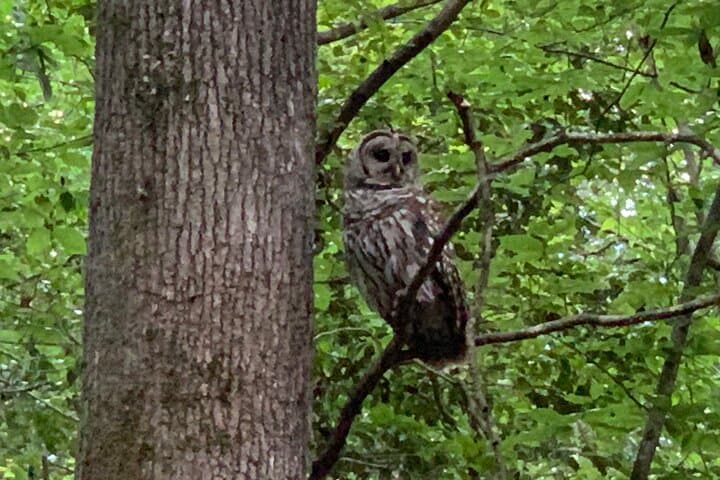
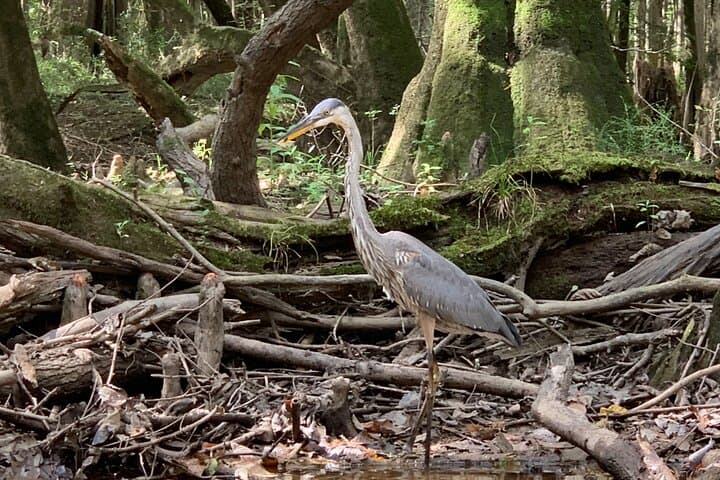
Expect a calm, wildlife‑rich paddle—great blue herons and prothonotary warblers are common, otters and turtles frequent quieter coves. Guides interpret flood dynamics, tree species, and park history while managing group safety. Trips run 2–3 hours and adjust for water levels; routes can include narrow oxbows and wider creek stretches.
Practical points: wear quick‑dry layers and secure water shoes, bring insect repellent and sun protection, and a small dry bag for essentials. Life jackets and kayaks are provided; Guides will brief on paddling technique and water etiquette. Tours run rain or shine but may cancel for severe weather. Paddle with attention to currents and fallen timber, give wildlife wide berth, and follow Leave No Trace to protect this rare bottomland forest for future visitors.
easy.
2–3 hours.
Suitable for most fitness levels; being comfortable with sitting and paddling for a couple of hours helps.
Yes—personal flotation devices are provided and required; guides ensure proper fit before launch.
No—trips are designed for all experience levels and include a brief paddling and safety orientation.
Tours run rain or shine for light to moderate rain; severe weather or dangerous high water will prompt cancellation for safety.
Yes—bring them in a waterproof bag or case; guides recommend securing electronics to prevent loss.
The Congaree floodplain preserved old‑growth hardwoods that escaped extensive 19th‑century logging; the area became a national monument in 1976 and a national park in 2003.
The park protects rare bottomland forest and floodplain ecology—avoid introducing invasive species, stay on water routes, and pack out all waste to minimize impact.
JK Adventure Guides operates guided outdoor trips and adventures with an emphasis on safety, stewardship, and memorable experiences.
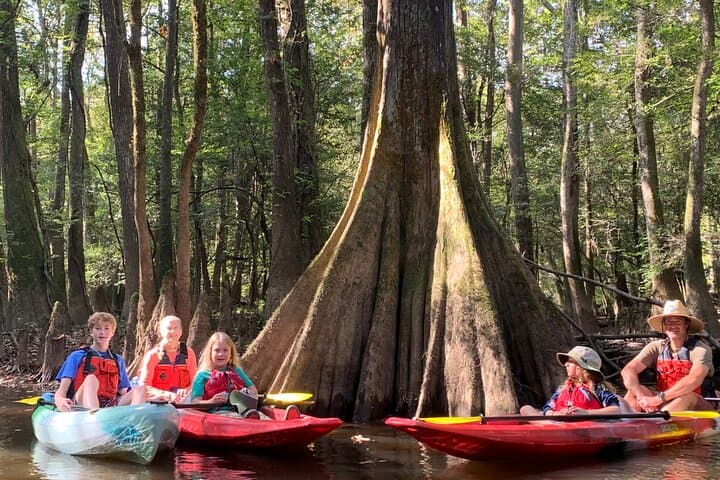
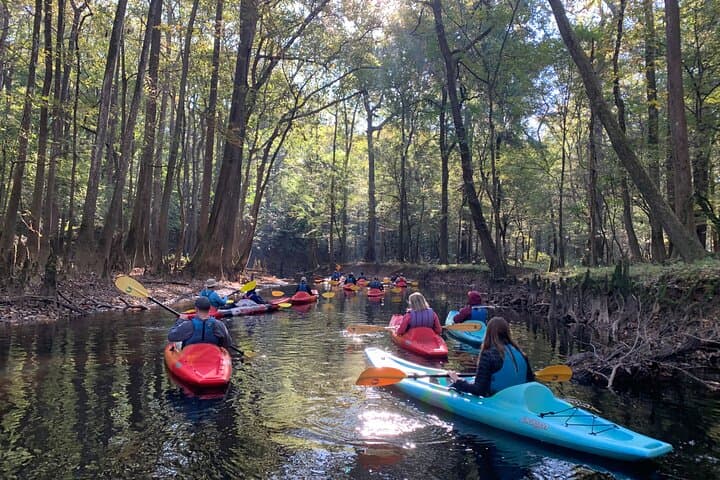
You push off into tea‑stained water and the forest leans over you—massive bald cypress knees pitching through the surface, sunlight sifting between buttressed trunks. The guide sets a steady rhythm while cedar‑scented air and a chorus of birds keep you moving downstream. Paddling Cedar Creek in Congaree National Park puts you inside the largest intact stand of old‑growth bottomland hardwoods in the Southeast, where water shapes the forest and every bend reveals a different angle of green.
You push off into tea‑stained water and the forest leans over you—massive bald cypress knees pitching through the surface, sunlight sifting between buttressed trunks. The guide sets a steady rhythm while cedar‑scented air and a chorus of birds keep you moving downstream. Paddling Cedar Creek in Congaree National Park puts you inside the largest intact stand of old‑growth bottomland hardwoods in the Southeast, where water shapes the forest and every bend reveals a different angle of green.
This floodplain has a human and geological story: repeated seasonal floods deposit rich alluvium; these conditions allowed the forest to persist when surrounding lands were logged in the 19th and 20th centuries. The park, protected as a national monument in the 1970s and designated a national park in 2003, preserves trees that are centuries old and channels that still shift with storms.
Expect a calm, wildlife‑rich paddle—great blue herons and prothonotary warblers are common, otters and turtles frequent quieter coves. Guides interpret flood dynamics, tree species, and park history while managing group safety. Trips run 2–3 hours and adjust for water levels; routes can include narrow oxbows and wider creek stretches.
Practical points: wear quick‑dry layers and secure water shoes, bring insect repellent and sun protection, and a small dry bag for essentials. Life jackets and kayaks are provided; Guides will brief on paddling technique and water etiquette. Tours run rain or shine but may cancel for severe weather. Paddle with attention to currents and fallen timber, give wildlife wide berth, and follow Leave No Trace to protect this rare bottomland forest for future visitors.